
A PYP Best Blog! Best Practices for Produce Storage!
Just in case you missed this article on the best storage practices for produce the first time we shared it a couple of years ago, we are republishing it. After we published this blog originally, we got an awesome response. This is one of the PYP Best Blogs!
 For a couple of years now I have been participating in produce cooperatives. I sometimes end up with more produce than I can use in a week, and sometimes I only participate in a monthly coop so I want to extend the life of my produce as long as possible.
After a bit of research I found that there were things that I was storing incorrectly. Now I am finding that not only do I have more refrigerator space, but my produce is maintaining the quality longer.
Apples – Avoid washing apples before storing. Remove any spoiled apples. Put in a plastic bag in the coldest part of the fridge or store in a cool place no longer than 6 weeks. Warning: storing apples next to produce like broccoli, cabbage, cucumbers, greens or cauliflower will cause these veggies to spoil faster. Apples give off ethylene gas, which causes faster ripening. (Or, put an apple in a bag with fruits such as peaches, plums and bananas to speed up ripening.)
Artichoke – Refrigerator life: 4 to 5 days. Add a few drops of water to a plastic bag.
Butternut Squash – Store in a dry area with good air circulation up to 6 mos. Winter squash should not be refrigerated unless cut. Stored in a cool, dry, well-ventilated area away from light, it will keep for up to three months. Cut squash will keep 1 week when wrapped tightly and refrigerated.
Cabbage – Whole Refrigerator life: 1 to 2 weeks in a plastic bag.
Cabbage – Cut Refrigerator life: 1 to 2 days if wrapped tightly in plastic wrap.
Carrots – Refrigerator life: Very variable. Store in their original plastic bag.
Cauliflower – Whole, Refrigerator life: Up to 5 days. Store stem-side up in a plastic bag.
Celery – Refrigerator life: Up to 2 weeks. Store in a plastic bag.
Cherries – Cherries are highly perishable; refrigerate ASAP. Sort carefully and place loosely in a shallow container so that air can circulate. Wash cherries just before using. For highest quality, fresh cherries should be stored only 1 or 2 days. Cherries make a guilt-free snack: they’re fat-free, low in calories, and rich in vitamin C, vitamin A and beta-carotene. I love pitting them and freezing in a single layer and then transfer to a freezer bag.
Cilantro – Wash in cool water, remove dead stems/leaves, snip ends. Pat dry and place stems in cup with water but avoid submerging the leaves. Cover with a plastic bag/wrap and refrigerate. Change water if it becomes murky. Can also store, prepped as above, wrapped with a damp paper towel in a plastic bag. Most fresh herbs will last more than a week stored this way.
Corn – More than any other vegetable, sweet corn tastes best when it’s fresh from the garden. The minute it’s picked its sugar content starts turning to starch.
Cucumber – Refrigerator life: 1 week if waxed; less if not waxed.
Eggplant – Refrigerator life: 3 to 4 days. Store in a plastic bag.
Garlic – Shelf life: A few weeks to a few months, depending on size. Store in a dark, cool spot.
Grapes – Avoid washing grapes before storing them. Check through bunches for spoiled grapes and remove; put grapes in a plastic bag in your fridge and store for a week max. Wash under cold water just before serving.
Green beans – Refrigerator life: 3 to 5 days. Store in a plastic bag.
Jalapenos – Keep cool and dry. If you refrigerate them, first remove them from the plastic produce bag; otherwise they’ll become soft and moldy. Generally they’ll keep for 3-4 days. Once the skin begins to wrinkle, it loses potency, and if you’re roasting or blanching them, the skins will be difficult to peel.
Leafy Vegetables – Refrigerator life: 3 to 5 days. Wrap in a damp paper towel and place in a plastic bag.
Leeks – Refrigerator life: Up to 1 week. Loosely wrap in a plastic bag.
Lettuce – Refrigerator life: Lettuce stored in sealed plastic bags in the crisper will last from a few days to 2 weeks. The firmer the lettuce the longer it will keep; iceberg up to 2 weeks, Romaine 10 days, butter and leaf lettuces for 4 days. Do not store with melons, apples, pears, or other ethylene gas-emitting fruits as they will cause the lettuce to turn brown.
Mangos – A few black spots on the skin are typical of ripe mangoes. Put in a paper bag to ripen at room temp (two will ripen faster than one) and keep in a cool place, such as a cupboard. Move to fridge when ripe and use within a few days.
Mushrooms – Prepackaged mushrooms can be stored, unopened in the refrigerator for 5 to 7 days. Once opened, mushrooms should be moved to a paper bag and refrigerated.
Nectarines – Store at room temperature until fully ripe. Once fully ripe, store them in the fridge for no more than a 2 of days. Nectarines stored longer may lose their juicy flavor. Use a little lemon or other citrus juice on the cut areas to retard the browning affect.
Onions – Cut, Refrigerator life: 2 to 3 days if tightly wrapped in plastic wrap.
Onions – Green, Store green onions/scallions away from odor-sensitive foods such as corn and mushrooms, which will absorb the odor of the onions. Remove bands and damaged leaves and store in plastic bags in the crisper. They’ll last up to 5 days.
Onions – Whole, Shelf life: 3 to 4 weeks. Store in a cool, dry, open space. (Although my neighbor stores them for MONTHS in her garage!
Oranges – Store citrus at room temp if you’ll eat it in a week or so, or it will keep in the crisper for 6-8 weeks. Citrus is ripe when picked. Surface marks usually do not affect the fruit inside.
Peas – Refrigerator life: 1 to 2 days. Store in a plastic bag.
Peppers – Refrigerator life: Up to 1 week. Store in a plastic bag.
Potatoes – New, Shelf life: 1 week. Store in a cool, dark, dry place.
Potatoes – all-purpose and baking, Shelf life: Store in burlap, brown paper, or perforated plastic bags away from light, in the coolest, non-refrigerated, and well-ventilated part of the house. They can last up to 3 months, but more realistically, 3-5 weeks. Don’t store onions and potatoes together, as the gases they each give off will cause rot.
Pumpkin – Shelf life: Up to 1 month in a cool, dry place.
Spinach – Untie, remove blemished leaves, wash thoroughly in cold water, spin dry, and refrigerate in plastic bag for 2-3 days. Rich in anti-oxidants, loaded with folic acid, vitamin K, magnesium, manganese.
Squash (Winter) – whole, Shelf life: Up to 3 months. Store in a cool, dry place.
Squash (Winter) – cut, Refrigerator life: Up to 1 week if wrapped tightly in plastic.
Squash (Summer) – Refrigerator life: Up to 1 week. Store in a plastic bag.
Strawberries – Strawberries are extremely perishable and should be refrigerated immediately. Wash just before enjoying. Refrigerate in a single layer on a paper towel in a moisture-proof container. Eat them within 72 hours, or freeze up to 10 mos. Ideally, let come to room temp before serving to bring out best flavor. Nutritional powerhouses: vitamin C, fiber, folic acid, phytochemicals.
Sweet Potatoes – Shelf life: Up to 1 month if stored in a cool, dry place; up to 1 week if stored at room temperature. If refrigerated, their natural sugar will turn to starch and ruin the flavor.
Tomatoes – Shelf life: Up to 2 days once fully ripe. Store at room temperature for the best flavor. Tomatoes should never be in the fridge until they have been cooked, cut or put into a raw dish like a salsa, or are fully ripe and would spoil if left at room temp. Place tomatoes stem end up, in a sealed paper bag with or without ethylene-producing fruit such as bananas. Refrigerated ripe tomatoes will taste better if brought to room temp before eating.
Watermelon – Uncut watermelons keep at room temp for up to 2 weeks. Store cut watermelons in fridge. Cover cut surface loosely with plastic wrap.
A PYP Best Blog! Recipes: Homemade Syrup – Lots of recipes!
Just in case you missed this article on making homemade syrup the first time we shared it a couple of years ago, we are republishing it. After Marne wrote this blog originally, we got an awesome response. This is one of the PYP Best Blogs!
When I was growing up, my mother made many different types of syrup for us to put on our pancakes and waffles. I wanted to share a few of those recipes with you today. These are a few of my favorites for the past 30 years or so. I hope you enjoy them as much as we do. Note: They do work out just find using reduced sugar.
Contrary to popular belief, Kneaders Restaurant did not invent cinnamon syrup! I have been eating it since the late-1970’s and my mom always made it from scratch!
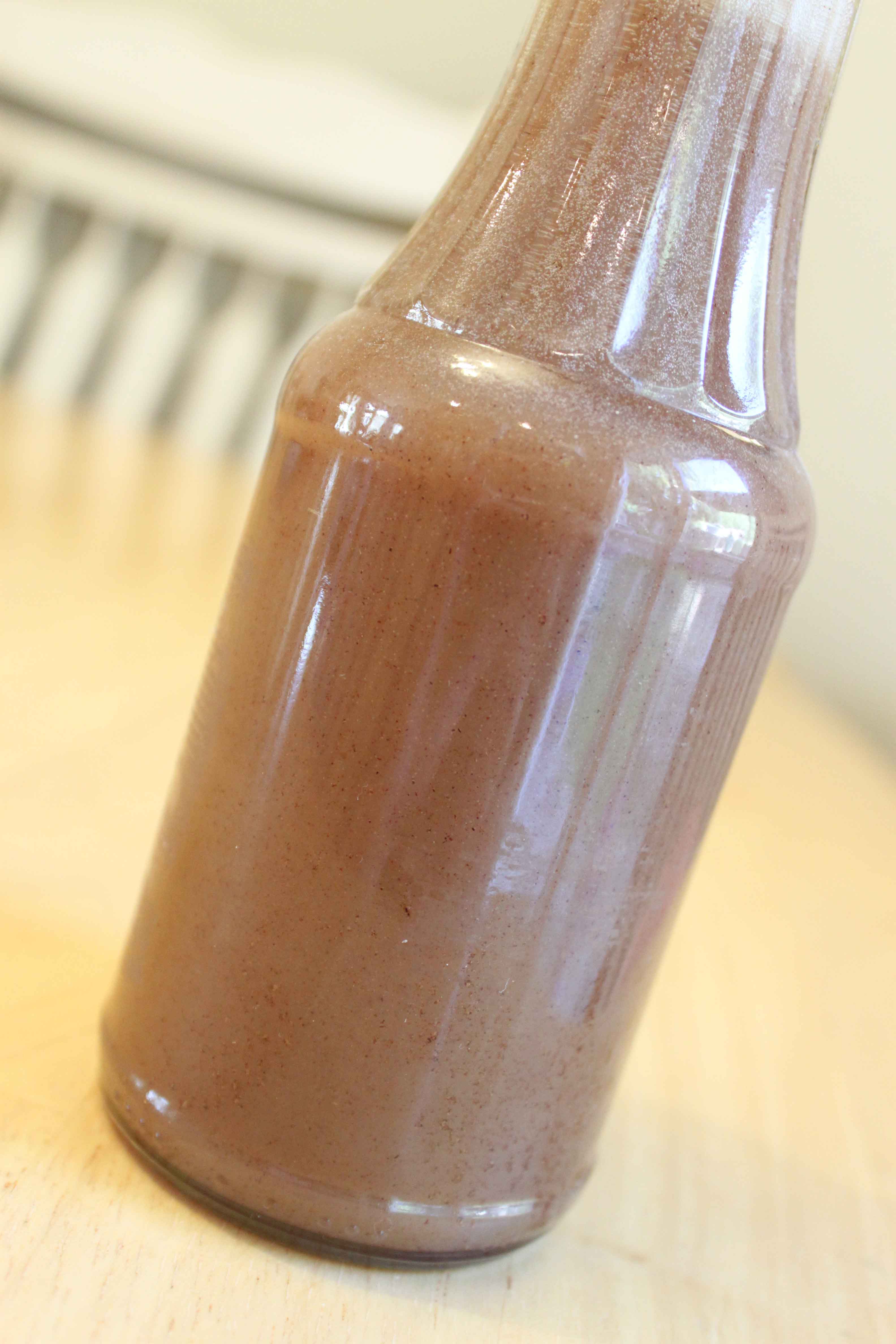
CINNAMON SYRUP
1 c. sugar
1/2 c. corn syrup
1/4 c. water
1/2 to 3/4 tsp. cinnamon
1/2 c. evaporated milk
Combine sugar, corn syrup, water and cinnamon. Boil over medium heat stirring constantly. Cook and stir for 2 minutes more. Cool for 5 minutes removed from heat. Stir in evaporated milk. Makes 1 2/3 cups.
ORANGE SYRUP
1/2 c. butter
3/4 c. sugar
1/2 c. orange juice concentrate
Heat almost to boiling. Serve over pancakes or waffles.
PEACH SYRUP
5 cups peach puree
2 cups sugar
2 TBSP lemon juice
2 tsp vanilla
Over medium heat in a heavy pot, combine the peach puree, sugar, and lemon juice. Heat to boiling then reduce to a simmer. Simmer, stirring frequently for five minutes. Remove from the heat and add the vanilla.
You can water bath can this syrup, or you can freeze it. If you choose to can it, pour into the sterilized jars, leaving 1/4″ headspace at the top of each jar. Wipe all the rims with a clean cloth and center the lids. Add the bands and tighten to finger tightness, and process in a boiling water bath for 25 minutes (less time if you live at a lower elevation. Check the Ball canning regulations for specifics). Makes approx. 3 pints of syrup.
A PYP Best Blog! Easy, Healthy Homemade Granola Bars!
Just in case you missed this article on making homemade granola bars the first time we shared it a couple of years ago, we are republishing it. After Trish wrote this blog originally, we got an awesome response. This is one of the PYP Best Blogs!
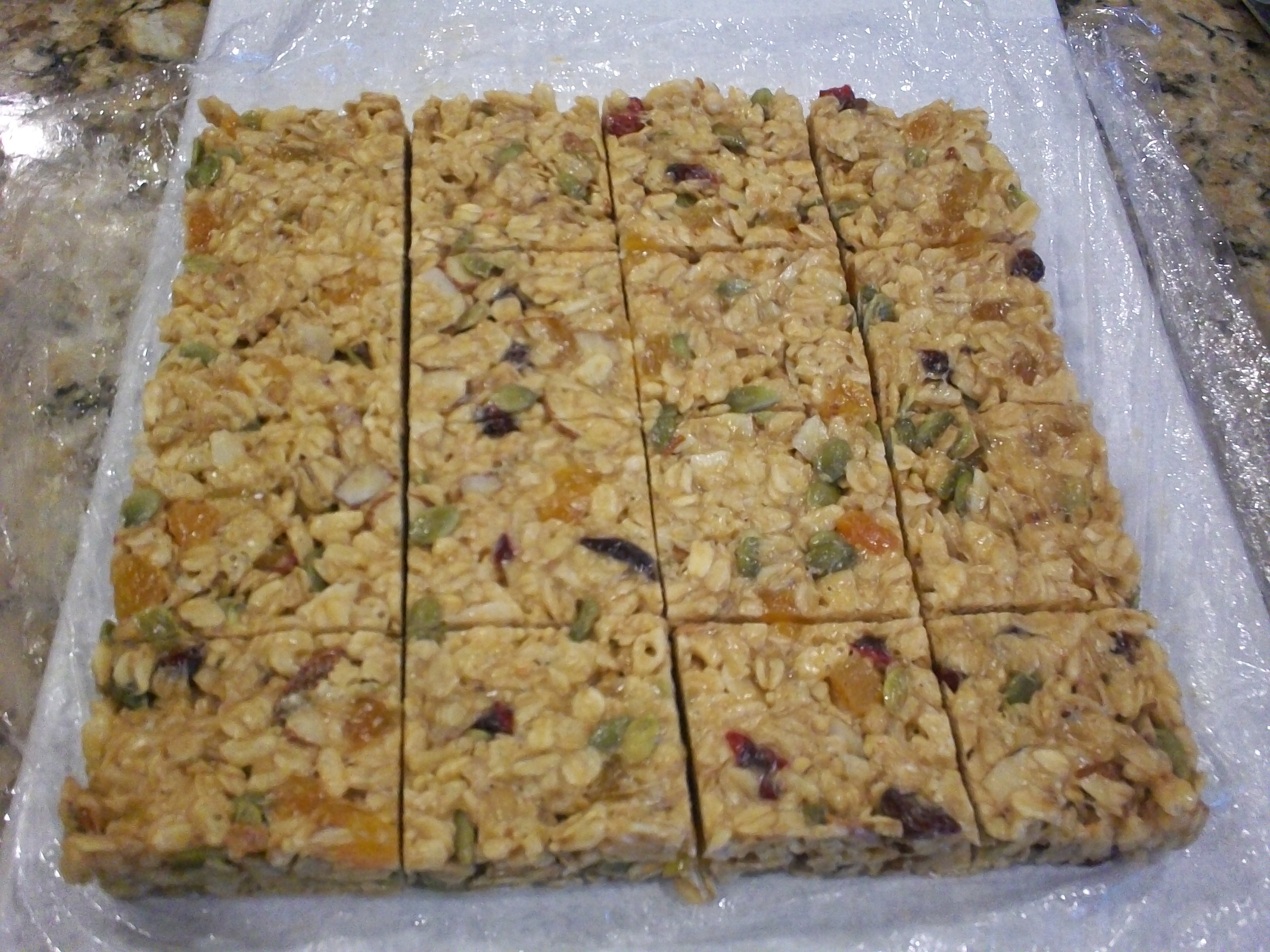
For a variety of reasons I won’t go into here, I have started packing lunches for my kids and husband every day.
When I decided to make the switch from school lunch to brown bagging, I sought the advice of PYP members in the forums. I was looking for wholesome, healthy, non processed options.
One suggestion I received was a Mark Bitman recipe for homemade granola bars.
They have been a huge hit! And I’ve made them so many times now that I can make them in my sleep.
I wanted to pass them on for others to enjoy.
I would guess that the approximate cost for a full recipe is about $2 for 16 bars.
Considering that I know exactly what’s in them (Nothing I can’t pronounce or identify!) and can customize the granola bars according to our tastes, I think that they are a good value.
Chewy Granola Bars
adapted from a Mark Bitman recipe
1/2 cup nut butter (almond or peanut)
1/2 cup honey
1 cup crispy rice cereal
1 cup oats (instant, quick or old fashioned)
1/2 chopped unsalted nuts and/or seeds (any combination you like)
1/2 cup chopped dried fruit (any that you like)
1/4 teaspoon salt (optional)
Place nut butter and honey in a small saucepan and heat over low heat just until melted enough to combine thoroughly with a whisk.
Lightly oil a 9X9 or 8X8 cake pan.
Center a piece of plastic wrap that is about 3 times the size of the pan over the pan and smooth it out to line the pan allowing the excess plastic wrap to hang over the sides.
Put the dry ingredients in a bowl. Add the combined nut butter and honey. Stir gently until well combined.
Pour mixture into pan and distribute as evenly as possible with the spoon you used to stir with.
Now fold the plastic wrap over the mixture and press firmly and evenly into the pan.
Refrigerate for at least one hour.
Lift the plastic wrap and granola mixture from the pan all at once.
Place on cutting board and cut into 16 equal pieces.
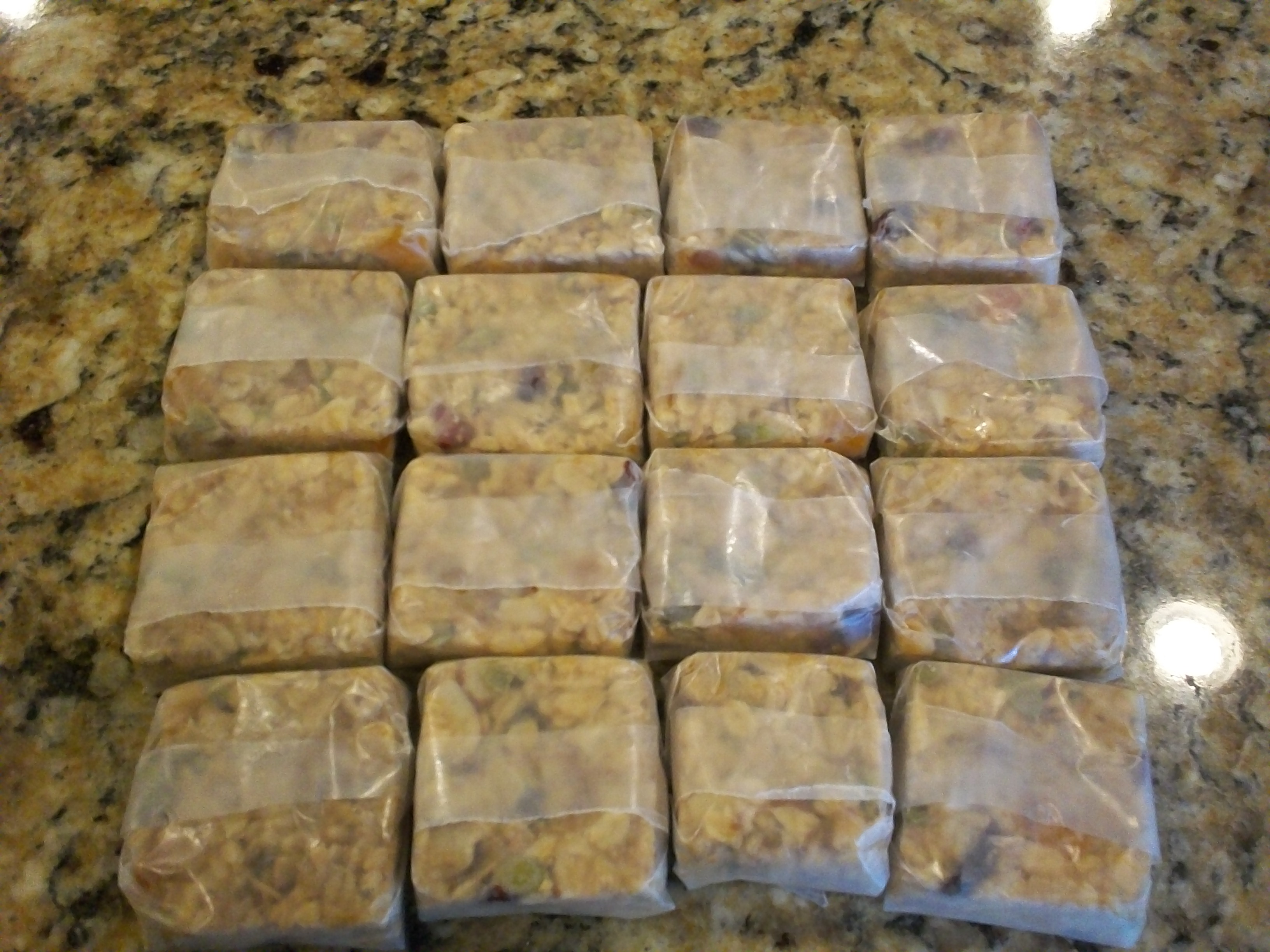
At this point I like to wrap each bar in waxed paper and put them into the freezer. When I’m packing lunches I can just grab one and add it to the lunches. It thaws perfectly for lunch.
For this batch I used natural peanut butter, almonds, raw pumpkin seeds, sunflower seeds, apricots and cranberries. YUM!
Pin It
A PYP Best Blog! Handpainting Signs! You can do it!
Just in case you missed this article on handpainting signs the first time we shared it a couple of years ago, we are republishing it. After Sharon wrote this blog originally, we got an awesome response. This is one of the PYP Best Blogs!
I love the posters and signs with messages on them. I love that you can customize and personalize them to fit you and your home. I do prefer to paint things like this by hand, though, and often get asked about my method for hand painting, so I thought I would share it here. I paint a lot and have been doing it for years; it does take some practice, but I think this is a pretty foolproof method for handpainting signs, even for a beginner!
I start by printing out my finished words or design on the computer. If it’s bigger than one piece of paper, I just tape them together.
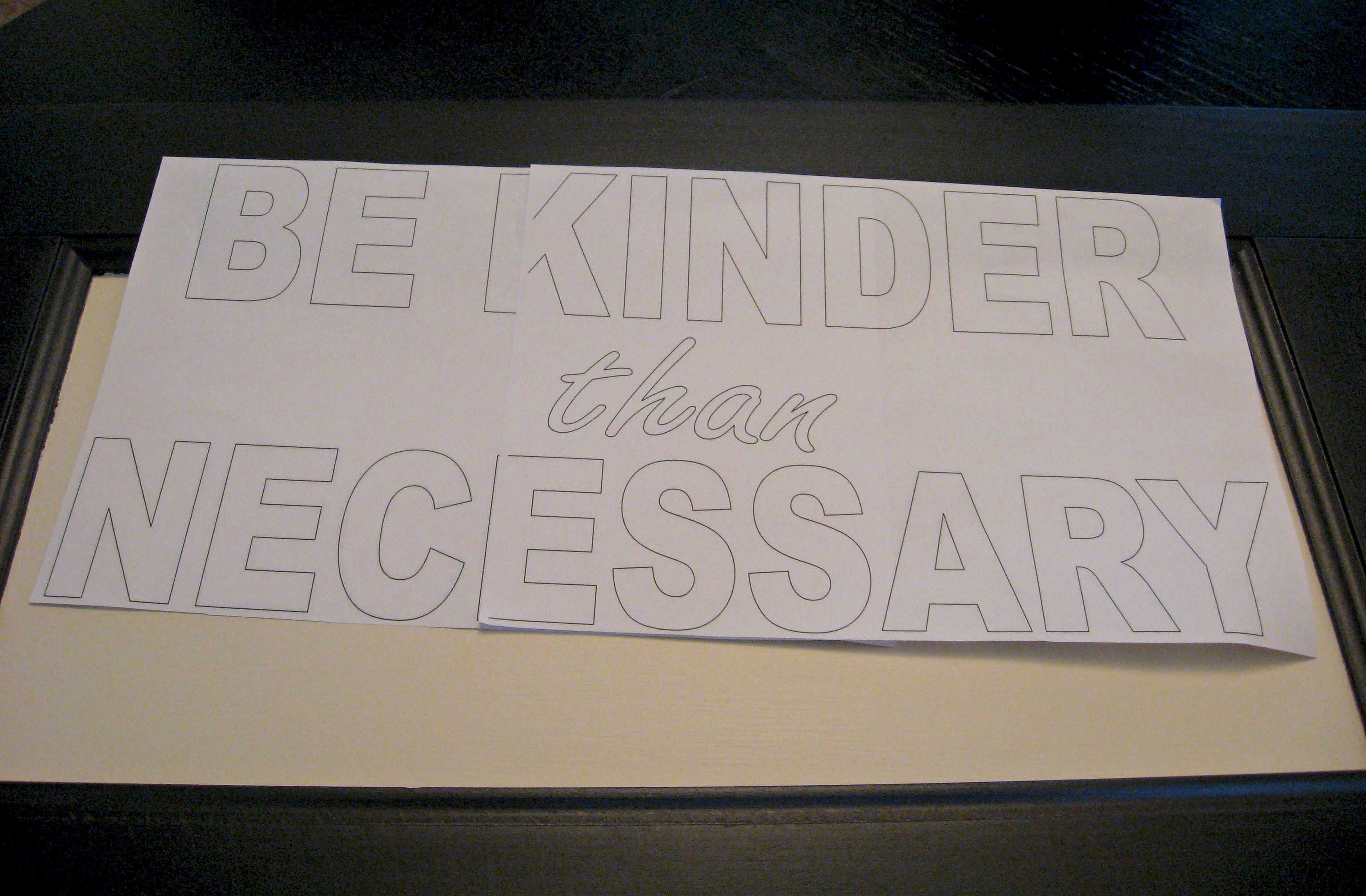
Now, I scribble over the lines on the BACK of the paper with a pencil. You could use actual carbon paper, but I just don’t see the point of the expense and mess when this works great.
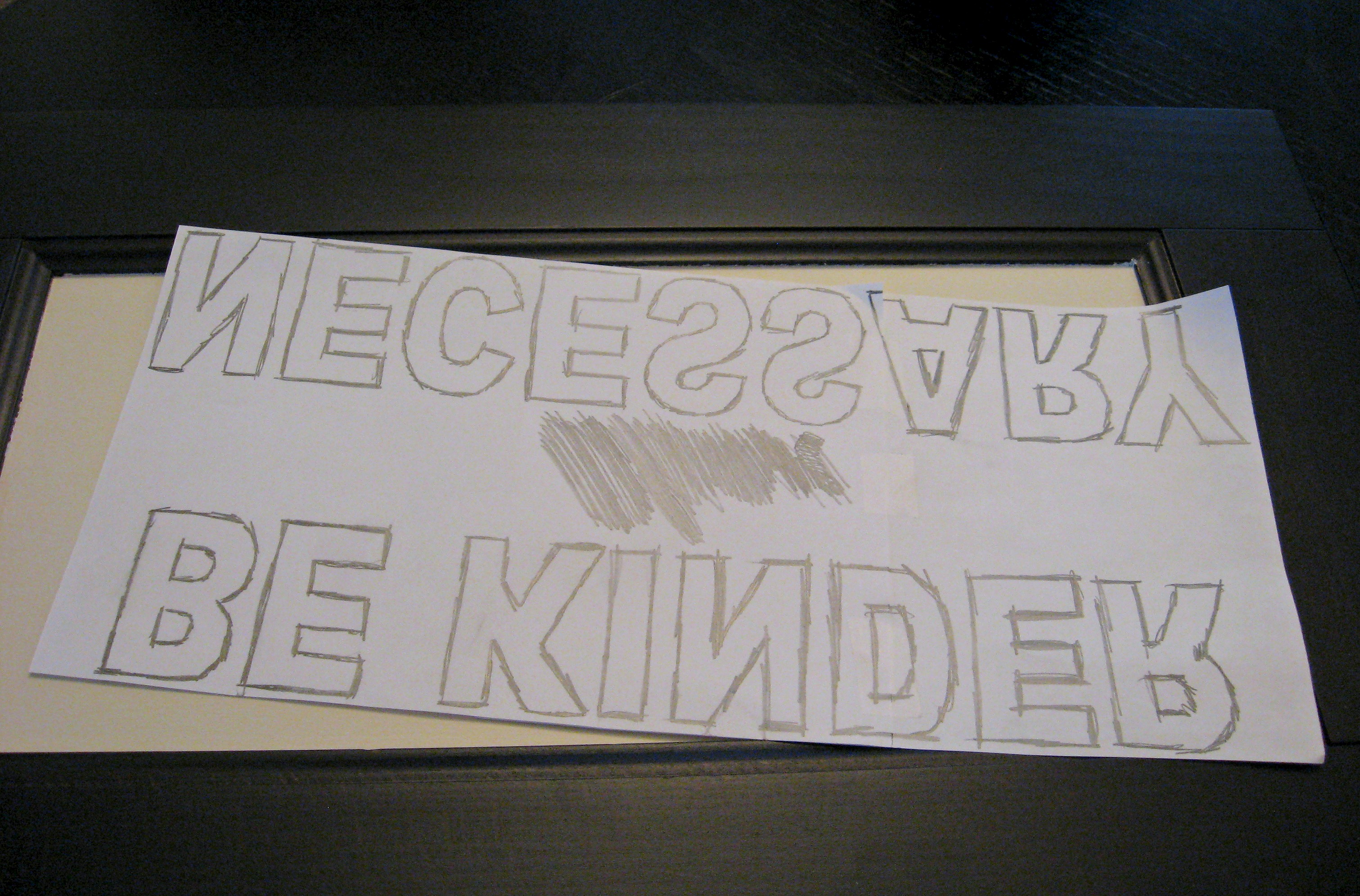
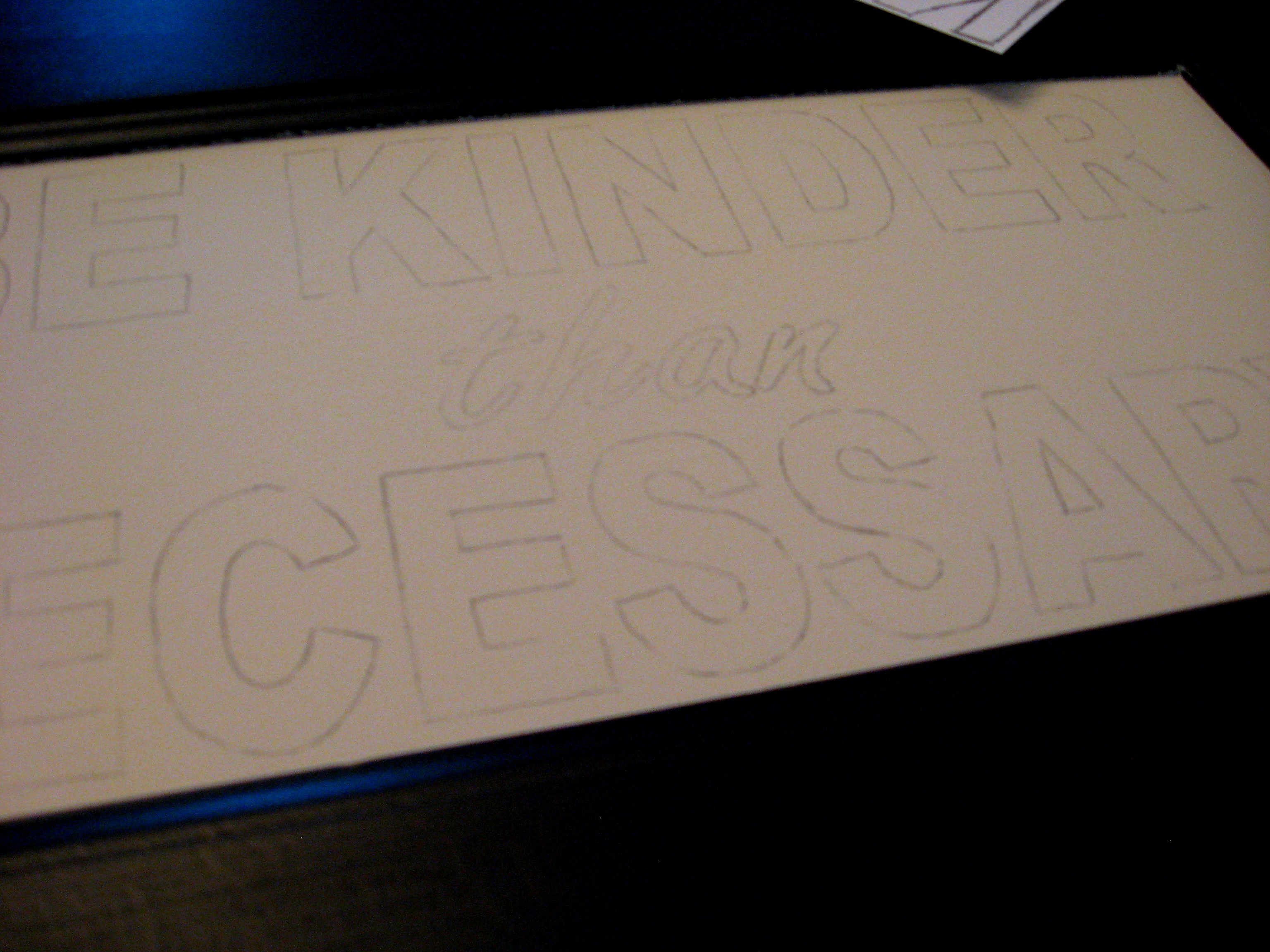
Position the pattern where you want it. Tape down the corners if you are afraid it will move around. Use a pen or pencil – whatever is more comfortable to you – to trace the design onto the surface you will be painting.

Now you have a perfect outline.
Next step, I outline everything with a paint pen. You can buy them at any craft store for a couple of dollars. I don’t have a favorite brand; this is one that came from Michaels.
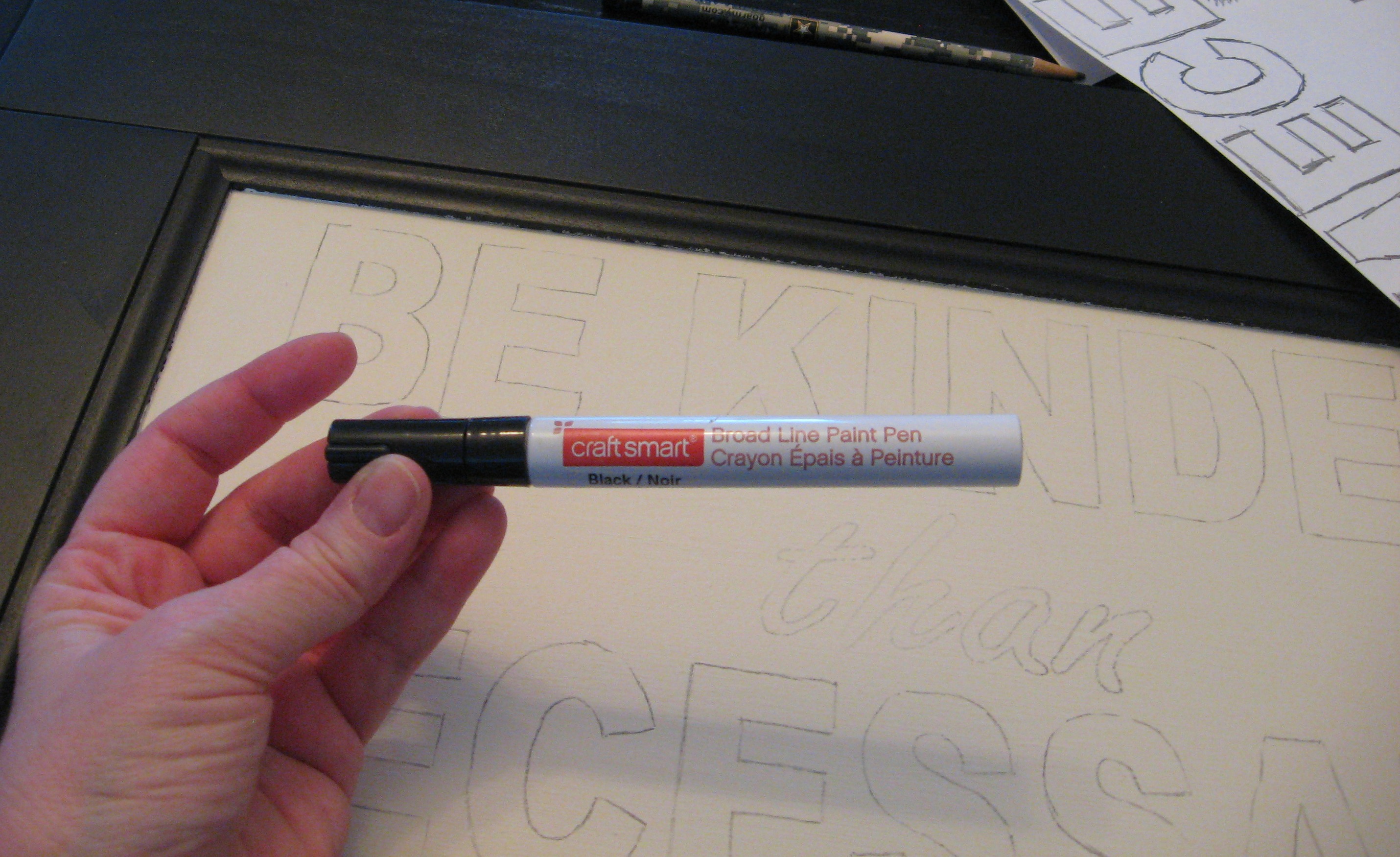
Here it is with the letters outlined.

Then begin filling it all in with craft paint and a small brush. Depending on the color, quality of paint and surface you’re painting on, it will take 2-3 coats to get good coverage.

Use a small brush and the background color to clean up any mistakes. When it is all dry, you can sand it to get a distressed look.

Handpainting signs is so much easier than it seems. It is a great way to create inexpensive decor and change things up for different holidays and season. Here are a few more examples of how much fun handpainting signs can be:



A PYP Best Blog: Dairy-free, egg-free vegan chocolate chip cookies!
Just in case you missed this article on making dairy-free, egg-free vegan chocolate chip cookies the first time we shared it a couple of years ago, we are republishing it. After Candi wrote this blog originally, we got an awesome response. This is one of the PYP Best Blogs!
We have diary allergies in my family. I inherited it from my dad, and then passed it along to all of my kids. For the most part, it hasn’t been bad – in fact, I made it all the way to 16 before I was officially diagnosed. My kids have had symptoms to varying degrees, although one has now outgrown it and does fine with dairy. And for most of my life, I have just lived with it and not worried about following a special or strict diet. I just could not give up cheese and ice cream! 🙂

Dairy-free, Egg-free Vegan Chocolate Chip Cookies
(I believe these would qualify as vegan, as long as you use vegan chocolate chips)
1/2 c granulated sugar
1/2 c brown sugar, packed*
2 Tbsp whole flax seeds**
3 Tbsp plain milk alternative (I used So Delicious unsweetened coconut milk, no hint of coconut flavor in the cookies)
2 Tbsp plain dairy-free yogurt (I used Silk soy yogurt)
1/2 tsp vanilla extract
1/2 tsp apple cider vinegar
2 c bread flour***
1/2 tsp baking powder
1/2 tsp baking soda
3/4 tsp salt
1 1/2 cups semi-sweet chocolate chips (I used vegan semi-sweet chocolate chips from Whole Foods Market)
A PYP Best Blog: A Freezer Meal Plan – The Chicken Edition
Just in case you missed this article on making 9 freezer meals in 3 hours for about $50 the first time we shared it a couple of years ago, we are republishing it. After Trish wrote this blog originally, we got an awesome response. This is one of the PYP Best Blogs!
My daughter had a baby this week and I had the opportunity to prepare a few freezer meals for her family. I took the time to write out a plan that I thought would be of interest to our readers.
Keep reading to get the details to prepare 9 freezer meals in 3 hours for about $50.
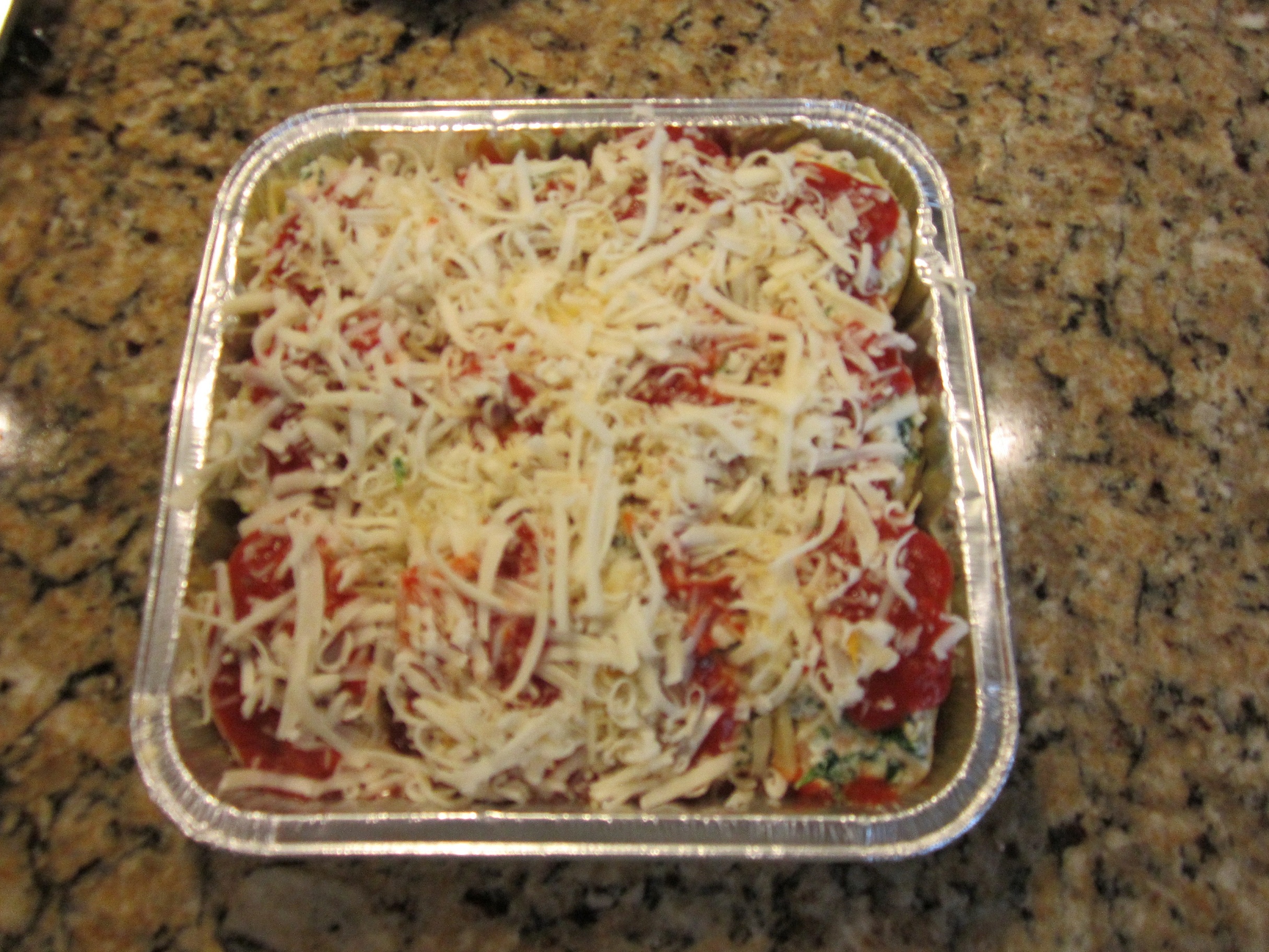
You’ll find a complete grocery list and detailed step by step instructions to load your freezer with 9 chicken based meals such as…
Cheesy Chicken Shells
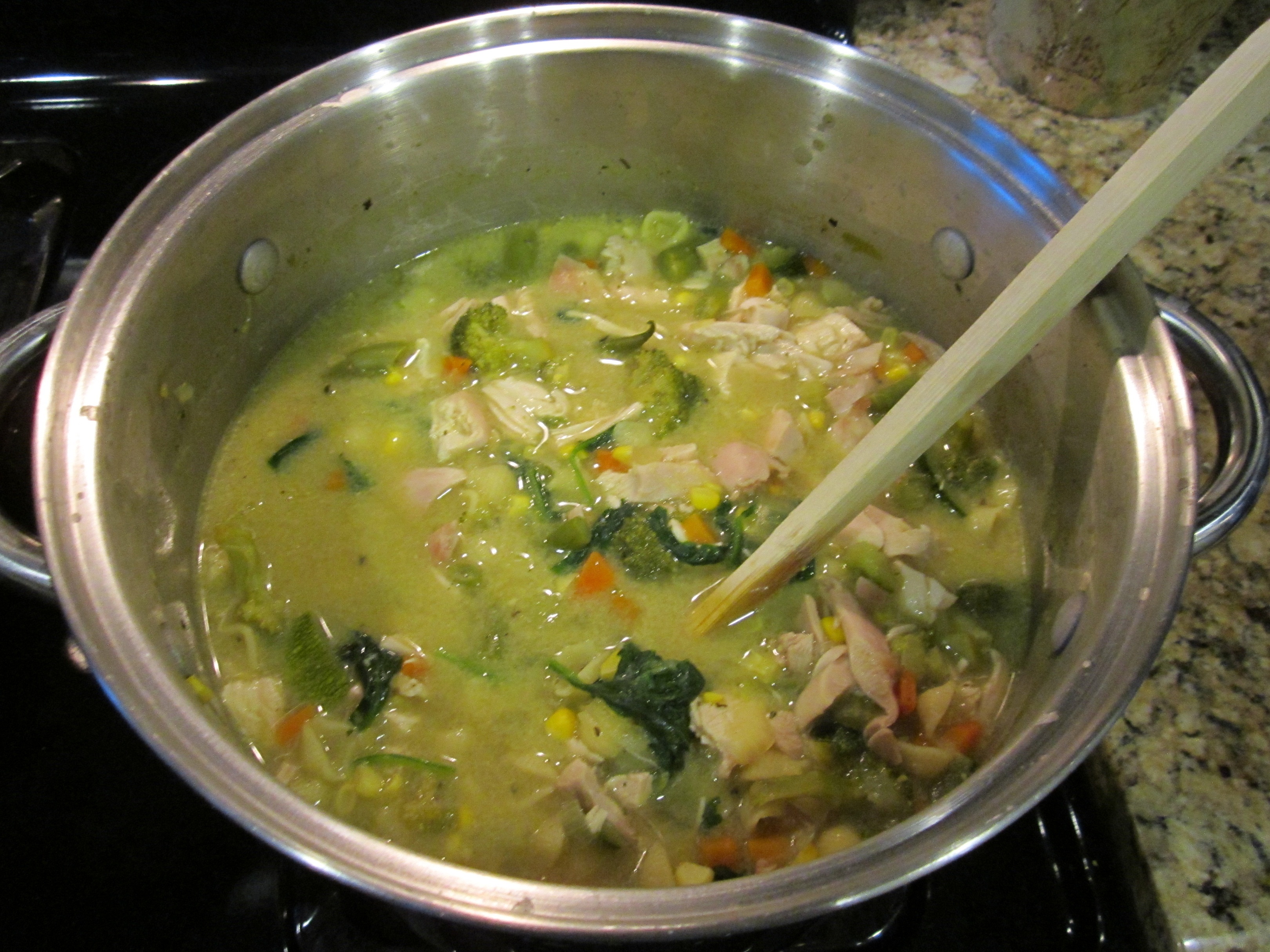
Chicken and Veggie Soup
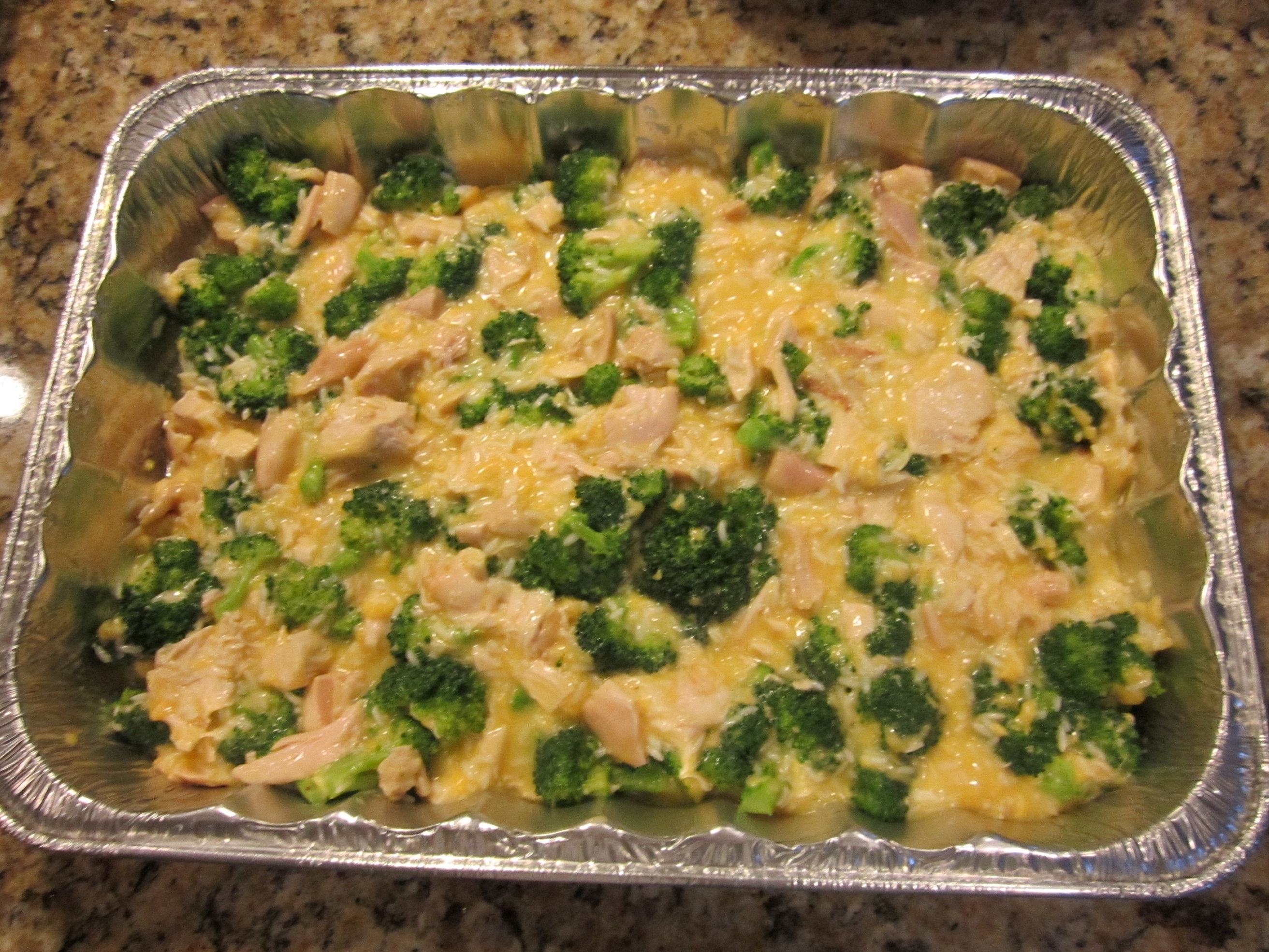
Cheesy Chicken and Rice Bake
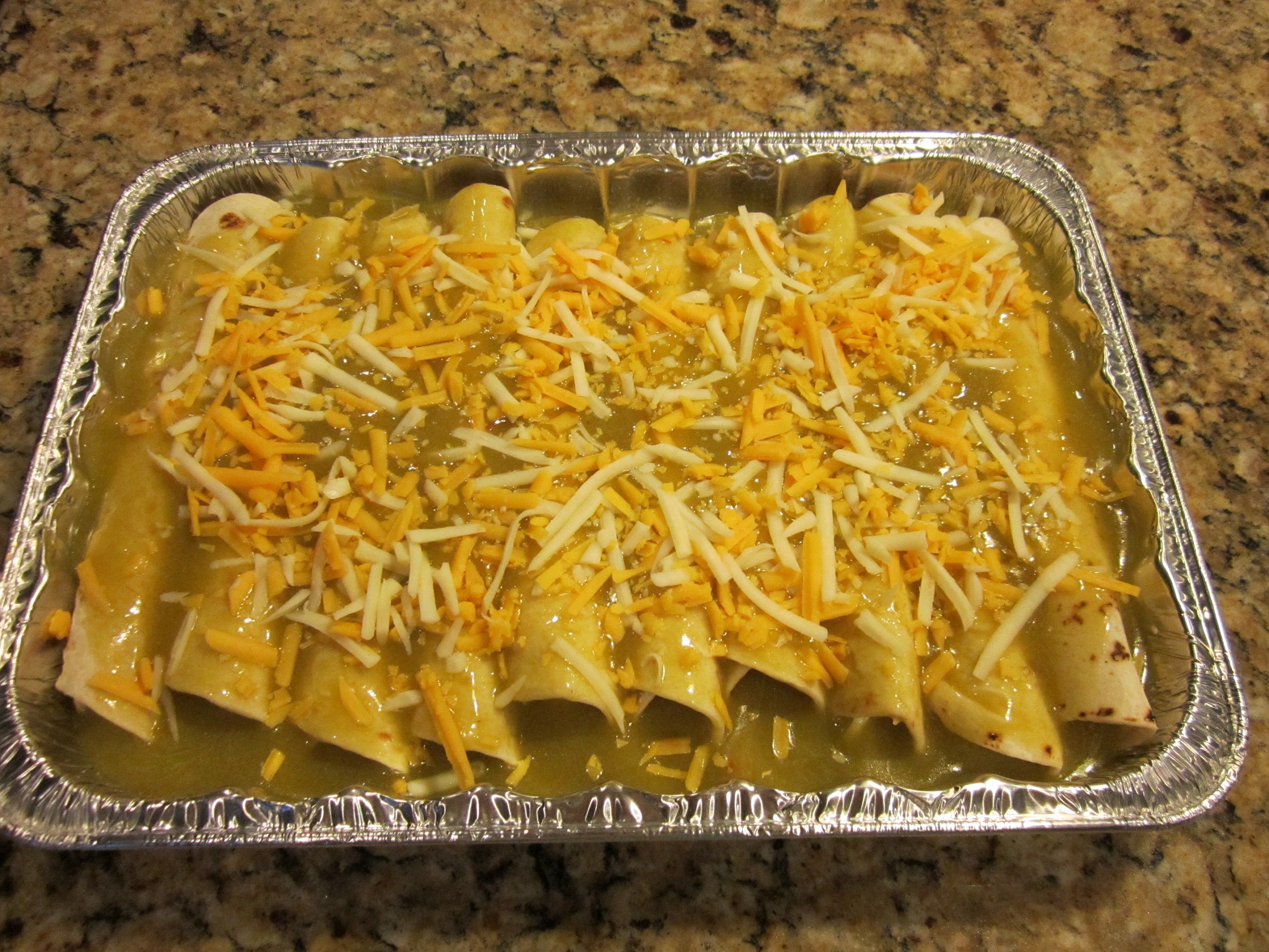
Honey Lime Chicken Enchiladas
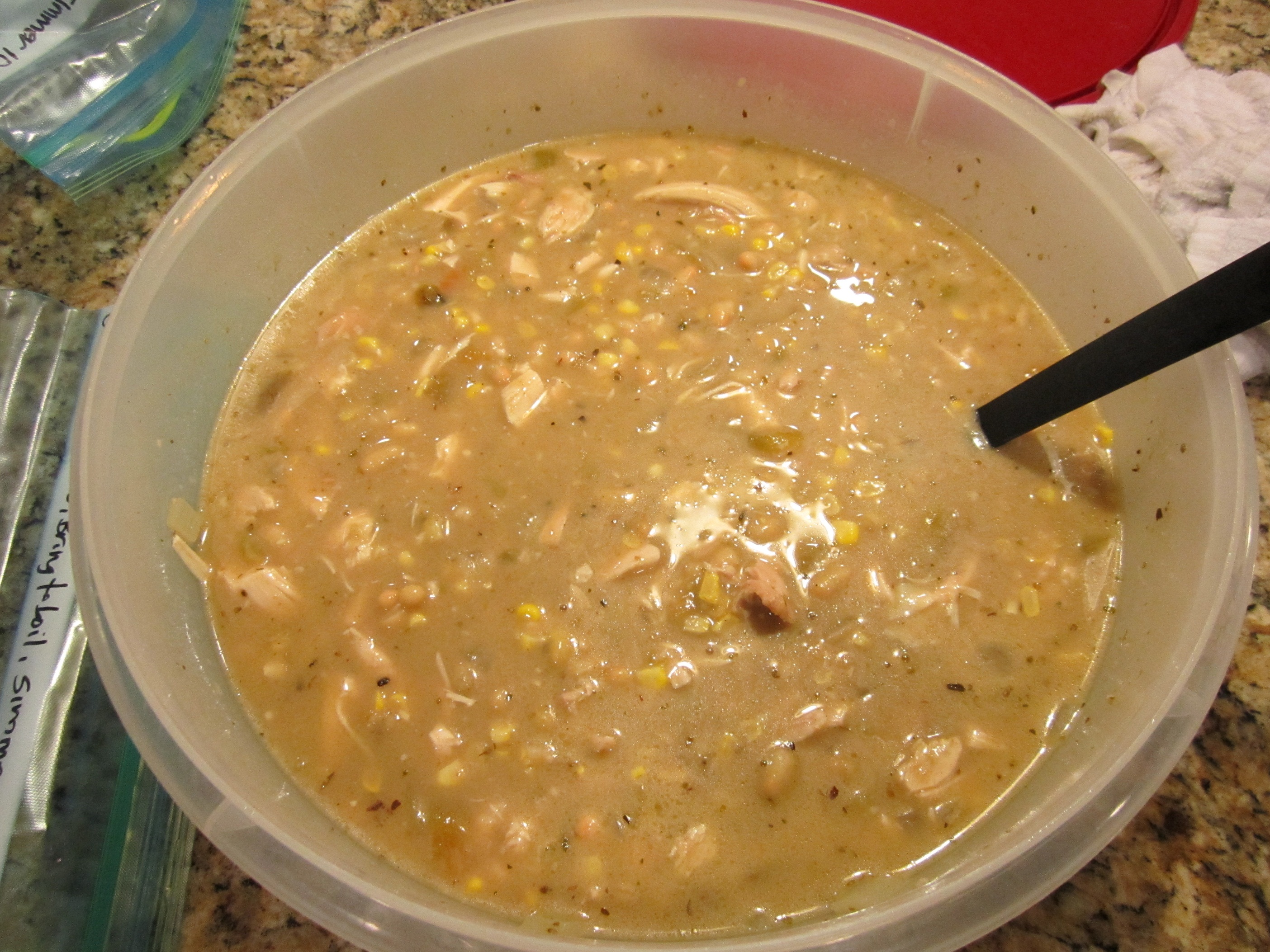
Chicken Chili
The Grocery List:
3 whole roasting chickens (Approx 4-5 pounds each)
1/3 cup parmesan cheese
4 cups (1 pound) shredded cheddar cheese
¾ cup shredded mozzarella
4 cups (1 pound) shredded Monterey jack cheese
15 oz ricotta cheese
10 oz package frozen spinach leaves, thawed
5 cups assorted veggies of your choice, finely diced. Example: green beans, corn, peas, broccoli, zucchini, cabbage, mushrooms. Check your fridge and freezer. You might already have them!
Small bag (9 oz) of fresh baby spinach leaves.
½ lb broccoli florets
1 green bell pepper
1 red bell pepper
4 small onions or 2 large
2 or 3 stalks of celery
1 large carrot
2 limes
1 lemon
1/3 cup raisins
3 – 15oz cans of white beans. Navy or cannellini.
7 oz can diced green chilies
5 quarts plus 1 can chicken broth I used this homemade veggie broth powder. BIG money saver!
1 – 8.75 oz can apricots
1 large or 2 small cans green enchilada sauce
15 oz can tomato sauce
1 can condensed cheddar cheese soup
2 cans cream of chicken soup
½ pound dried pasta in small shapes (stars, mini shells, etc)
12 oz package thin spaghetti noodles
12 uncooked jumbo pasta shells
10 flour tortillas
1 ½ cups uncooked long grain rice
Check the pantry to make sure you have:
1 egg
garlic
honey
oil
Creole seasoning
Ground white pepper (black is fine if you don’t have white)
Cumin
Dried oregano
Cinnamon
Garlic powder
Seasoned salt
Cayenne pepper
Chili powder
Curry powder
Dried basil
Bay leaves
You’ll need a few gallon sized Ziploc bags and at least one 8X8 pan and one 9X13 pan that can go into the freezer.
For less stress and best results, start with a clean kitchen and an empty dishwasher.
You should be able to pull these all together within 3 hours or as soon as you can handle the chicken to remove it from the bones.
Preheat the oven to 400 degrees while you rinse and pat dry the chickens.
Place them in a large roasting pan. Rub them down with some olive oil or vegetable oil and sprinkle them with some Creole seasoning or seasoned salt, your choice. Just trying to give them a hint of flavor and retain the juices by crisping up the skin.
Place the chickens in the oven and roast for 30 minutes. Then reduce the oven temperature to 350 and continue roasting for 45 minutes to an hour, until juices run clear or thermometer placed in thickest part of thigh reaches 165 degrees.
When they’re done, remove from oven and place the pan on a cooling rack to help them cool off faster.
While the chickens are roasting and cooling put together each meal.
Meal 1 and 2:
Start the Chicken and Veggie Soup.
In a very large stock pot, heat 2 tablespoons of oil, over medium heat.
Chop one onion, the celery, the carrot, half of the green bell pepper and half of the red pepper. Toss them in the pot with the heated oil. Add 2 Tablespoons of minced garlic, 1 Tablespoon dried basil, 2 teaspoons Creole seasoning, and 2 bay leaves.
Sauté veggies for about 4 minutes.
Add the 5 cups of finely diced assorted veggies and a pinch of red pepper flakes. Sauté for 1 minute.
Add 3 quarts of chicken broth.
Turn off the heat and let stand.
Meal 3:
Start the Chicken Chili.
Heat 1 Tablespoon oil in large pot over medium heat. Add 1 chopped onion and 3 cloves minced garlic and sauté until onions are soft, about 5 minutes. Add the canned green chilies, 1 Tablespoon ground cumin, 1 Tablespoon dried oregano, ½ teaspoon cinnamon, dash of cayenne pepper and dash of white pepper. Saute 5 more minutes. Drain 2 cans of white beans and add them to the onion and spice mixture. Add five cups chicken broth.
Take the third can of white beans and puree the beans with their liquid in a blender or food processor. Add this to the pot. Bring to a boil.
Remove from heat, stir in 2 cups shredded Monterey jack cheese. Stir until cheese is melted.
Let stand.
Put a large pot of water on to boil for the pasta shells.
If you need a pot, you can put the chicken chili in a large bowl to cool and rinse and reuse that pot.
While you wait for the water to boil and the shells to cook…
Meal 4:
Mix the ingredients for the Cheesy Chicken and Rice Bake
In a large bowl combine the cheddar cheese soup, 2 cups water, 1 cup shredded cheddar cheese, ¾ cup uncooked long grain rice, ½ pound broccoli florets.
Set aside.
When the pasta shells are done, rinse with cold water and lay out on waxed paper so they won’t stick together.
Fill that pot with water again and bring to a boil for the spaghetti. Break the spaghetti into fourths and cook according to package directions. Do not overcook! When it’s done, drain and rinse with cold water.
While you wait for the water to boil and the spaghetti to cook…
Meal 5:
Make the filling for the Cheesy Chicken Shells
Squeeze the water from the thawed spinach and then chop it finely.
In a medium bowl, combine the ricotta, 1 egg (slightly beaten), the thawed spinach, 1 teaspoon garlic powder, and 1 Tablespoon dried oregano. Mix until well combined. Stir in ¼ cup parmesan and ¼ cup shredded mozzarella cheese.
Set aside.
Meal 6 and 7:
Make the Chicken Spaghetti
In a large bowl combine the 2 cans cream of chicken soup, 2 cups shredded cheddar cheese, the other half of the red bell pepper (chopped), the other half of the green bell pepper (chopped), one chopped onion, 2 cups chicken broth, 1 teaspoon seasoned salt, black pepper, pinch of cayenne pepper and the cooked spaghetti. Mix well. Set aside.
Meal 8:
Fruity Curried Chicken
In a medium saucepan, heat ¾ cup long grain white rice, 1 chopped onion and 2 ½ cups chicken broth to a boil. Stir, cover and reduce heat to low. Simmer on low for 18 minutes without lifting lid. Then turn off the heat.
While the rice cooks, it’s time to pick all that chicken off the bones. Get as much chicken off as you can and put it in a big bowl. No need to worry about the size for now. Just get it off the bones.
Save all the skin and bones for later. Just leave them in the roasting pan for now.
Now let’s finish a few things up.
Turn the Chicken and veggie soup back on. Bring it to a boil and add the ½ pound of small pasta. Continue to boil until the pasta is slightly underdone. Turn off heat.
Meanwhile, Grab a couple of handfuls of chicken and chop it in large chunks (1/2 to 1 inch sized pieces). Add 2 cups of the chunks to the Chicken Chili. Mix well.
Divide the Chicken Chili between two gallon size freezer bags. Seal tightly, expelling as much air as possible.
Label bags as follows – Chicken Chili: Thaw in fridge. Bring to boil, reduce heat, simmer 10 minutes.
Lay bags flat and place in freezer. Both bags = 1 meal. I like to tape the bags together since they are for one meal.
Back to the Fruity Curried Chicken –
Grab another couple of handfuls of chicken and chop it into large chunks. Put 2 cups of the chunks into the pan of cooked rice. Drain the can of apricots and cut them into chunks. Put the apricots, ¾ teaspoon salt, 1 teaspoon curry powder, ¼ teaspoon black pepper, juice from half the lemon, and 1/3 cup raisins in the saucepan with the rice and chicken. Gently stir till combined.
Place in gallon sized Ziploc bag. Seal tightly, expelling as much air as possible without smashing the rice too much. Flatten the bag to conserve freezer space.
Label bag as follows – Fruity Curried Chicken: Thaw, place in baking dish treated with non stick spray. Cover with foil. Bake for 1 hour at 350 degrees. Check the dish at 30 minutes. Add small amount of water if the rice is becoming too dry.
Place in freezer.
Finish up the Chicken and Veggie Soup –
Grab a couple of handfuls of chicken and chop into large chunks. Add 3 cups to the soup. Stir in the fresh spinach leaves until wilted. Let the soup cool while you finish other dishes.
Finish up the Cheesy Chicken Shells –
Grab one hand full of the chicken. Chop it very finely. Add 1 cup to the ricotta mixture and mix well.
In 8X8 baking dish (foil pan if you prefer) pour half the can of tomato sauce. Fill the cooked shells with the ricotta mixture. Place the stuffed shells in the pan, on top of the tomato sauce. Pour remaining tomato sauce evenly over the stuffed shells. Sprinkle ½ cup shredded mozzarella cheese and the remaining parmesan over the shells. Cover tightly with foil and label as follows – Cheesy Chicken Shells: Thaw, remove foil, bake 30 – 45 minutes at 350 degrees, until center shells are heated through.
Place pan in freezer.
Finish up the Chicken Spaghetti-
Grab a couple of handfuls of chicken and chop into smallish pieces, ½ inch or less. Add two cups of chicken pieces to the bowl of chicken spaghetti. Mix well. Divide in half between two 8X8 baking dishes (foil pans if you prefer). Top each pan with ½ cup shredded cheddar cheese. Cover tightly with foil. Label as follows:
Chicken Spaghetti: Thaw, Remove foil, bake at 350 degrees for 45 minutes or until hot and bubbly throughout.
Place pans in freezer.
Note: You can also put each half of the recipe into a gallon bag. Place the additional cheese for topping in smaller bags and tape one to each of the gallon sized bags.
Finish up the Cheesy Chicken and Rice Bake –
Grab two handfuls of chicken and chop it into large chunks.
Add 2 cups of chicken to the bowl of broccoli, rice and soup mixture. Mix well.
Place in gallon sized Ziploc bag. Seal tightly, expelling as much air as possible and flattening the bag to save freezer space. Label as follows:
Cheesy Chicken and Rice Bake: Thaw, place in 9X13 pan treated with nonstick spray, cover tightly with foil, bake 45 minutes at 375 degrees.
Place bag in freezer.
Note: This could also be frozen in a pan rather than a bag.
Meal 9: Make the Honey Lime Chicken Enchiladas.
Combine 6 Tablespoons honey, 4 ½ Tablespoons lime juice, 1 Tablespoon chili powder, ½ teaspoon garlic powder. Mix completely.
Chop the remaining chicken very finely. Add it to the above mixture and stir well.
Let that marinate while you package the Chicken and Veggie Soup.
Divide the Chicken and Veggie Soup evenly between two gallon sized freezer bags. Seal tightly, expelling as much air as possible. Label as follows:
Chicken and Veggie Soup: Thaw, Bring to a boil and simmer 10 minutes.
Each bag is one meal. Two bags = two meals.
Place bags in freezer.
Finish up the Enchiladas.
Pour half the large can (or 1 small can) enchilada sauce on the bottom of a 9X13 baking dish which has been treated with non stick spray.
Place 10 flour tortillas on counter top.
Evenly divide the marinated chicken among the tortillas.
Top each one with a bit of shredded Monterey Jack cheese, reserving about a 1 cup of cheese.
Roll each tortilla tightly and place in pan on top of enchilada sauce.
Pour remaining enchilada sauce on top of rolled tortillas.
Top with remaining Monterey Jack Cheese.
Cover tightly with foil and label as follows:
Honey Lime Chicken Enchiladas: Thaw, Remove foil, bake at 350 degrees for 30 minutes or until heated completely through.
You’re done!
Now, about those bones…you can turn them into delicious broth for the next time you do this. See this link for instructions.
If you don’t want to do that right now, you can put all the bones and the drippings from the pan into freezer bags and put them in the freezer to make broth another day.
Chicken and Veggie Soup – my original recipe
Chicken Chili – my original recipe
Honey Lime Chicken Enchiladas – posted by Wengmama and a popular favorite here on PYP
Cheesy Chicken and Rice Bake – adapted from a recipe here on PYP
Chicken Spaghetti – adapted from Pioneer Woman Cooks website
Cheesy Chicken Shells – adapted from a Weight Watcher’s recipe
Fruity Curried Chicken – from Once a Month Cooking by Mimi Wilson and Mary Beth Lagerborg
A PYP Best Blog! Free DIY pajamas!
Just in case you missed this article on making free DIY pajamas the first time we shared it a couple of years ago, we are republishing it. After Trish wrote this blog originally, we got an awesome response. This is one of the PYP Best Blogs!
I’ve had a plan brewing for a while now to re-purpose a pile of t-shirts into pajamas for my son.
A few days ago I was making my way around blog land and came across an idea to make leggings for baby girls. So Cute! But I don’t have any sweet baby girls anymore. Just one 5 year old boy who is growing like a weed! All arms and legs!

Our family participates in a few company sponsored charity events each year. We always get at least one promotional t-shirt per family member for each event. Sometimes two! That adds up to a pretty large stack of t-shirts pretty fast.
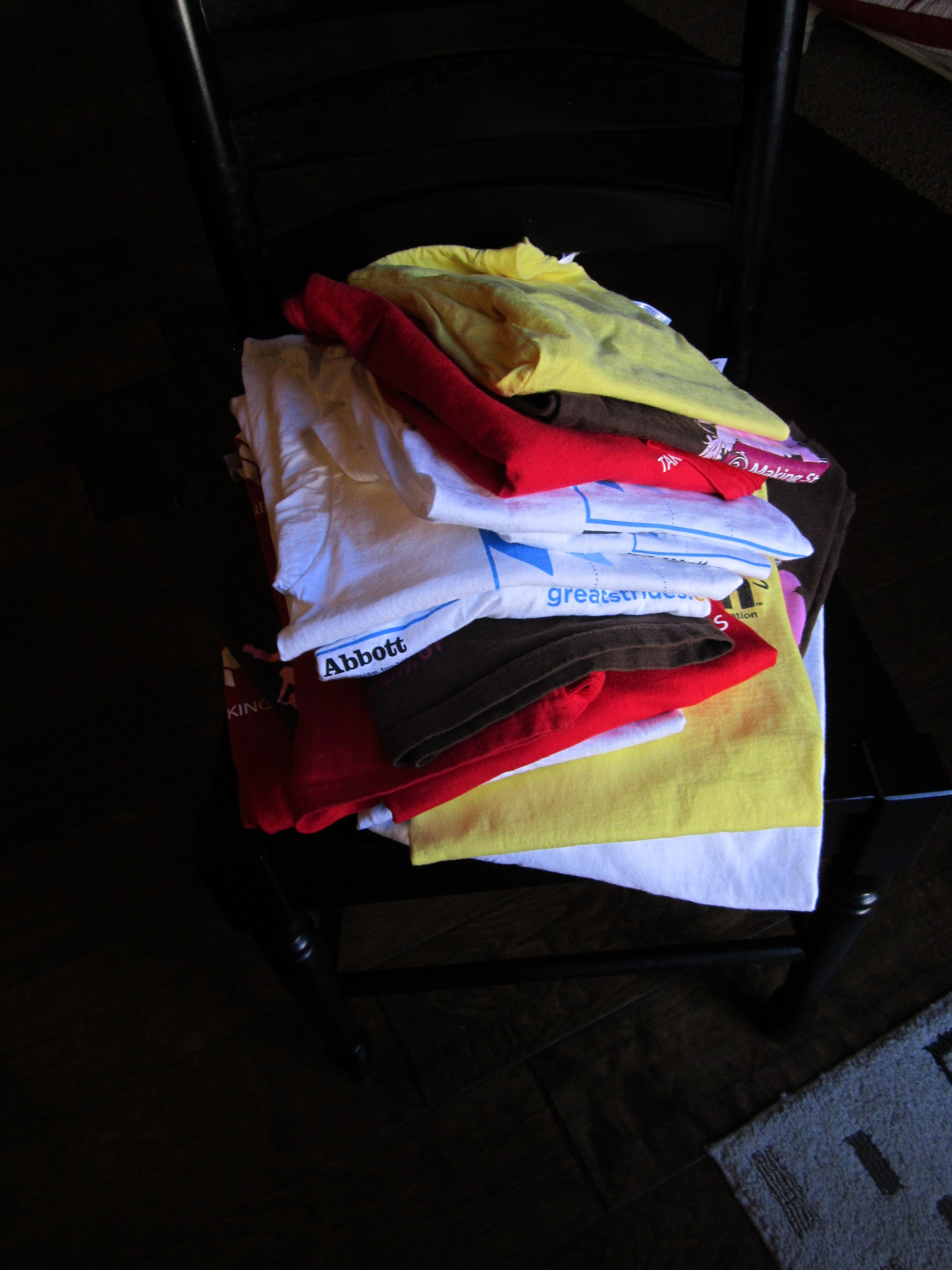
I thought this would be a great way to put them to good use. I love a cute pair of PJs as much as the next mom, but let’s face it, all they do is sleep in them. Well, and occasionally they might get dragged to the store for an emergency milk run at 6 am in them. But still, pajamas don’t really NEED to be high fashion.
So, using that blog as a starting point, I decided to make some pajamas.
I took one of the largest t-shirts (Adult size L) and cut off the sleeves, neck and shoulder seams and then up each side of the shirt to harvest two pieces of fabric as large as possible.
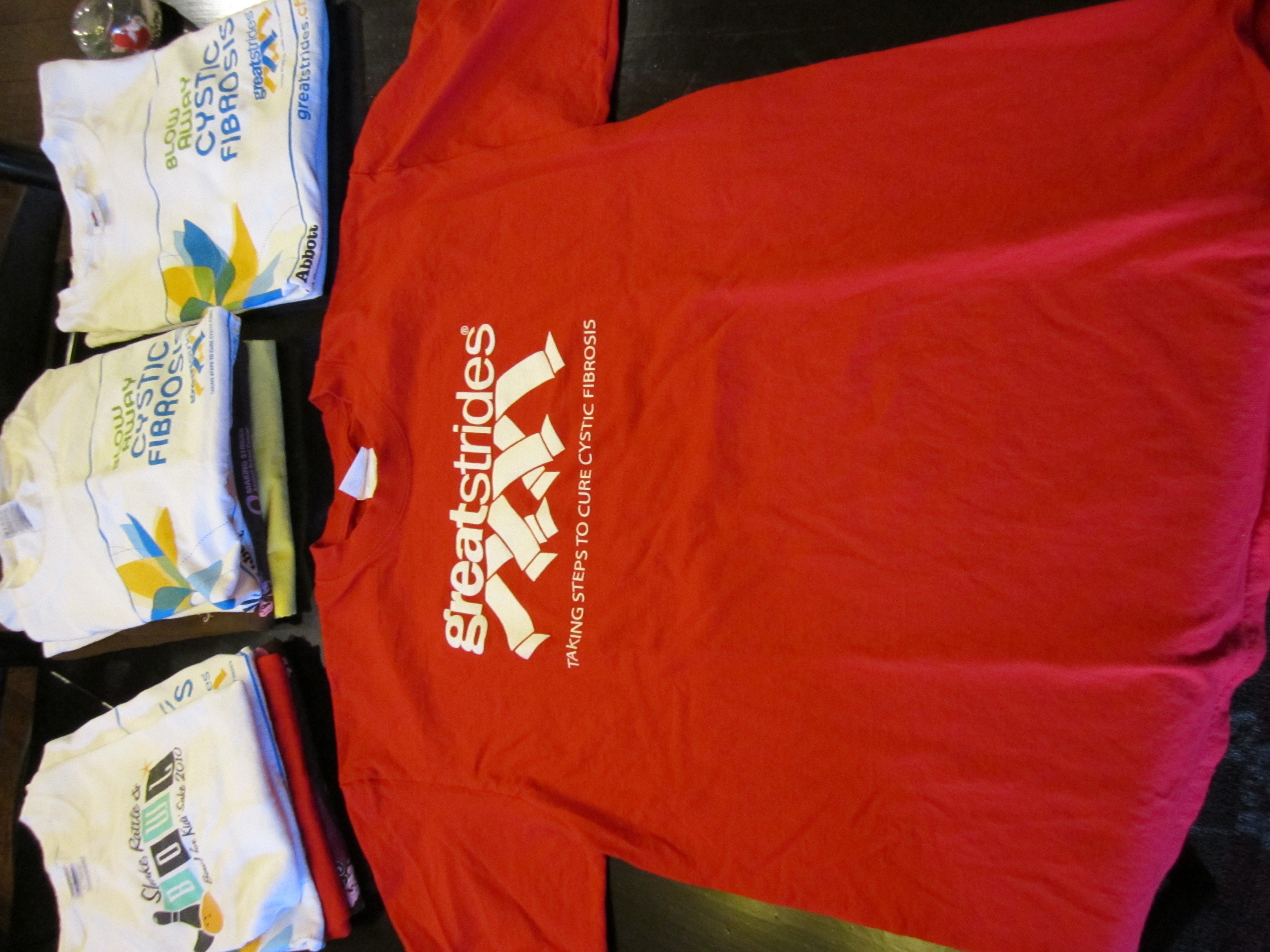
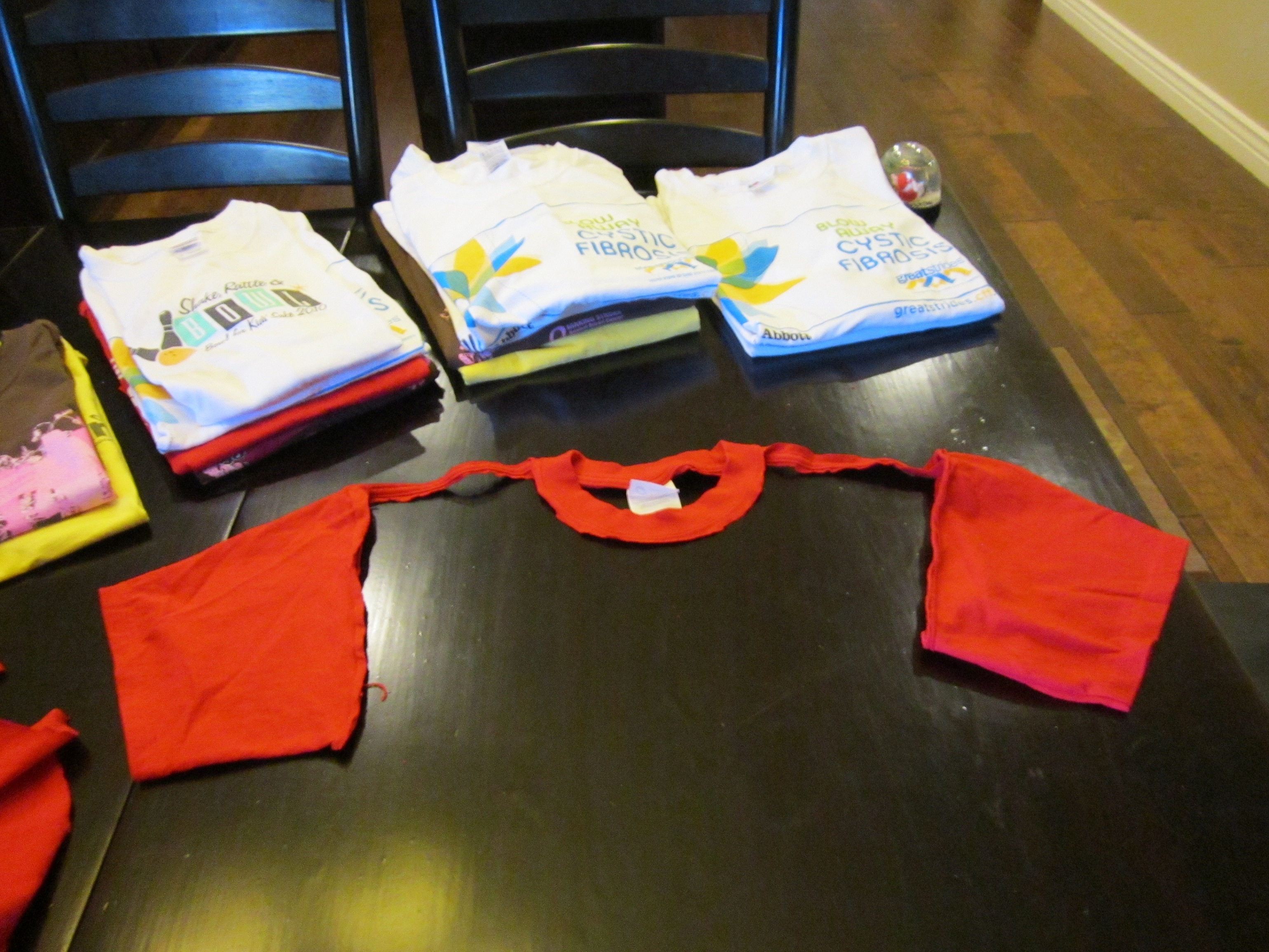
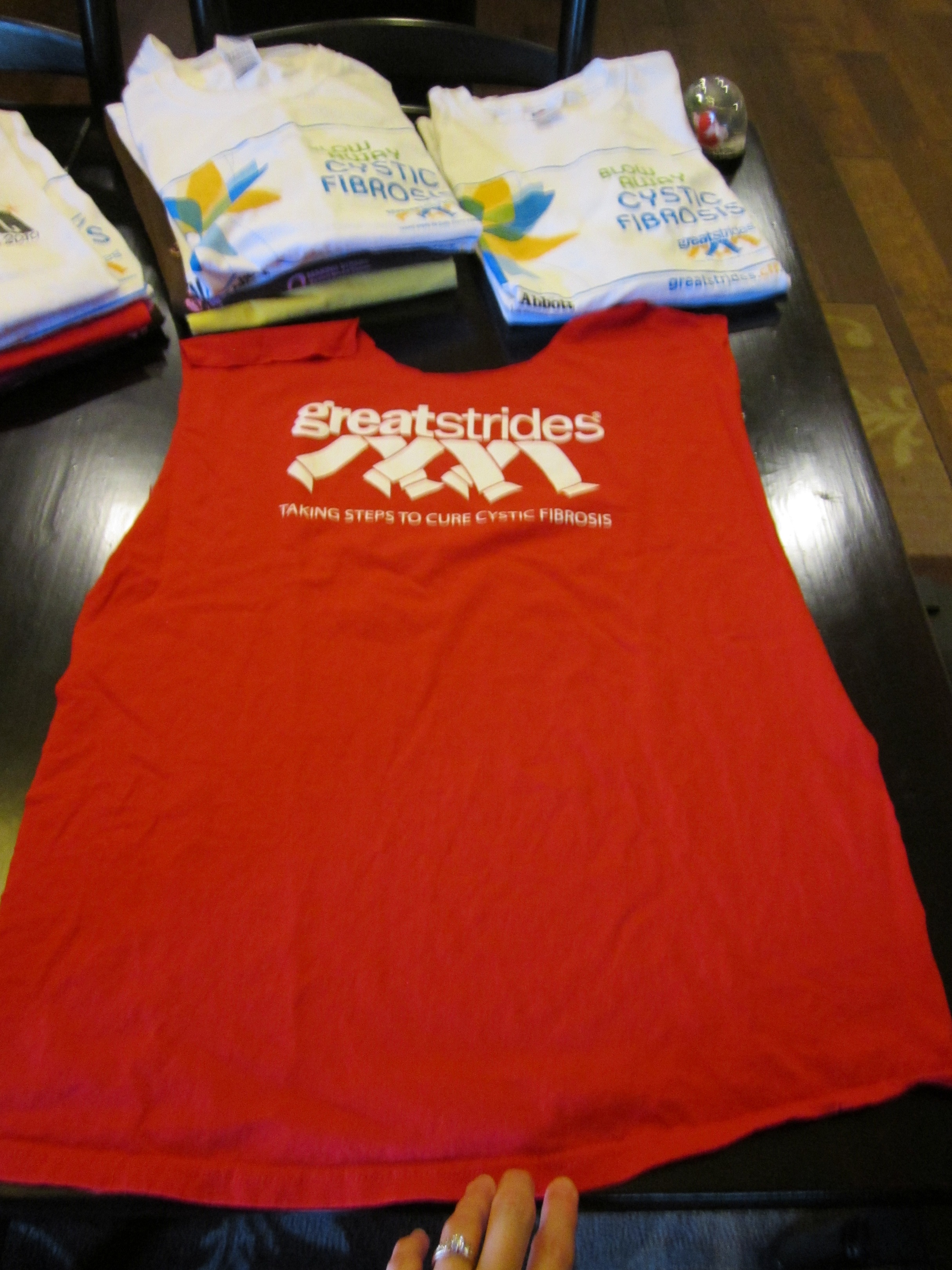
Now fold what was the back of the shirt in half with the right sides together and place it on a flat surface.
Next, fold what was the front of the shirt in half with the right sides together and lay it on top of the first piece with the folds lined up on top of each other. And the t-shirt hems lined up at the bottom.
I grabbed the pair of pajama pants that currently fit him best (But still too small! ugh!), fold them in half and line the straight side up on top of the folds of t-shirt fabric.

I wanted to take advantage of the hem at the bottom of the t-shirt and make it the hem of the pants. Less sewing for me! And you will need about an inch or so at the top to create a waist band later. This gave me some extra length for future growth. Perfect!
Now, being careful to make sure you’re always cutting through 4 thicknesses of fabric, just cut about an inch above the top of the pants and then all along the crotch side all the way down to the hem, leaving about a half inch for seam allowances.
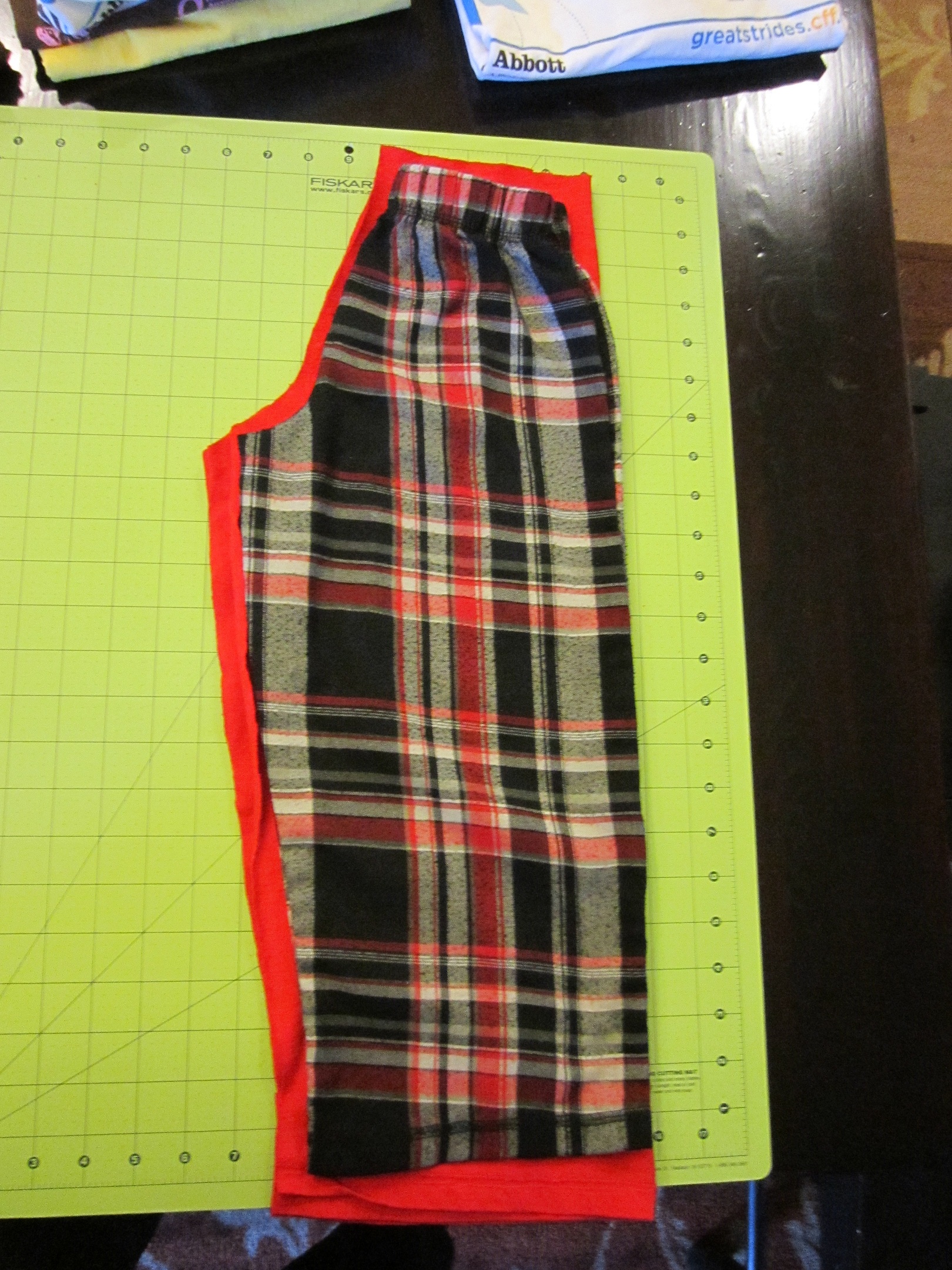
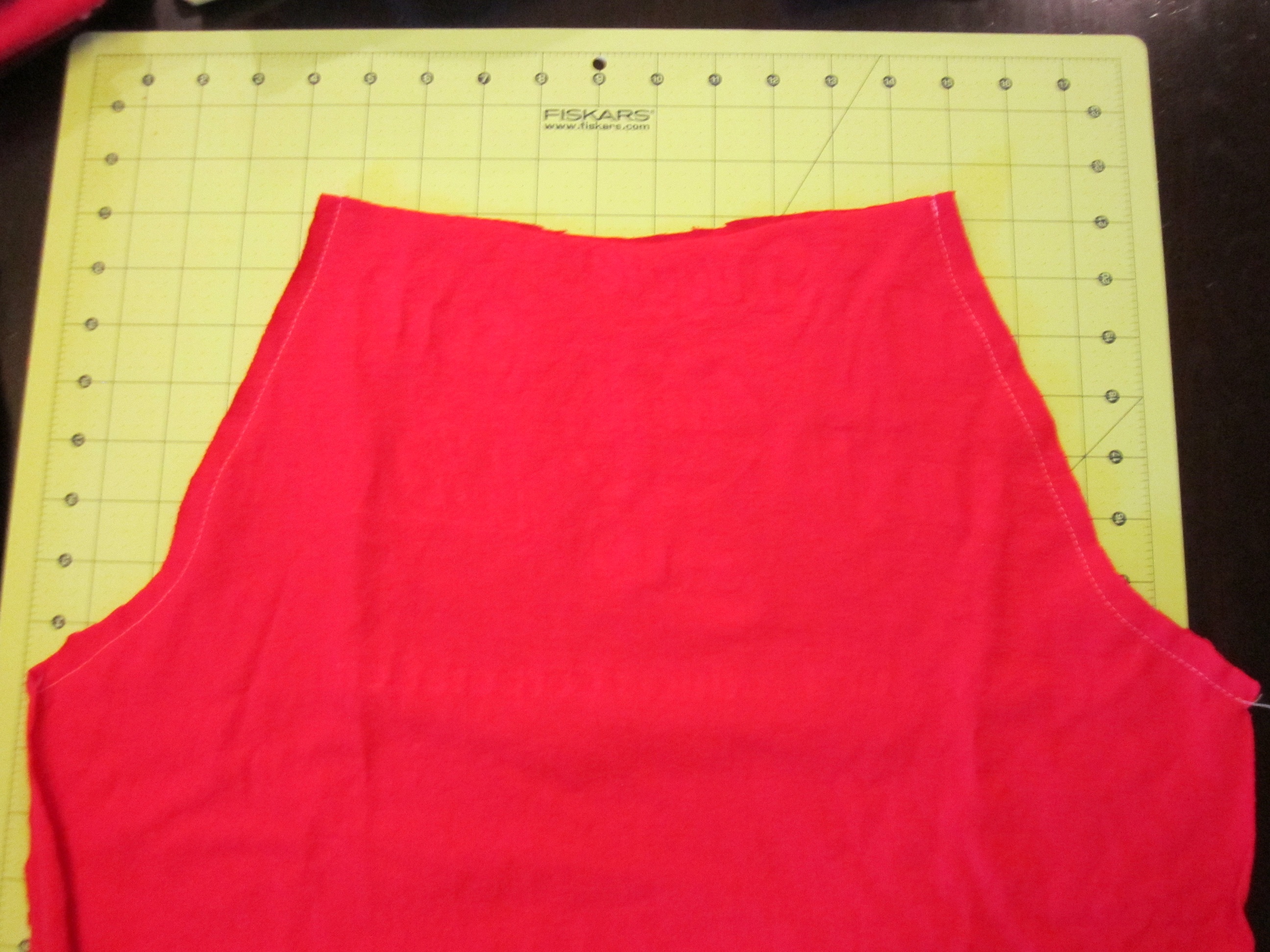
Open up the two pieces of fabric you just cut and line them up with right sides together. Stitch from the waist (top, unhemmed edge of pieces) to the crotch.
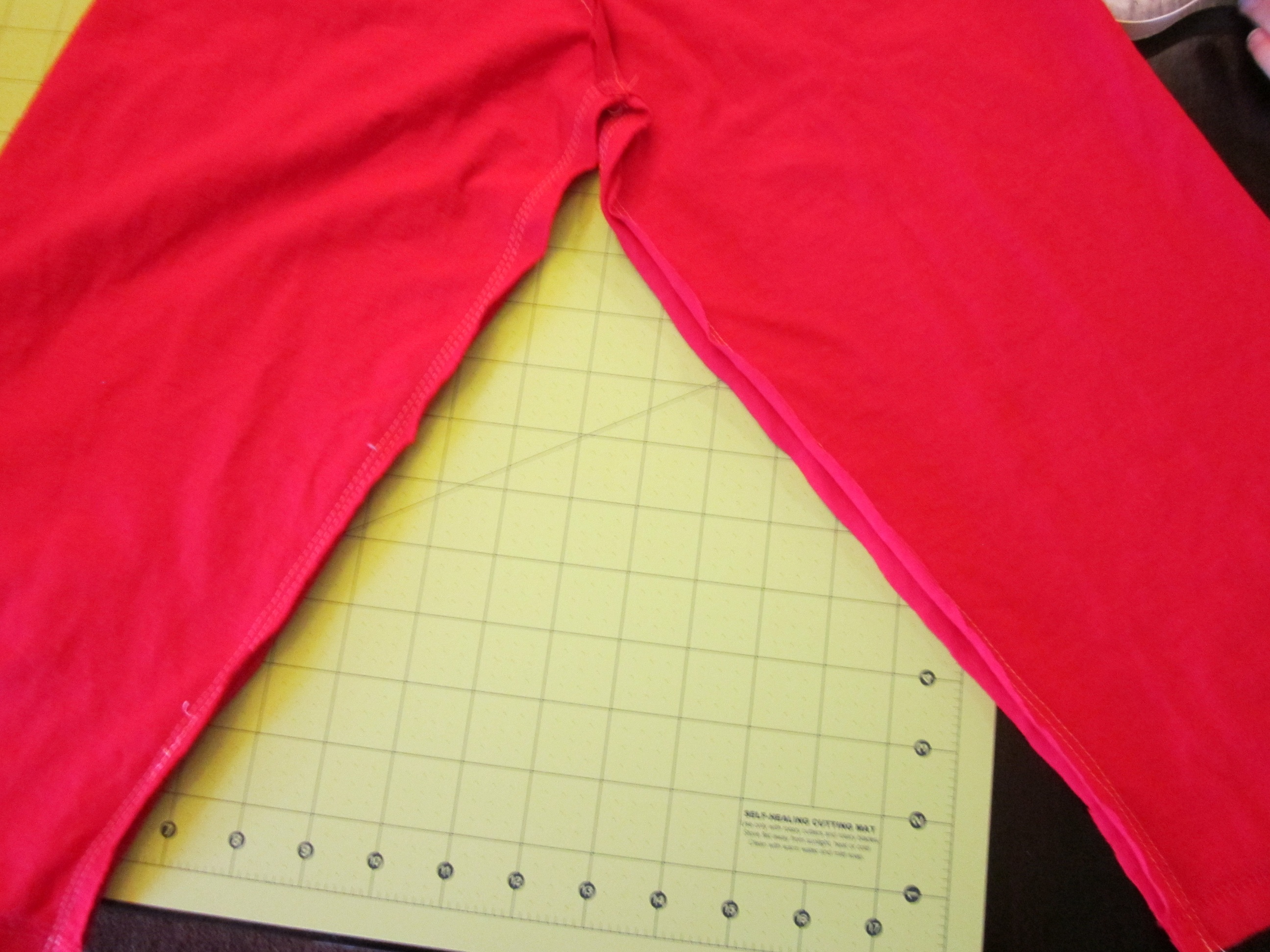
Next line the legs up and stitch the inseams. I made two lines of stitching for a little reinforcement. One at 5/8 inch and one at 3/8 inch.
For the waistband (forgot to take a picture of this step. sorry!) Just fold the cut edge down about an inch and stitch almost all the way around, leaving an opening for elastic. Cut a piece of 1/2 inch elastic to fit your child’s waist and insert it into the waistband casing you just created. Stitch the ends of the elastic together and then stitch the opening of the casing closed.
No need to finish any edges since these are made of t-shirt material and will not fray.
Matched up with the t-shirt that he had from the charity event, he now has a pair of pajamas that will last through another growth spurt or two so I can focus our clothing budget on school clothes! yay!

It took me about 20 minutes to make these, including time to take pictures.
He loves them!
Pin It
A PYP Best Blog: Make Your Own Ketchup
Just in case you missed this article on making your own ketchup the first time we shared it a couple of years ago, we are republishing it. After Trish wrote this blog originally, we got an awesome response. This is one of the PYP Best Blogs!
This is a penny pinching recipe in that it cost me nearly nothing to make. My garden has been abundant with Roma tomatoes.
But, of course, time has a value and this does take an investment of time.
This was my first time making homemade ketchup and I really think the flavor is worth the effort. It’s not at all like store bought ketchup. Much more complex flavor, which is wonderful for me since I don’t much care for regular ketchup.
This is adapted from a Jamie Oliver recipe based on the ingredients I had on hand today.
For 2 pints of ketchup you will need:
3 pounds of peeled, diced, Roma tomatoes
(Roma are best for this because of their low water content. You can use others but you’ll need an extra pound or so and after chopping them, allow them to drain in a colander for a bit. I’d like to try this next time with some of the different colored heirloom varieties. I’ll bet the colors and flavors would be quite unique.)
1 1/2 cups water
1 stalk celery, coarsely chopped
1 large onion, coarsely chopped
one inch piece of fresh ginger, coarsely chopped
2 cloves garlic, chopped
1/4 teaspoon red pepper flakes
1/4 teaspoon fennel seeds
1 Tablespoon dried basil
1 teaspoon ground coriander
2 whole cloves
salt (start with 2 teaspoons and adjust later)
1 teaspoon ground black pepper
3/4 cup plus 2 Tablespoons red wine vinegar
1/3 cup packed brown sugar
2 Tablespoons olive oil
Heat the olive oil in a large stock pot, over medium heat. Add the celery, onion, ginger, garlic, red pepper flakes, basil, coriander, fennel, cloves, salt and pepper. Cook until veggies are soft, about 10 minutes.
It’s okay to let them brown a bit. That’s flavor!
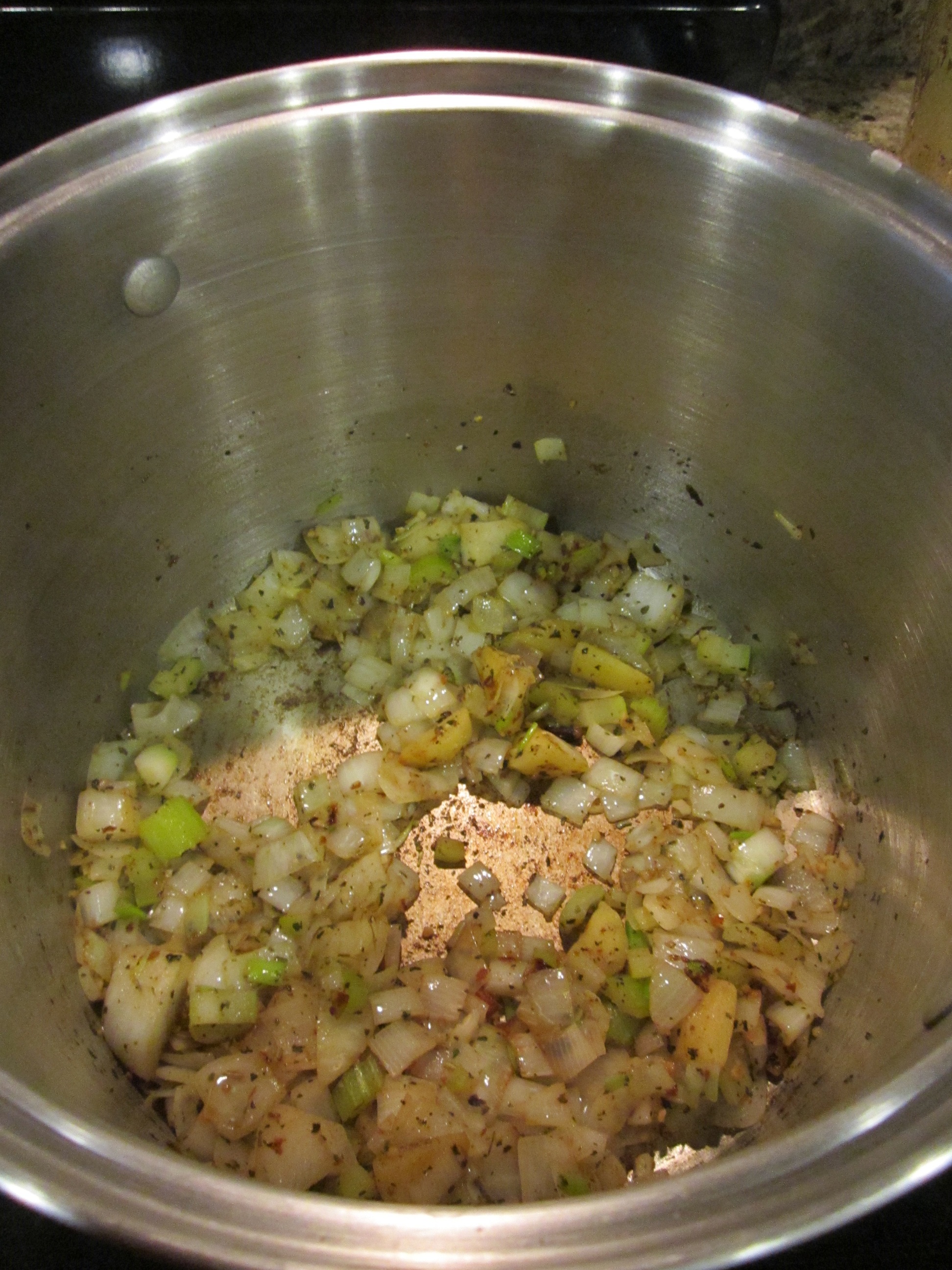
Now add the tomatoes and the water. Stir, scraping the bottom of the pot to deglaze the pot and get all the flavor stirred in.
Now you will reduce this by half. Here’s a little (admittedly OCD) trick that I use to judge when it has been reduced by half.
Put a skewer into the pot, all the way to the bottom.
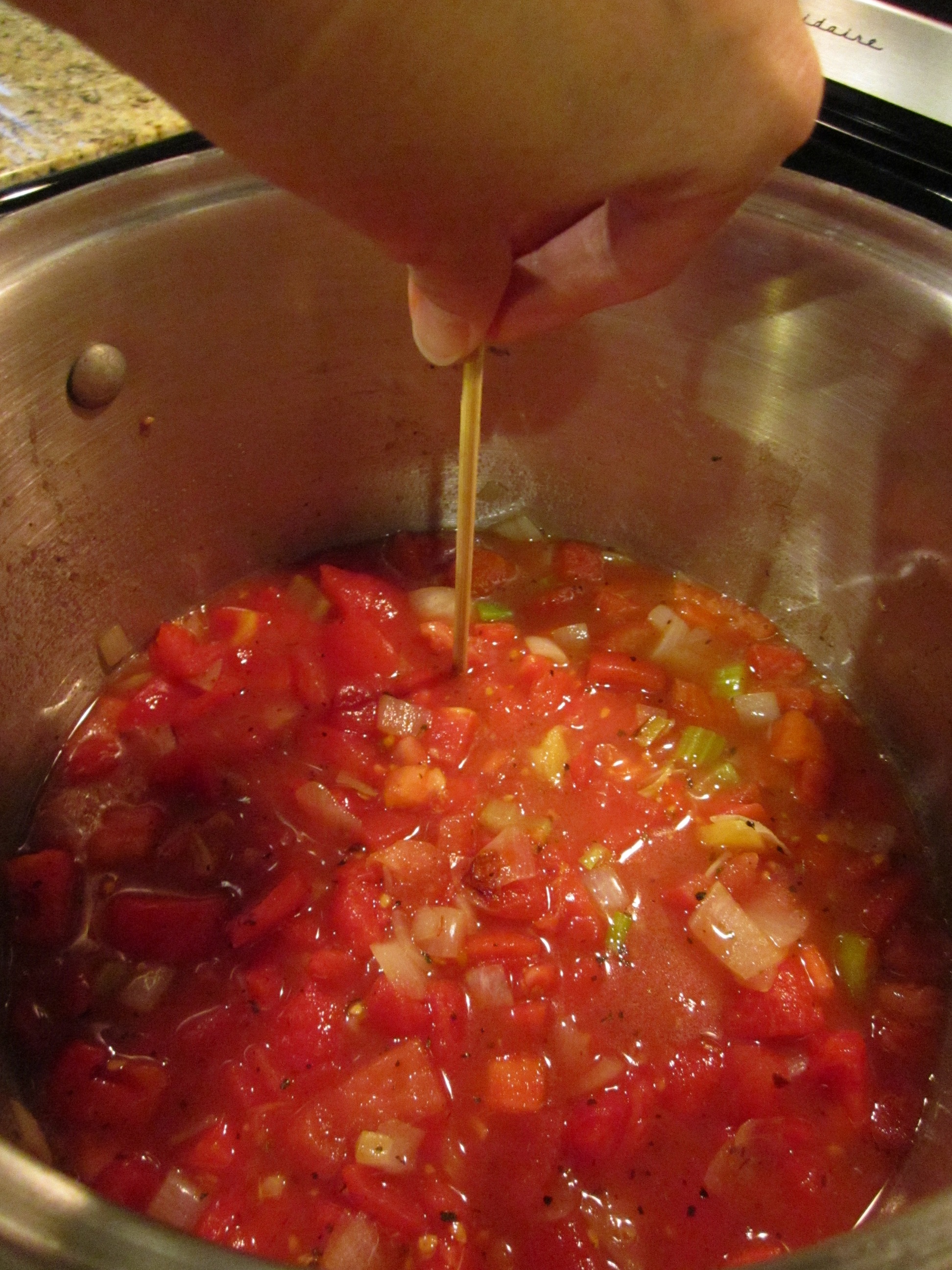
Now mark that skewer where the top of the sauce was so you’ll have a way to judge when it has reduced enough. I use a sharpie.
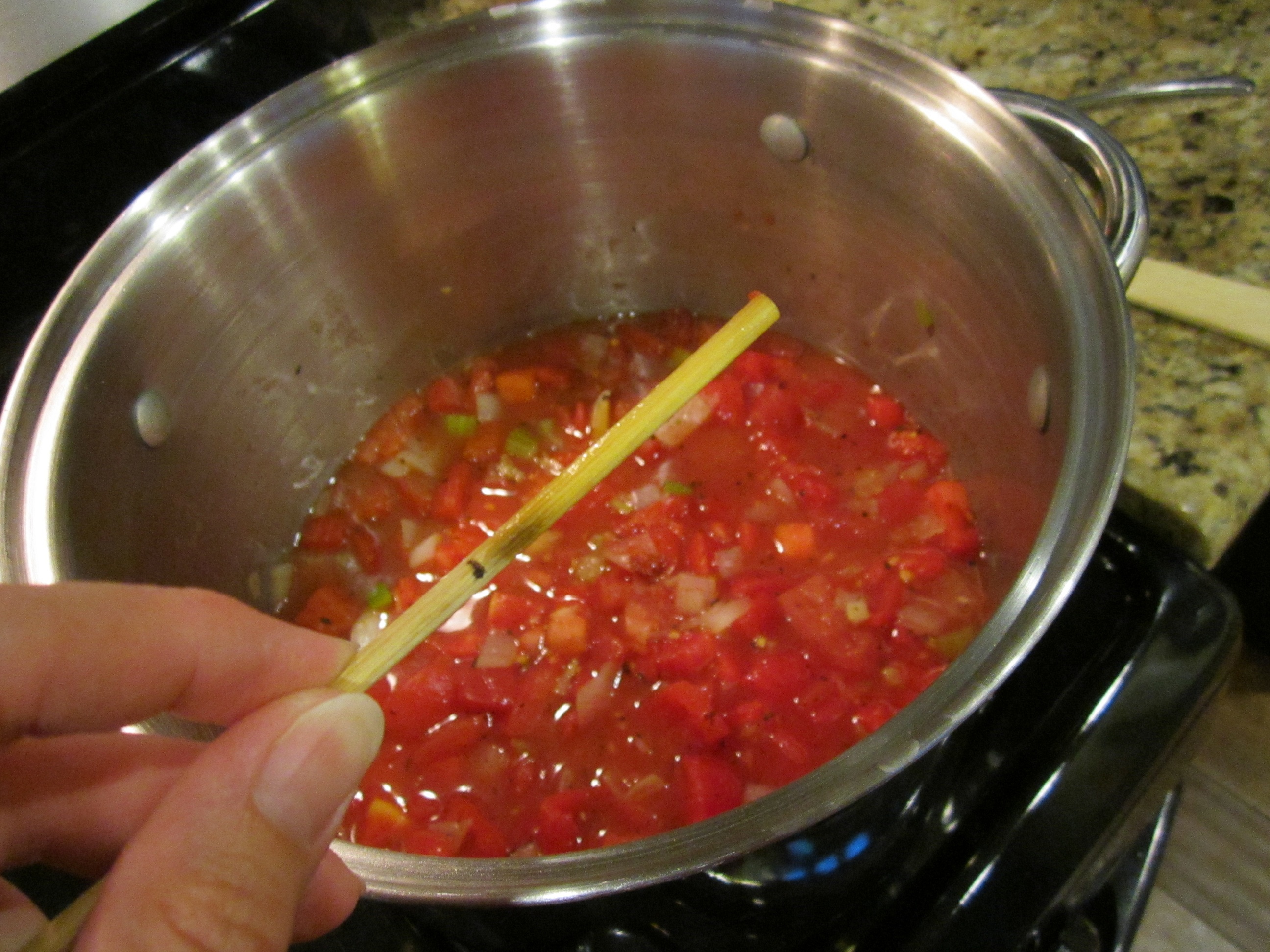
Bring the sauce to a boil over high heat. Reduce the heat and let it simmer, uncovered until it has reduced by half, stirring occasionally. This took abut an hour for me. And it looked like this when it was done.
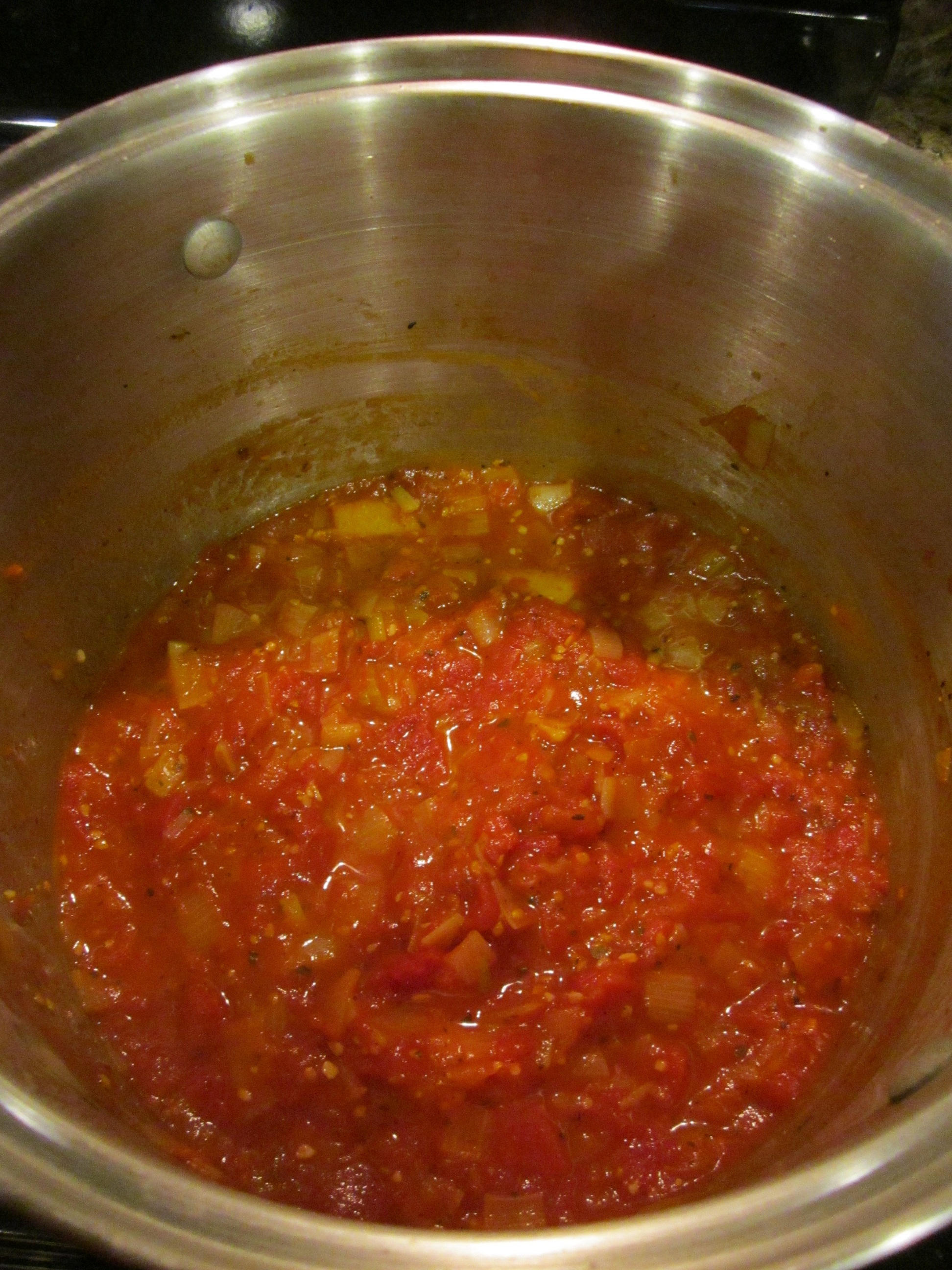
At this point, you can push the sauce through a food mill or a fine sieve to make the sauce as smooth as possible and remove the fennel seeds and cloves.
I have a powerful blender and don’t have a problem with a little texture to my ketchup so I just put it through the blender, in two batches, until it was as smooth as possible.
Put the sauce into a clean pan and stir in the red wine vinegar and the brown sugar.
Mark your skewer again, because it needs to reduce by half again.
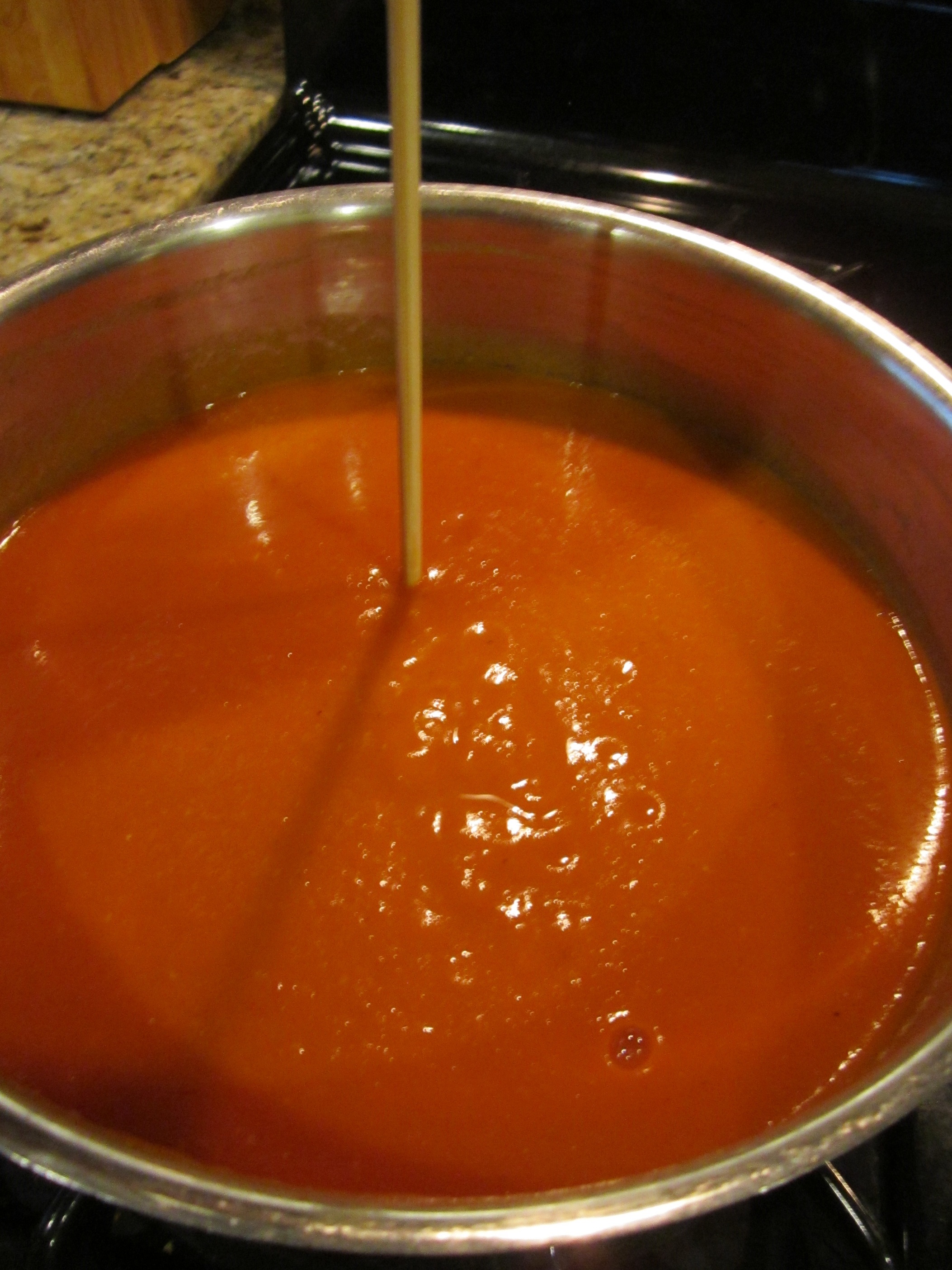
Bring the sauce to a boil over high heat, reduce heat and simmer, stirring occasionally until reduced by half or as thick as you want your ketchup to be. It will thicken a little more as it cools.
This is a good time to check for seasoning and add more salt if you like. If it tastes a little too tart form the vinegar, a little more salt will tone that down.
This took another hour for me and the last half hour needed more frequent stirring as it was getting very thick by that time.
When the ketchup is finished, it can be kept in the refrigerator for several weeks.
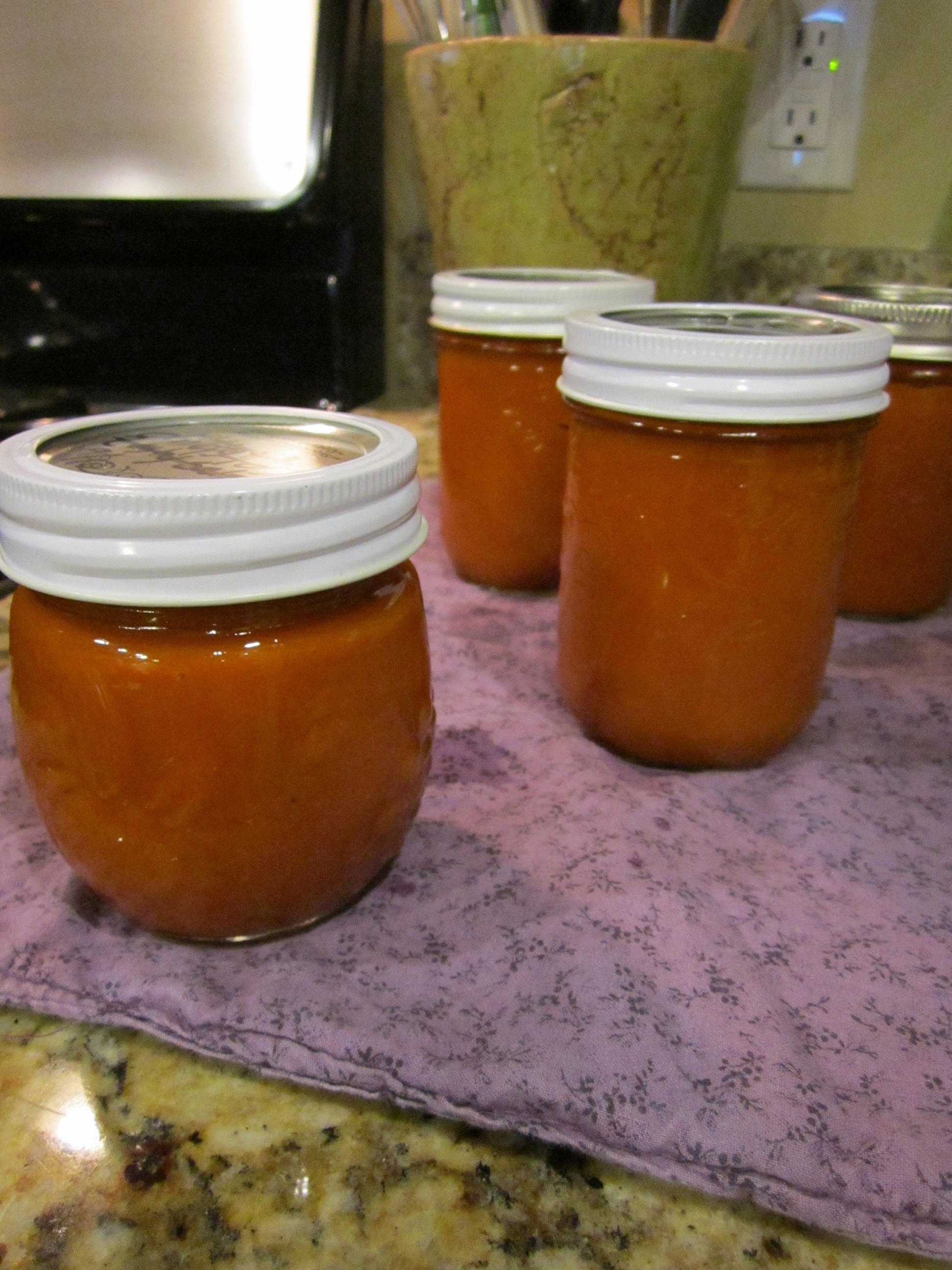
I have no delusions that my two kids will choose this gourmet delight over the shiny, bright red gel that comes from the store. So I chose to can mine. This recipe yielded 4 half pints. I processed 3 and put one in the fridge. I’m excited to get some gourmet burgers and fries on the menu this week for my ketchup’s grand premiere!
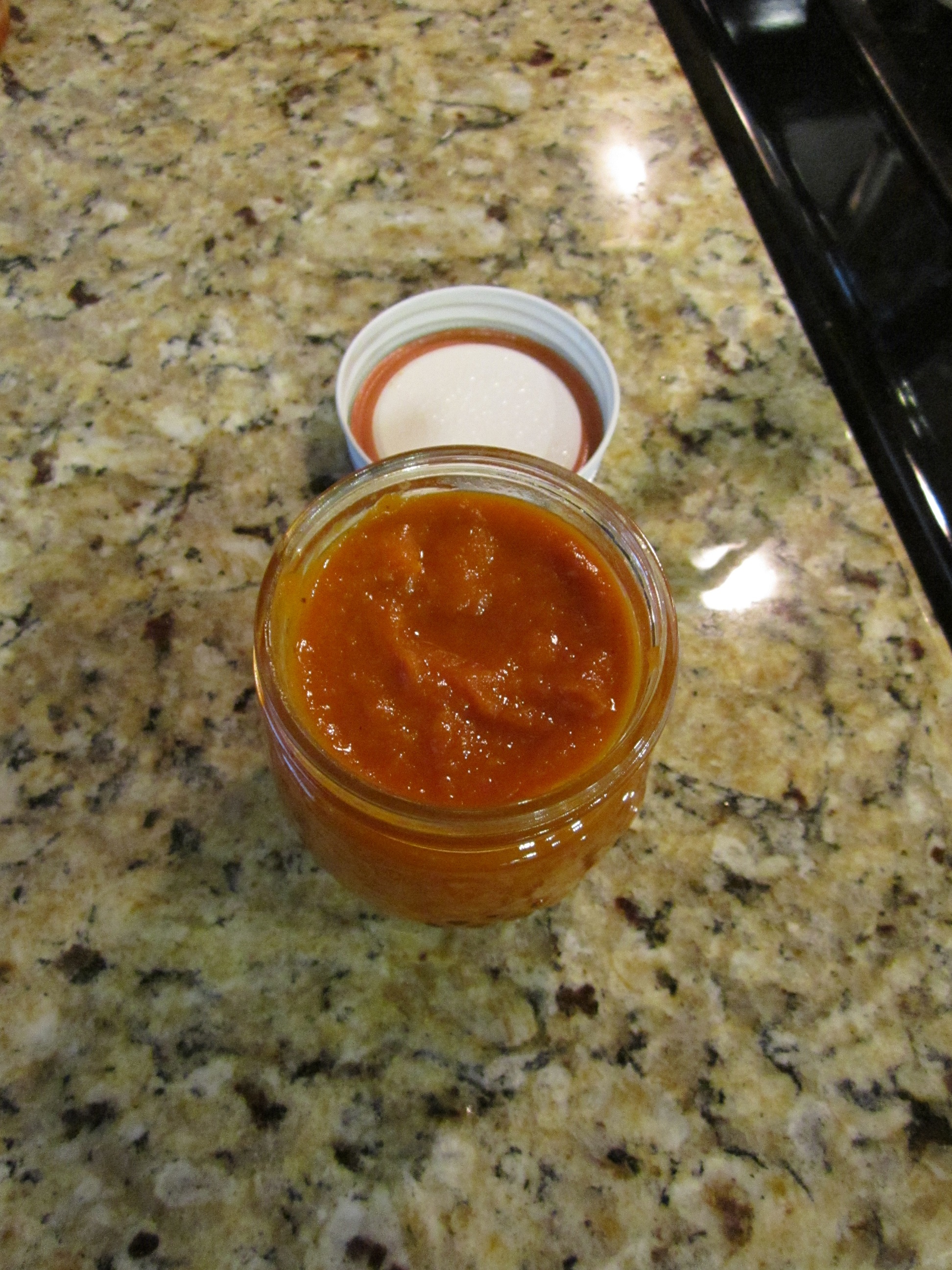
If you want to can yours, put your water bath canner on to boil during the last half hour of reducing the ketchup.
Heat jars and lids in simmering water until ready to use. Do not boil.
Ladle hot ketchup into hot jars leaving 1/2 inch headspace. Remove air bubbles. Wipe rim. Center lid on jar. Apply band until fit is fingertip tight.
Process jars in boiling water canner for 15 minutes, adjusting for altitude. Remove jars and cool. Check lids for seal after 24 hours. Lid should not flex when pressed in center. Enjoy!
Pin It
A PYP Best Blog! Make It Yourself: Buttermilk Ranch Dressing
 Just in case you missed this article on making your own ranch dressing mix the first time we shared it a couple of years ago, we are republishing it. After Trish wrote this blog originally, we got an awesome response. This is one of the PYP Best Blogs!
“Restaurant Ranch” is the preferred salad dressing/dip at our house.
It has to be Hidden Valley Buttermilk Ranch made from the packet, not the bottle.
I’ve got some discerning taste buds gathered ’round my table.
In my never ending effort to not buy anything that I don’t have to, I decided to finally ditch the little magic packet of ranch dressing mix and make my own.
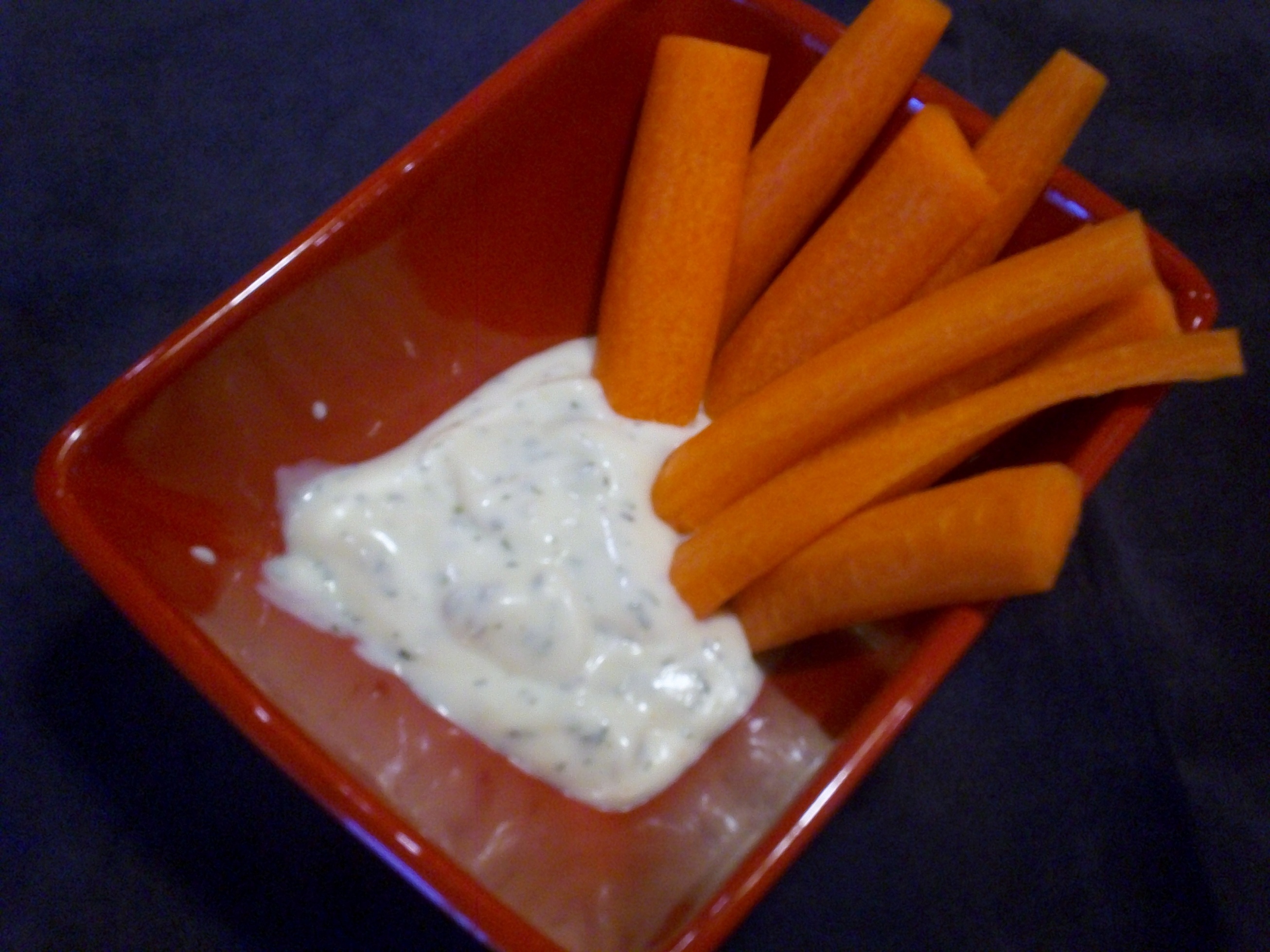
After reviewing many recipes, I adapted several of them into this one. And it was a hit!
I had all the spices in my cupboard so the only costs were the buttermilk and mayo which I would have used to make the packet anyway. So about… $1 for 16 ounces of veggie dipping goodness. Saving myself the dollar something that the ranch dressing packet would have cost. And a trip to the store. Which would have meant getting out of my comfy pajamas. Who needs that?
I mix this up in a special shaker bottle that I got about a hundred years ago. It was part of a “bonus offer” when I bought a packet of Hidden Valley mix. But good news! The shaker is made by Tupperware. There are also lots of shaker bottles for sale everywhere from Amazon, to WalMart to Dollar Tree.
You could also just whisk it up in a bowl and store in the fridge in any container that suits your fancy.
Now let’s make some dressing!
It’s simple! Just put these ingredients in your shaker and shake! Or put them in a bowl and whisk!
Homemade Buttermilk Ranch Dressing
1 cup mayo (We use reduced fat)
1 cup buttermilk (We use lowfat, which is the most common kind you’ll see in the store.)
1/8 teaspoon paprika
1/8 teaspoon black pepper
1/4 teaspoon mustard powder
1/4 teaspoon salt
1/4 teaspoon onion powder
1/4 teaspoon dried dill
1/4 teaspoon garlic powder
1 Tablespoon dried parsley flakes
This will keep in the fridge for a couple of weeks.
Enjoy!
Pin It
A PYP Best Blog! Denture Tablet = Easy Cleaning!

Just in case you missed this article on cleaning with denture tablets the first time we shared it a couple of years ago, we are republishing it. After Trish wrote this blog originally, we got an awesome response. This is one of the PYP Best Blogs!
It’s worth keeping a box of denture tablets in your cleaning arsenal. Their job is to clean, deodorize and disinfect so put them to work!
~I like to clean my kid’s toothbrushes if they’ve been sick but the toothbrush is still fairly new. (I know! We penny pinchers have no problem getting cheap or free toothbrushes, but it just seems wasteful to me to toss a practically new toothbrush.) Drop a denture tablet into a glass of warm water and then soak the toothbrush in it overnight.
~Clean retainers the same way!
~Make diamonds and glass beads sparkle like new by soaking in warm water and a denture tablet.
~Clean that mineral build up line that you get in vases as the water evaporates. Fill the vase with warm water and drop in a denture tablet. Let it soak for a half hour and rinse.
~Drop a denture tablet or two in the toilet at night. Flush away the mineral build up the next morning.
~Clean the hair product build up from your combs and brushes. Fill a tall jar with hot water, drop in a denture tablet and soak combs and hairbrushes overnight. Rinse clean in the morning.
~Are your coffee or tea mugs stained? Fill them with hot water and drop in a denture tablet. Let soak for a bit. Rinse.
~Use them to unclog a drain. Drop to or three tablets into the drain. Pour a cup of vinegar over the tablets. Wait 15 minutes. Then pour very hot water down the drain to rinse away the loosened clog.
~Clean mineral deposits from a shower head. Fill a jar with hot water, drop in a tablet and soak the shower head. If you can’t remove your shower head, try this. First put a rubber band over the shower head and up to the pipe. Then fill a ziploc bag with hot water, drop a tablet in the bag and then place the bag on the shower head. Secure it with the rubber band. Let soak for 15 minutes and then run hot water through the shower head to rinse.
~Clean a crusty casserole dish. Fill it with hot water and drop in a tablet. Let it soak for half an hour and then rinse away the formerly crusted on food.
~Clean melted cheese from a dish. That stuff is like cement! Fill your sink with hot water, just enough to cover the dish. Drop in the tablet and wait 15 minutes. Now it should wipe right off.
~Clean teething toys and pacifiers. Fill a bowl with hot water, add a couple of tablets and the teething toys and pacifiers. Wait 15 minutes and then rinse clean with hot water.
~Whiten your fingernails. Mine get a little yellow looking from all the tomato canning I do. Blech! Fill a small dish with hot water, drop in the tablet and then soak fingertips for 10 minutes.
~Clean and deodorize reusable water bottles and hydration pack bladders. Fill with hot water, insert a denture tablet, wait 15 minutes and then rinse with hot water.
Pin It
A PYP Best Blog! Make Your Own Reusable Produce Bags!
Just in case you missed this article on making your own reusable produce bags the first time we shared it a couple of years ago, we are republishing it. After Trish wrote this blog originally, we got an awesome response. This is one of the PYP Best Blogs!
One more way to eliminate the amount of waste coming into your home and going out to the landfill or recycling facility.
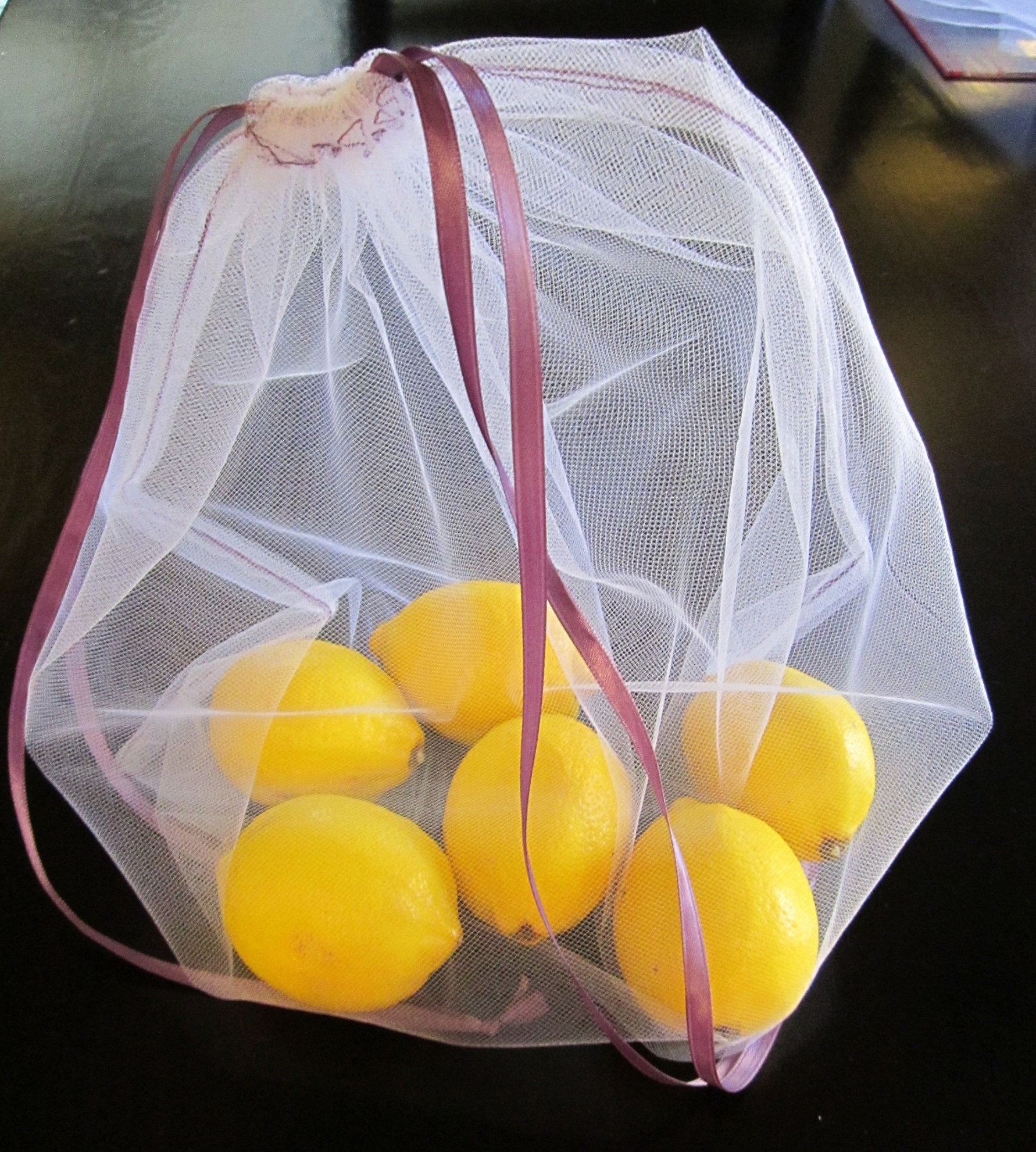
For four bags you will need one yard of tulle and 8 yards of ribbon.
These are super simple to make if you can sew a straight line.
I used tulle to keep them as lightweight and easy to clean as possible.
The yard of tulle that I purchased was 56 inches wide. I cut it into four pieces that were 18 inches by 28 inches to maximize the full yard of tulle.
Turn the long sides up about a 1/2 inch and stitch.
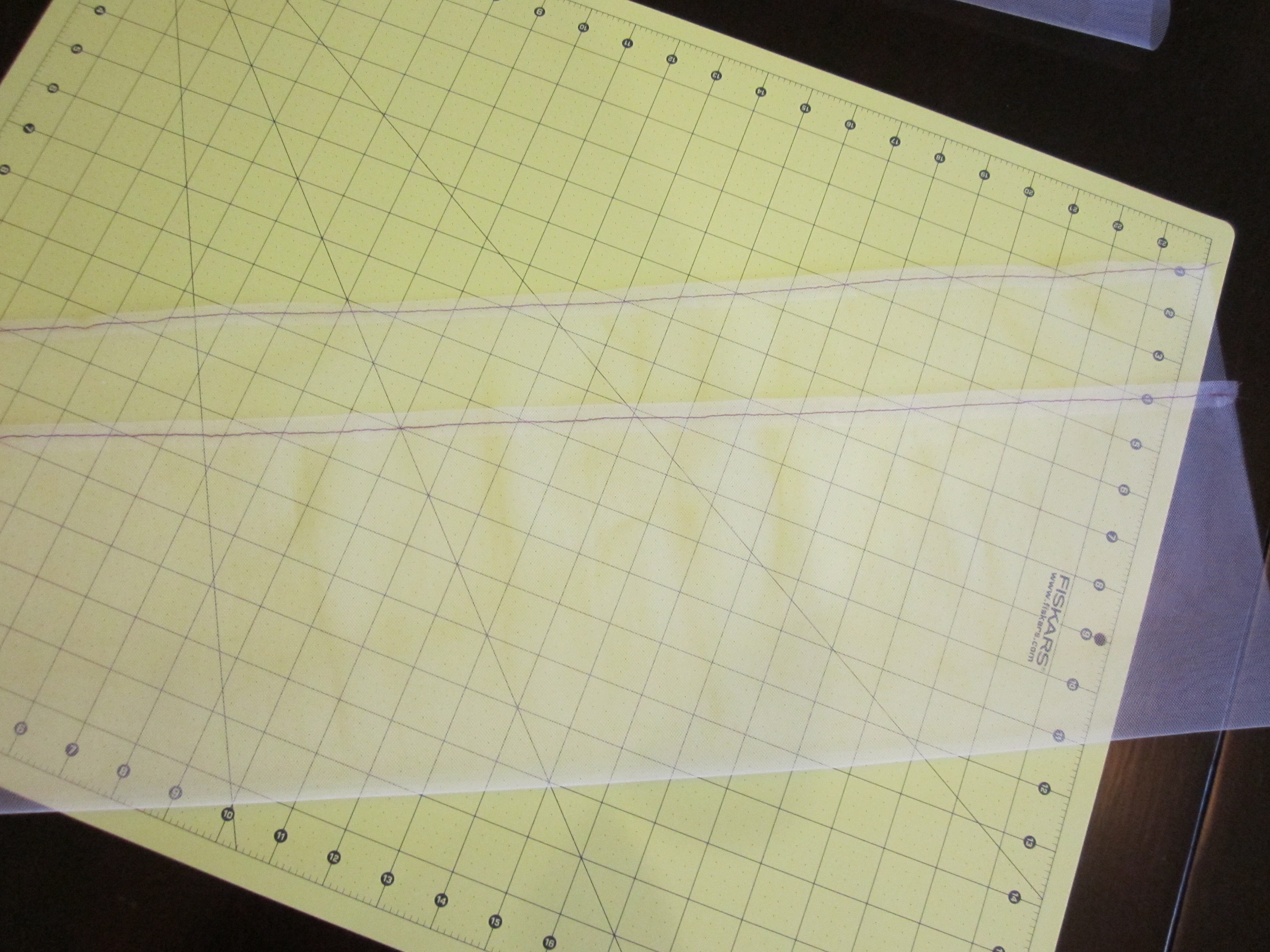
Turn the short sides up about 3/4 of an inch inch toward the same side of the fabric as you did the sides and stitch. This will make the casing for the drawstrings.
The side of the fabric that you turned those edges to is the WRONG side.
Fold the piece in half, with RIGHT sides together, so that the two short ends meet up. Stitch up the sides starting BELOW the casings you made previously and down to the folded edge. You need that casing to remain open to thread the drawstring through.
Repeat on the other side, exactly the same way.
Now turn your bag right side out.
Slip a safety pin onto the end of one yard of ribbon and thread it through one side of the casing and into the other, coming back out where you started.
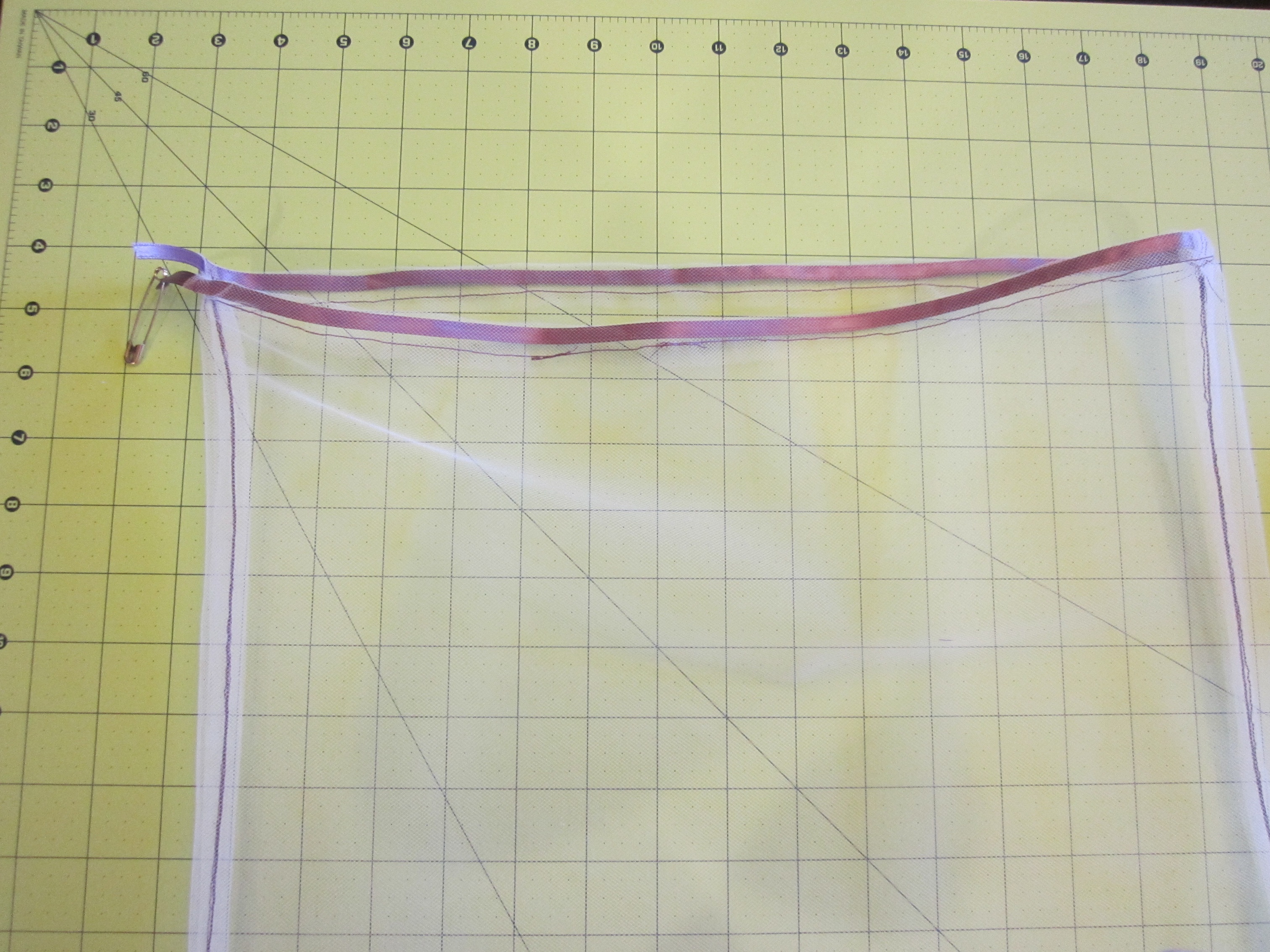
Tie those ends together in a knot.
Attach the safety pin to another yard of ribbon and feed it into the casing on the opposite side as before. Take it through the casing on one side and into the other, coming back out where you started again. Tie the ends together in a knot.
This makes the drawstrings cinchable.
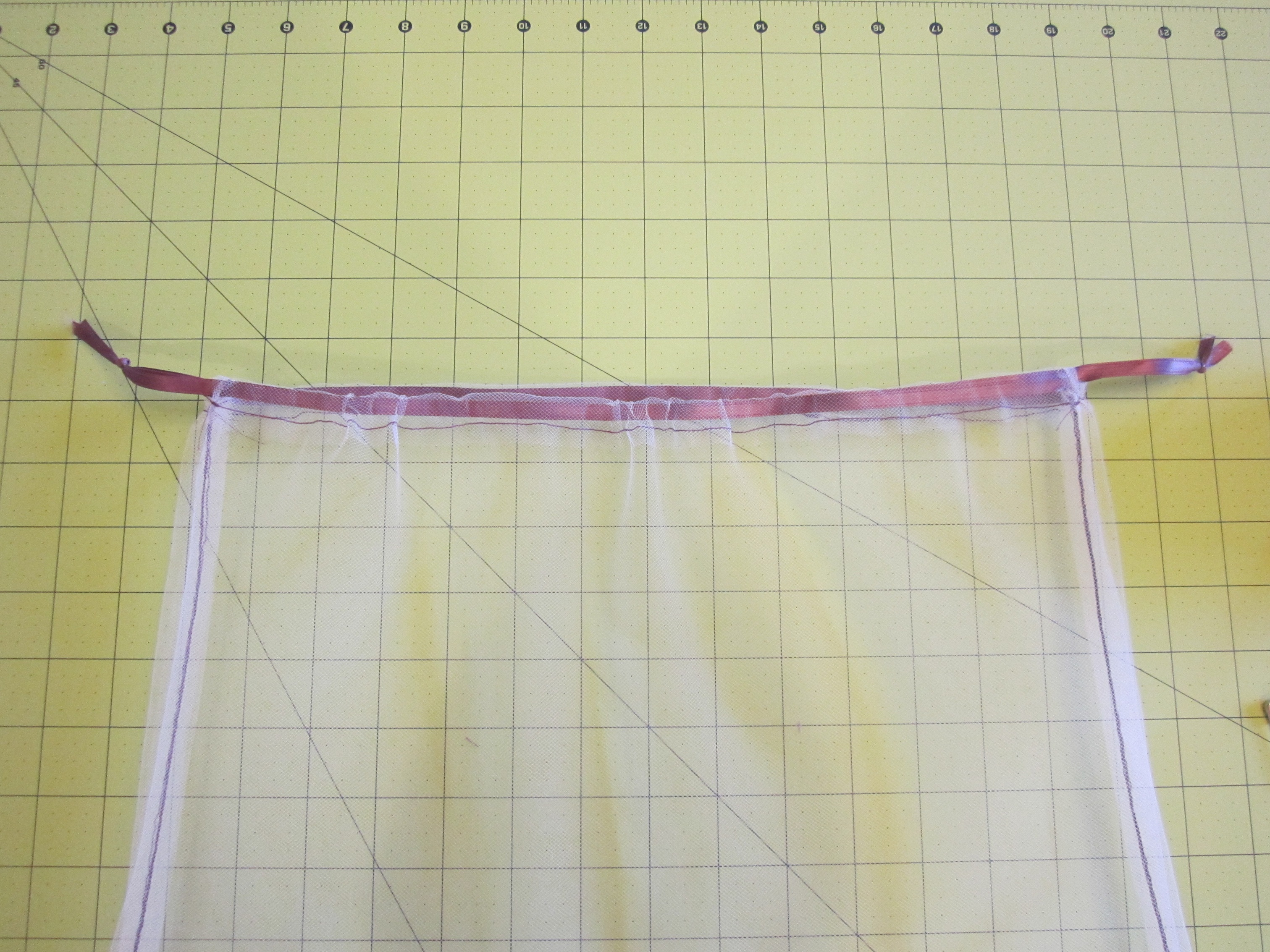
That’s it! You’re done!
I made four bags in just under an hour. I spent only $1 on the yard of tulle. I had the ribbon and thread on hand.
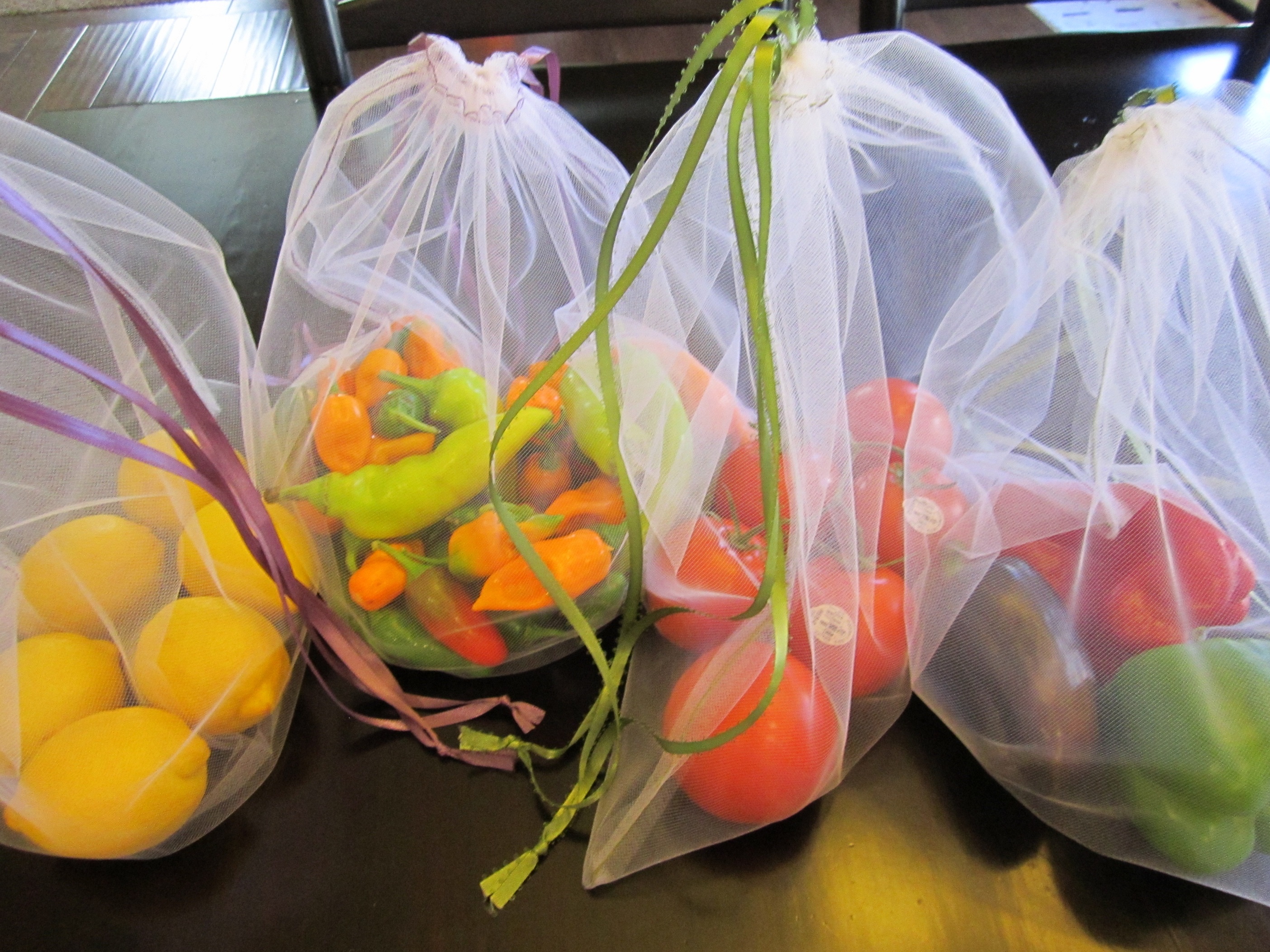
Here are the comparisons between the plastic and reusable bags.
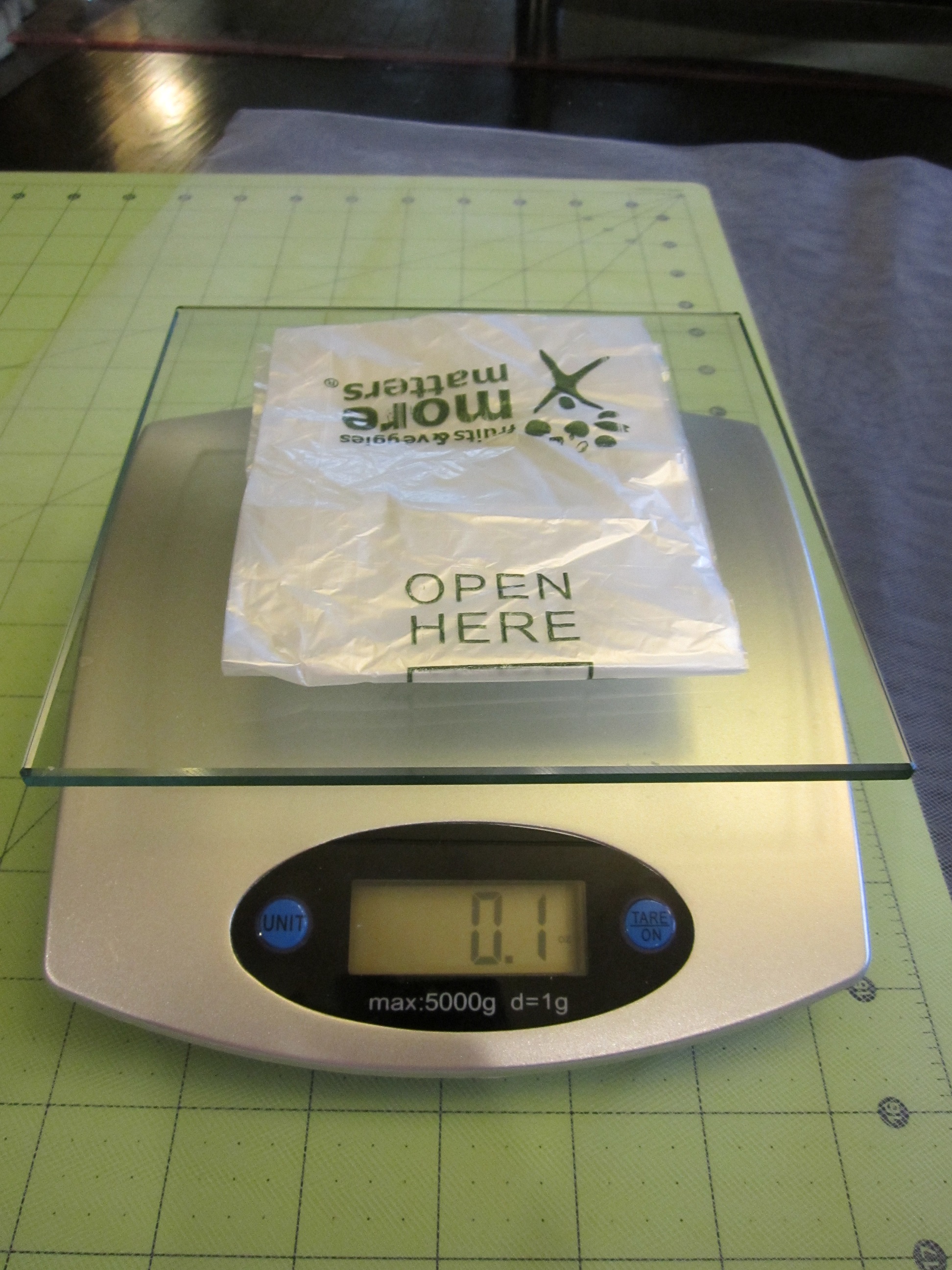
The plastic bag from the grocery store weighs 1/10th of an ounce.
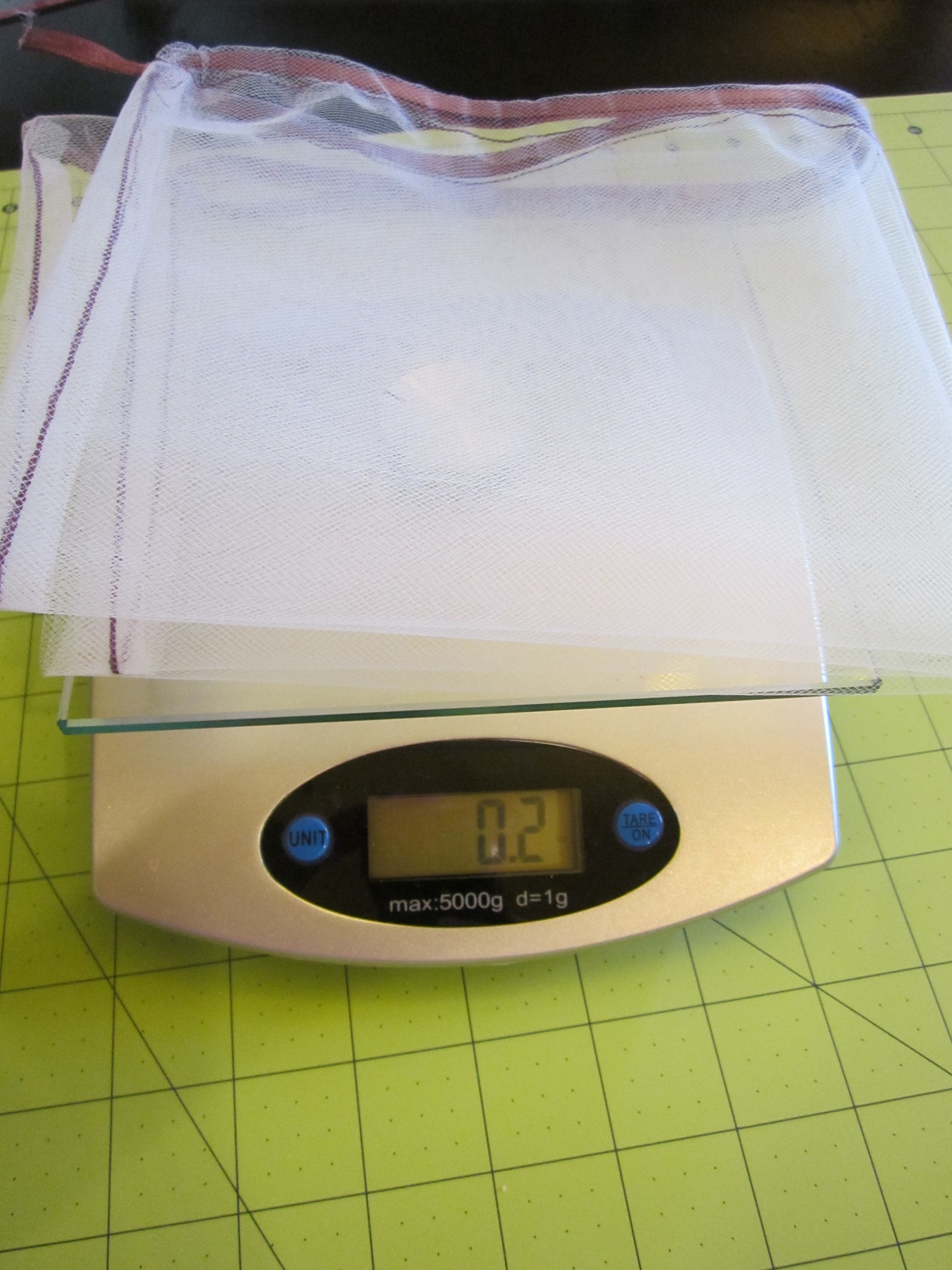
The reusable bag weighs 2/10ths of an ounce.
My scale is pretty sensitive and couldn’t decide between .1 and .2.
I snapped the picture at .2.
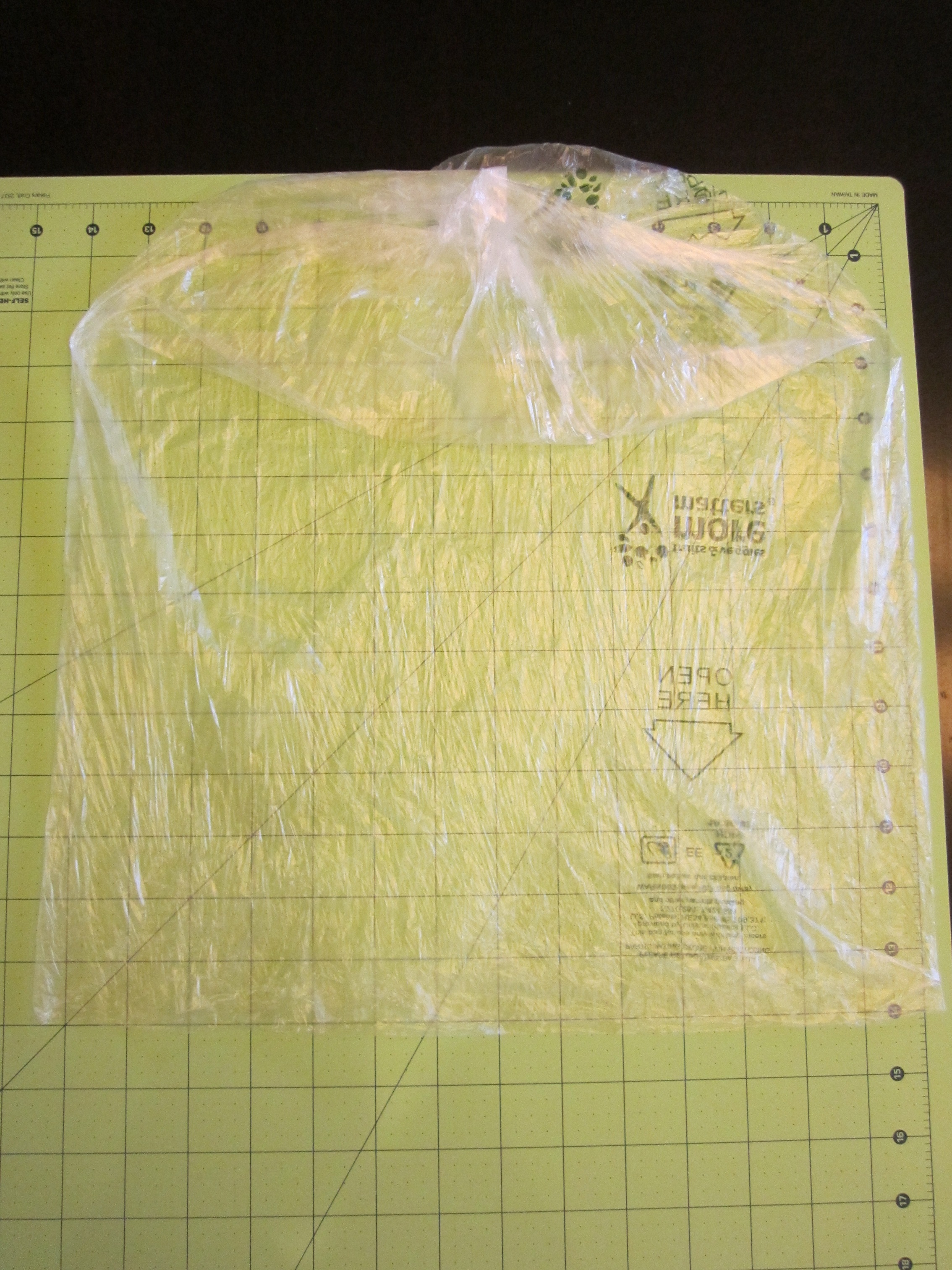
When fully opened, the size of the plastic bag is about 14 inches by 14 inches.
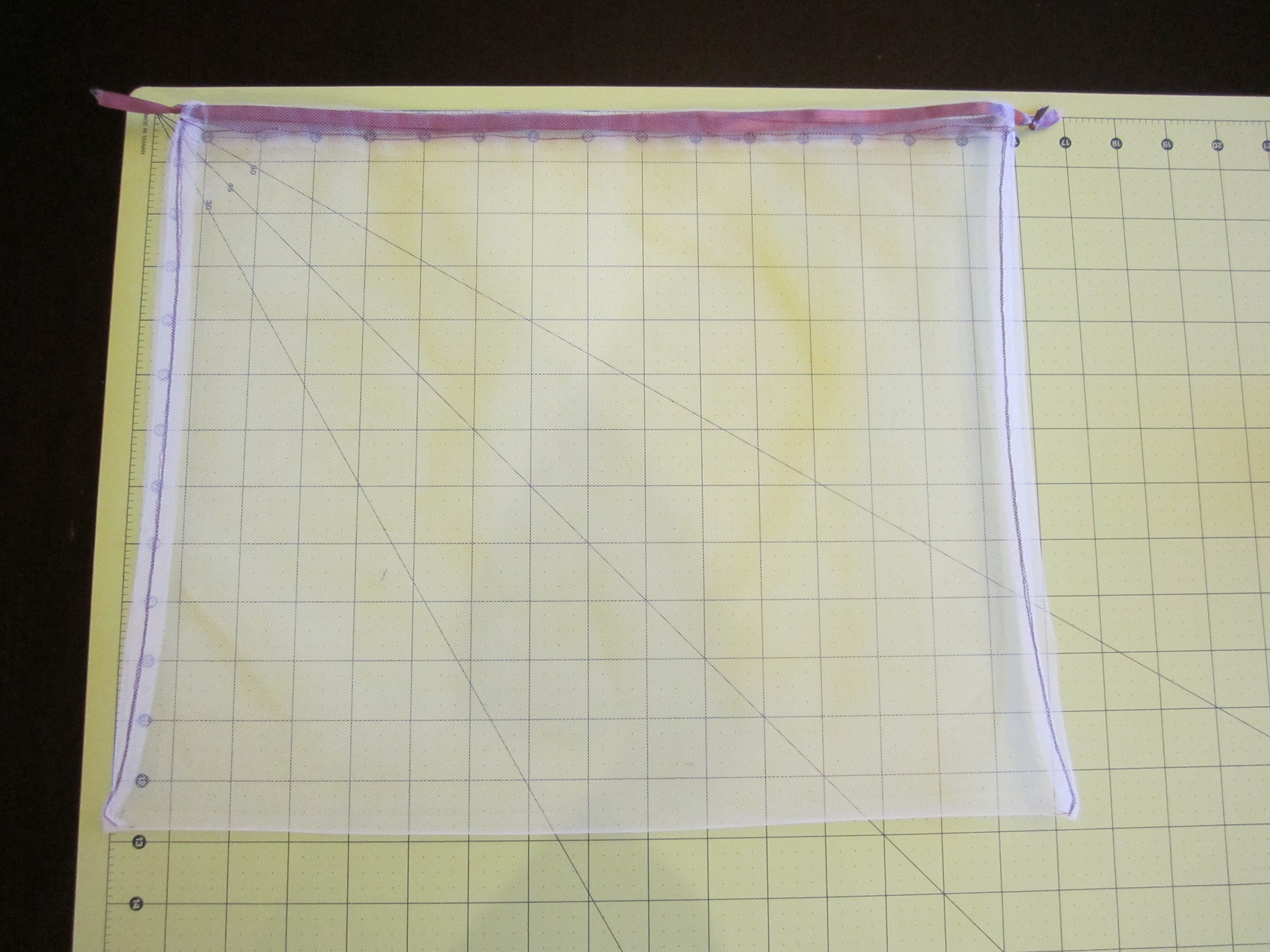
The reusable bag is about 13 inches by 16 inches.
Plastic bag: Can possibly be reused once or twice. Then it goes in the garbage. OR to the recycling bin where it will go to a recycling facility which may or may not be in the U.S. and will consume energy in the recycling process.
Reusable bag: Keep it and use it over and over again.
Tulle can be machine washed and tumble dried on low according to the care label on the bolt of fabric.
I think it would be just as easy to wash the bags in a sink full of soapy water, rinse, and air dry. Which won’t take long at all for the tulle.
Some of my reusable grocery bags have a zippered pocket inside them. I’ve never had a use for that pocket but now I think it will be the perfect place to store my produce bags until I need them in the store. 🙂
Pin It
All Entertainment Coupon Books only $8.99 + Free Shipping!
All Coupon Books only $8.99 + Free Shipping!
Still time to use these great coupons!
A PYP Best Blog! My favorite picture hanging tips. Share yours!
Just in case you missed this article on picture hanging in your home the first time we shared it a couple of years ago, we are republishing it. After Trish wrote this blog originally, we got an awesome response. This is one of the PYP Best Blogs!
I’ve been working on two gallery walls in my home recently and I thought I’d share some of my favorite tricks and see if others had some that they would like to share.
I know that Command Strips are all the rage these days and I do like them for some things. But for the most part, I do my picture hanging old school style. With nails. *gasp!* I know! But the holes!!! It’s okay. If I can’t touch them up later, I’ll have the perfect excuse to paint the whole room a new color. Hubby just LOVES that! 😉
First of all, I buy almost all my frames at thrift stores. The only time I buy new is if I get impatient and can’t find the right one at the thrift store fast enough. Or if I need it to be very specific.
Have you ever had to put a sawtooth hanger on a frame so you can hang it?
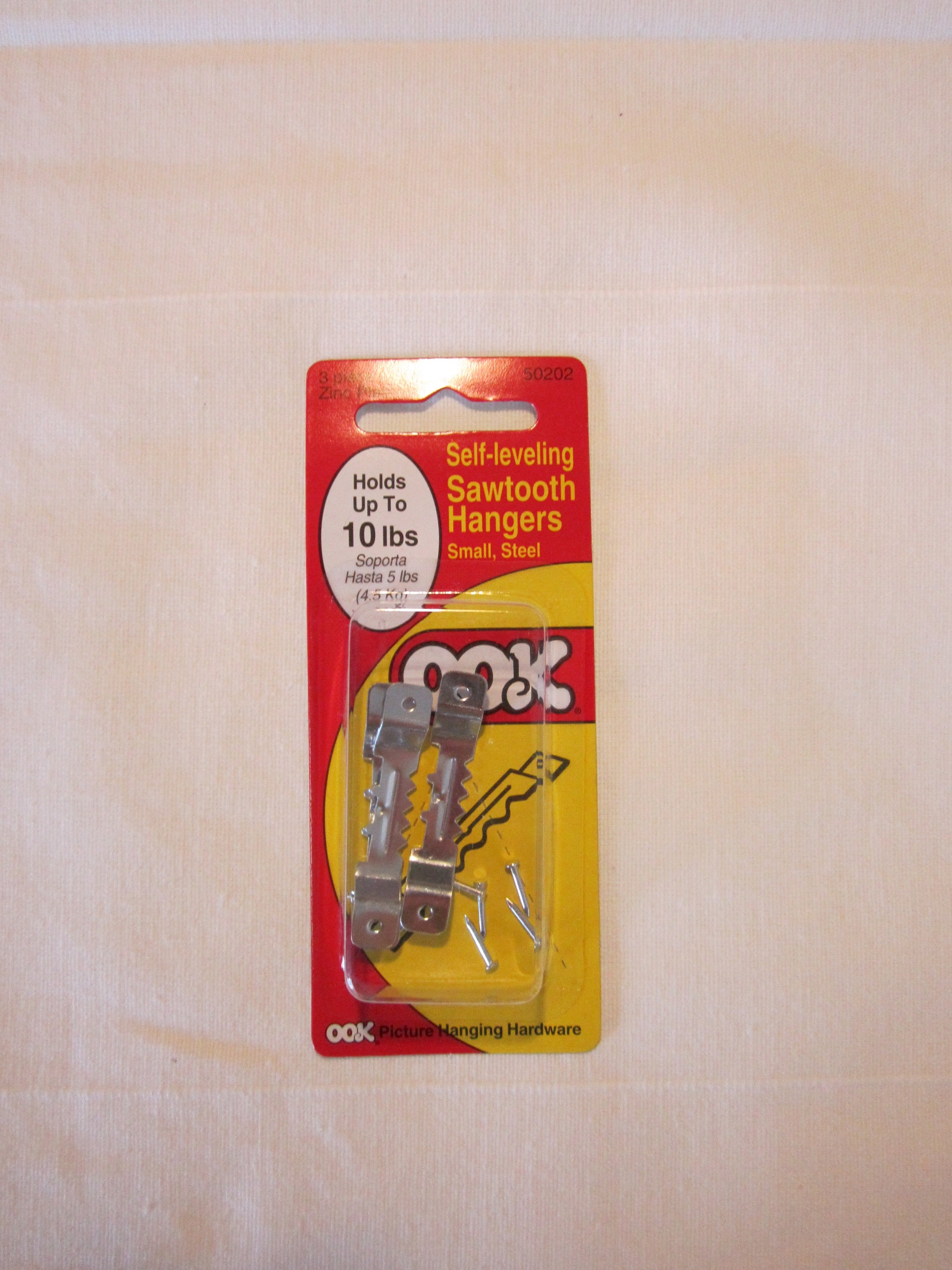
Do they make nails smaller than the ones that come with those?!?! Ugh! I used to hammer my fingers every time.
Now I use a couple of pieces of duct tape to hold the metal piece in place.
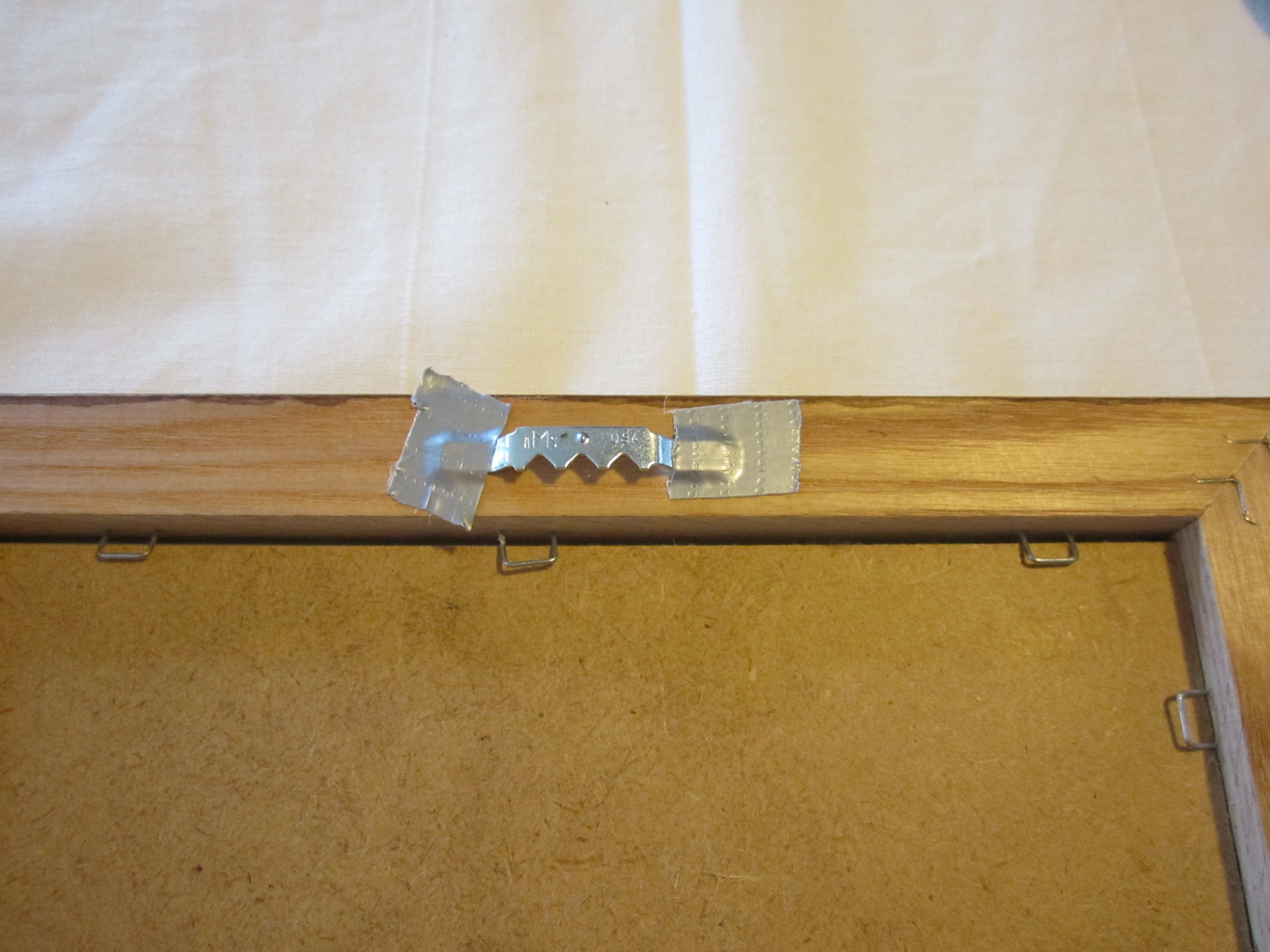
Then I just poke the tiny nails into the tape and they stay there all by themselves till I give them a tap with the hammer.
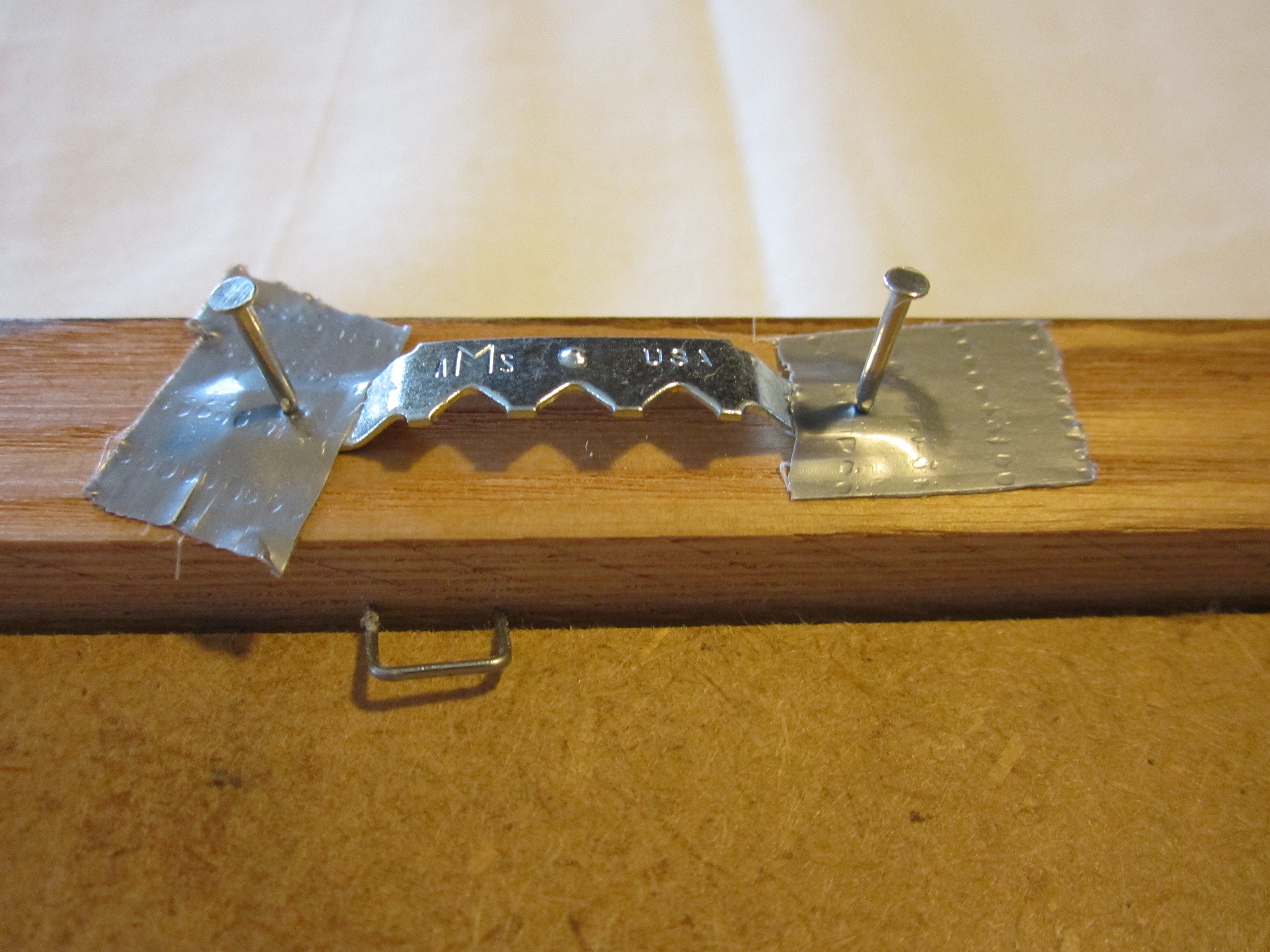
Then nail them in and peel away the tape.
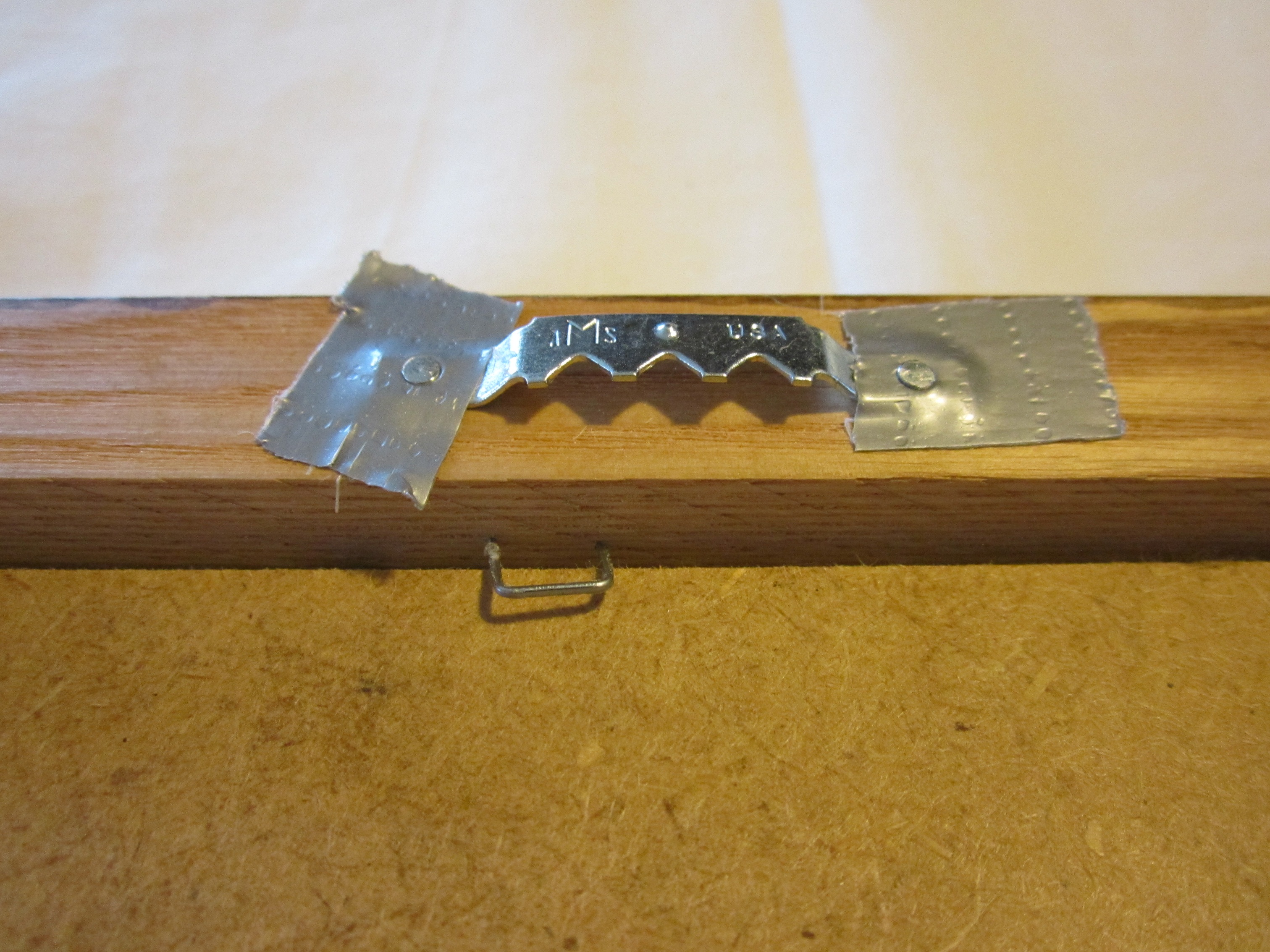
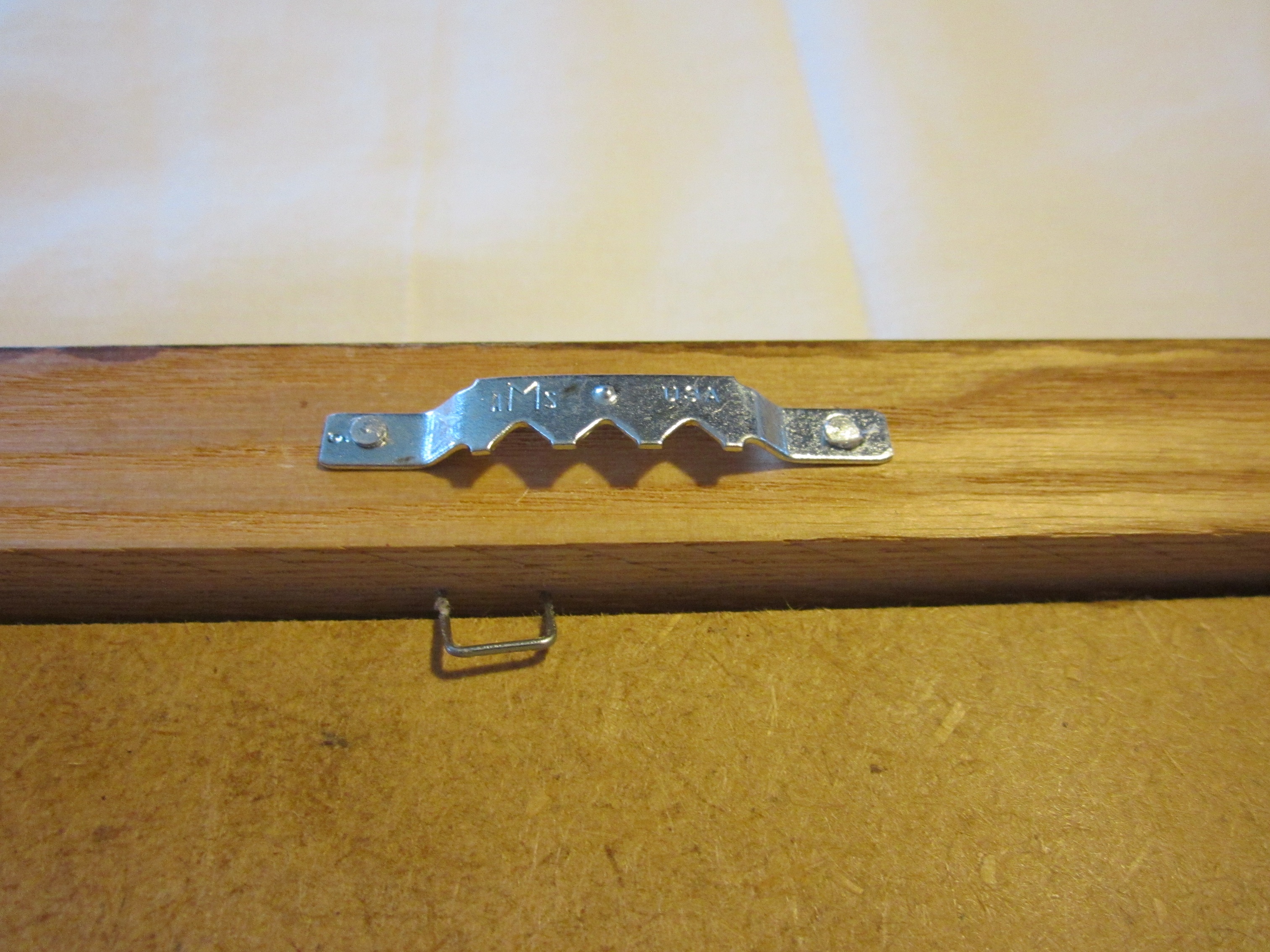
Easy peasy! No smashed fingertips.
This is my best friend for making sure that the pictures I hang on the wall STAY straight.
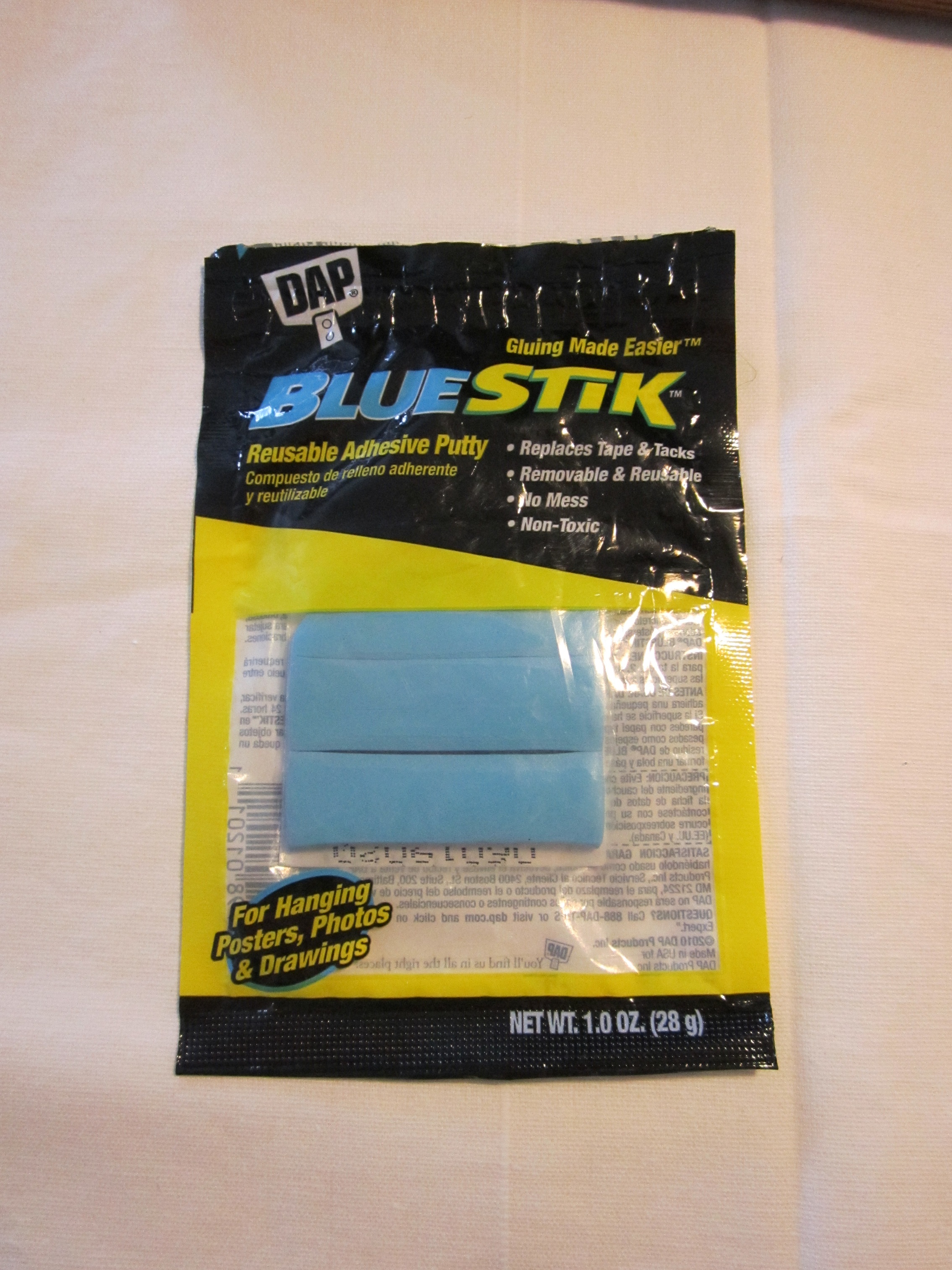
You can find it in most craft or home improvement stores. Usually near the other adhesives.
Just a tiny ball of it on each bottom corner of the frame does the trick.
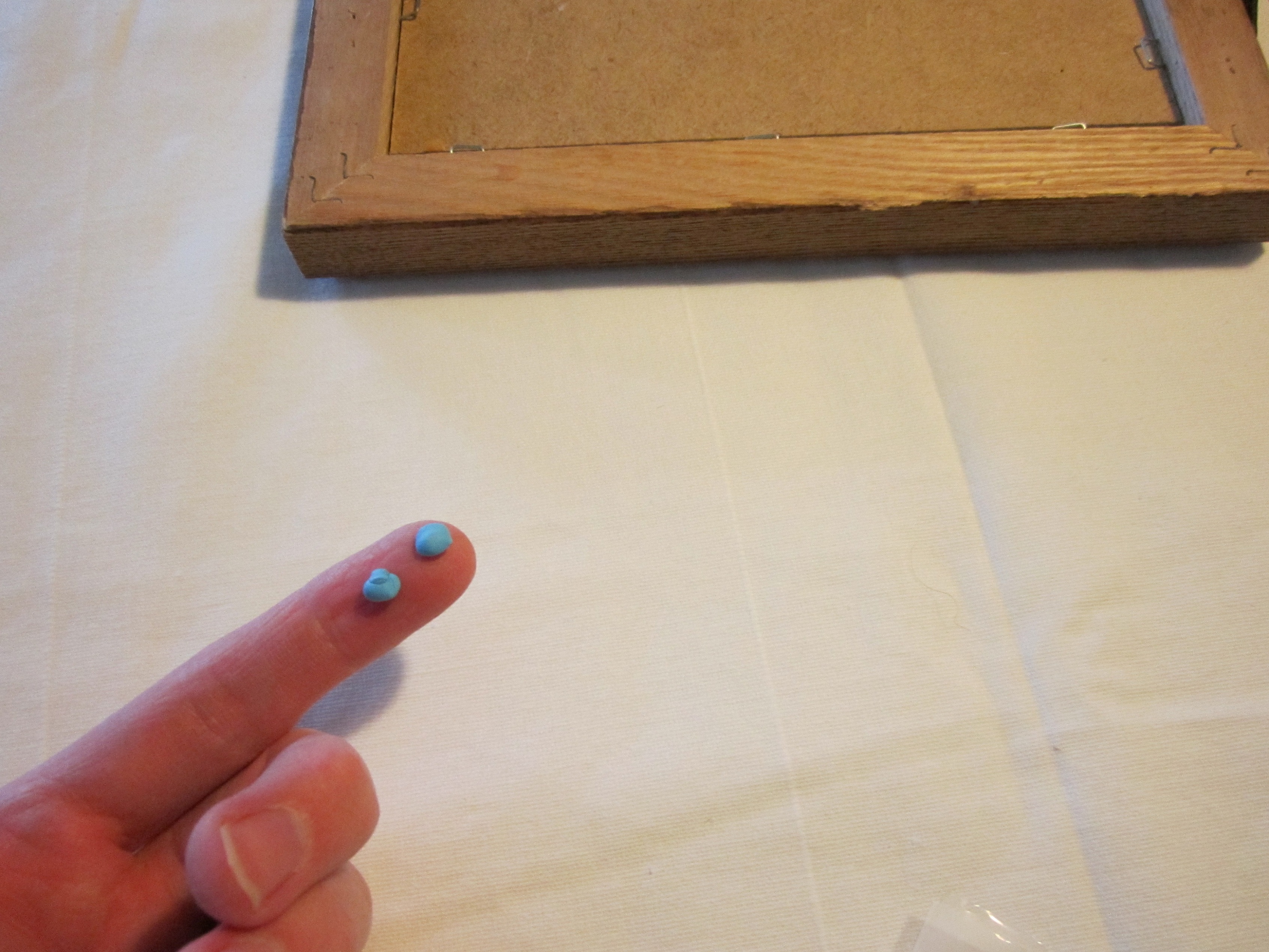
Hang the picture, use a small bubble level to get it level and then gently press those bottom corners to the wall.
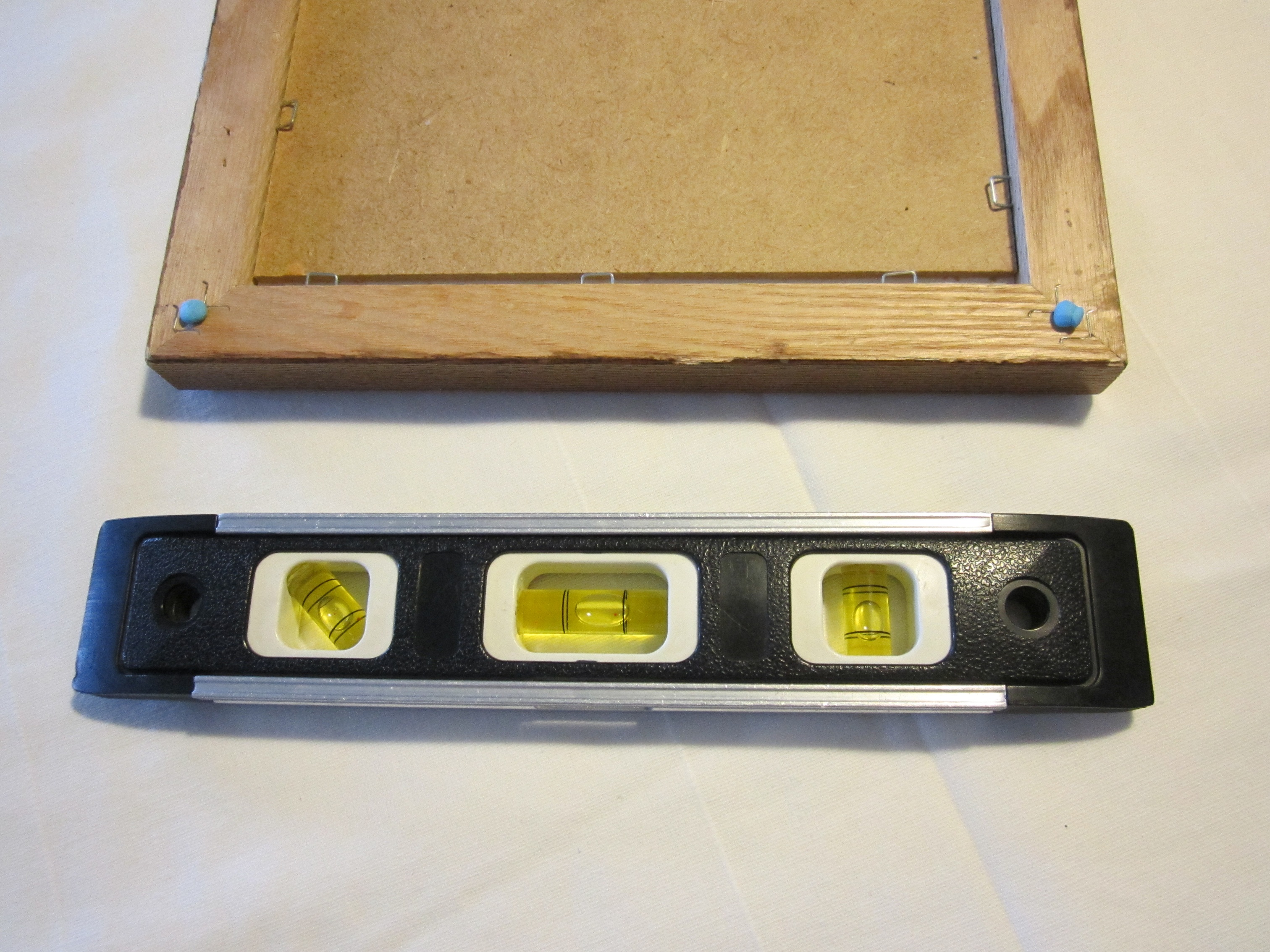
When you take the picture down, you just remove the putty and you can even reuse it!
Keeping the pictures level is especially important on gallery walls. Once a couple of the frames goes crooked, it just looks a mess.
Speaking of gallery walls, if you get all your frames collected and hung and then find that you don’t have exactly the right pictures to put in them yet, try using scrapbook paper that coordinates with the colors in the room or with the theme of the gallery. It’s a great way to hold the place until you collect just the right pictures.
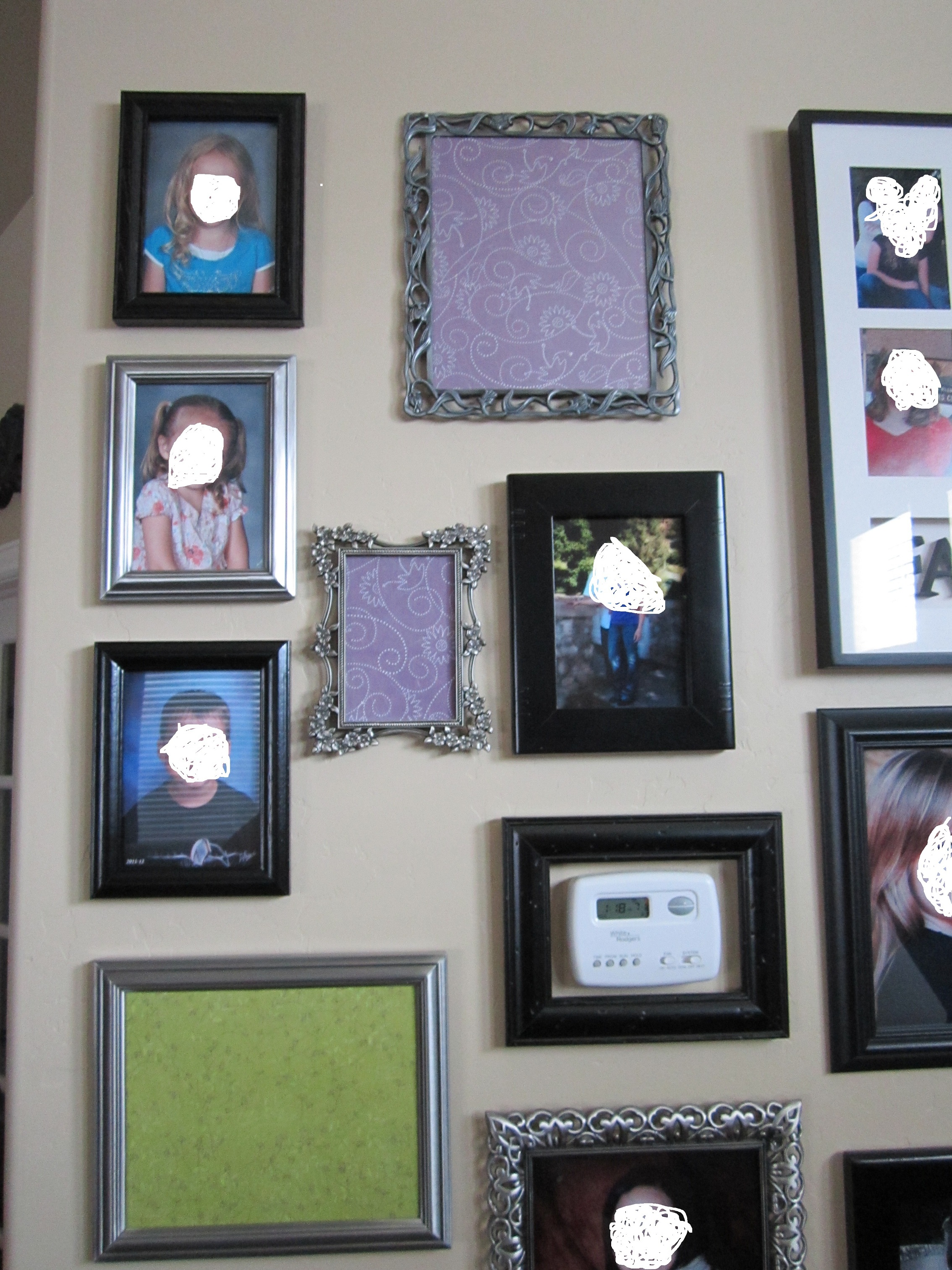
Also notice that an empty frame is a nice way to camouflage a thermostat or some other nuisance that a builder may have put smack in the middle of the wall that was clearly meant to be your gallery wall!
Since I buy my frames from thrift stores, I’m not picky about the colors. I just do a lot of spray painting. I have found that a couple of wooden skewers placed under the frames when I spray paint them, prevents them from sticking to the surface I’m painting them on.

So, what are your handy picture hanging tricks?
A PYP Best Blog! How to pressure can chicken!
Just in case you missed this article on how to pressure can chicken the first time we shared it a couple of years ago, we are republishing it. After Candi wrote this blog originally, we got an awesome response. This is one of the PYP Best Blogs!
I first learned about canning meats when I was watching a show about surviving in Alaska, and the participants were catching salmon and canning it. Up until that time, for some reason it had just never even occurred to me that one could can meats, even though I had seen canned meats in the store plenty of times. My mother would can peaches and pears when I was little, but she never did pressure canning.
A year or so after watching that show, my local church asked me to help put together some ideas and plans for emergency preparedness for those who might be interested. I have to confess that I was not exactly an example of preparedness at the time. So I had to kinda learn it all from scratch. Some of the preparations we worked on involved having some food stored away in case of an emergency. And so I did more research on canning meats, and talked with a few people who had done it, and found it was a lot easier than I expected it to be. (Note: By “easy” I mean ‘not overly complicated’ rather than easy as in ‘quick’. Just want to throw that out there right now.)
I have since found that I really enjoy having canned meats around – they have been so helpful on nights when I need a quick and easy meal!
I usually can chicken when I can find it on sale in the 40lb boxes for about $1.30-$1.50/pound. Since we’ve had a few of those sales where I live recently, and with the Zaycon chicken deals being introduced into some new states and areas, I wanted to give you guys another option for storing/preserving all that chicken!
Now, I’m not going to go through all of the specific details for the actual canning part, because that will differ based on your particular model of pressure canner. So be sure to read through your canner’s instruction manual for the specifics. And for those who are new to pressure canning, please note that a pressure CANNER is different from a pressure COOKER (although a pressure canner can be used to pressure cook, a pressure cooker cannot usually be used to pressure can unless the manual specifically states that it is approved) – totally clear as mud?
For canning chicken using the raw-pack method (meaning that you don’t have to pre-cook the chicken), start by gathering all your supplies. You will need:
- pressure canner (this is NOT the same as a pressure cooker)
- chicken
- approved canning jars
- canning lids and rings (lids must be new, rings can be used)
- salt, preferably pickling salt if possible
- boiling water, chicken broth or chicken bouillon
You’ll also want to have some tools handy. Here’s what I use:
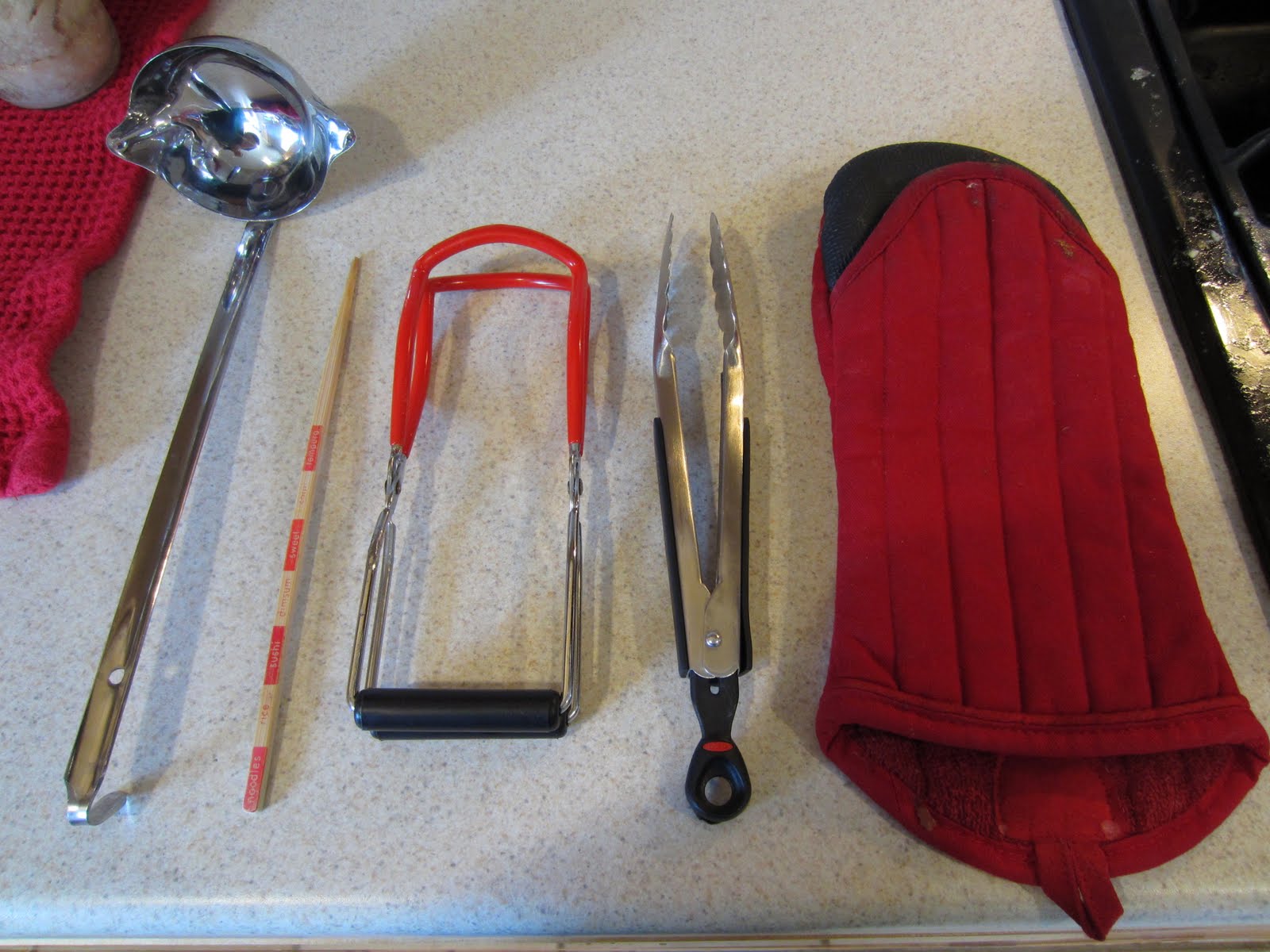
- ladle (for filling jars after chicken is in)
- wooden chopstick (for removing air bubbles from jars)
- jar lifter (for moving jars into and out of hot canner)
- tongs (for taking lids out of simmering water)
- hot pads or hot mitts
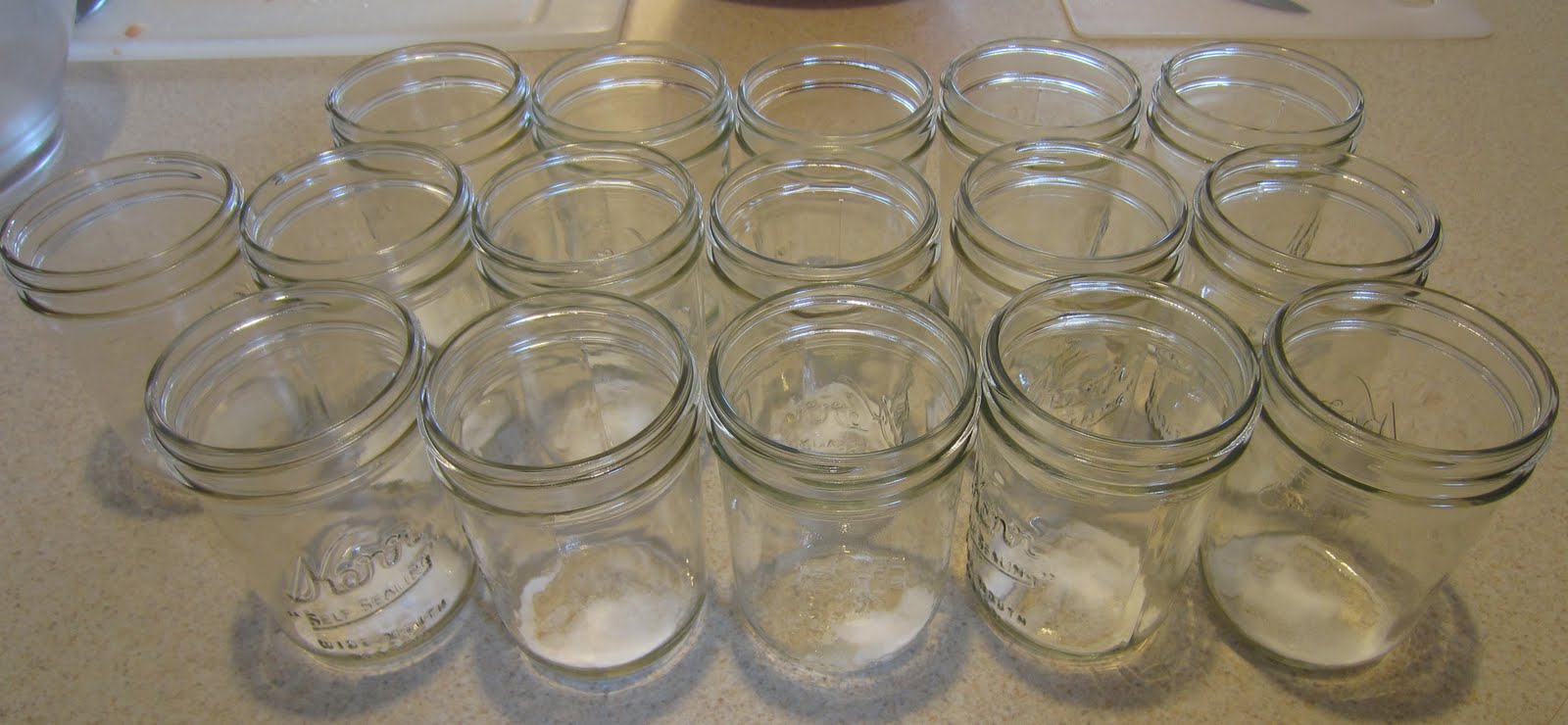
Start by preparing your jars. Wash and dry them. For chicken, I add 1/2 tsp of salt to each jar. (The official instructions say to use pickling salt, but I’ve used regular kosher salt in the past with no problems.)
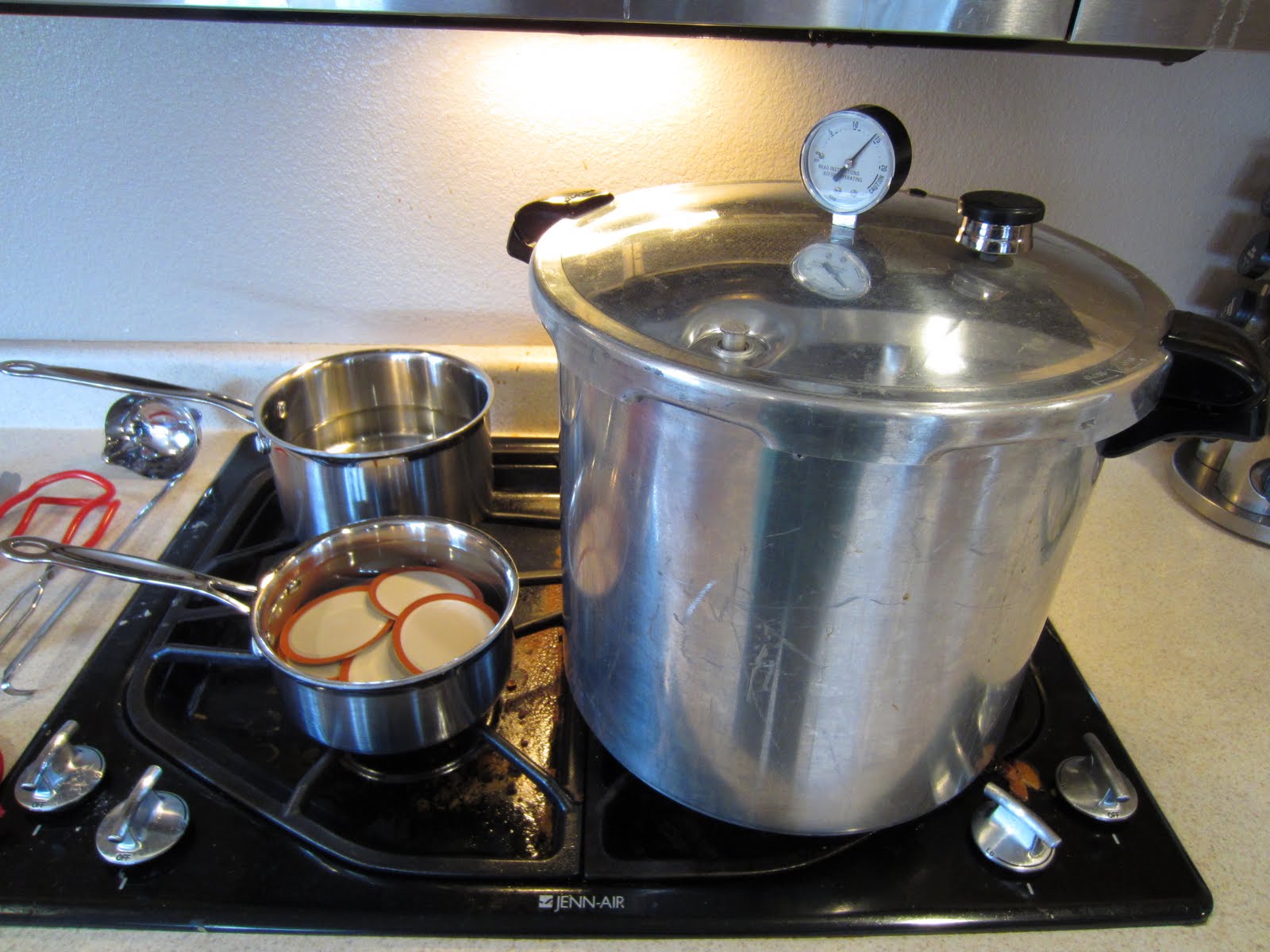
Then get your stove and pots all situated. You will need your pressure canner with the appropriate amount of boiling water (and vinegar to help reduce water spotting) – check your canner’s instructions for how much water you need. You will need another pot with boiling water (for adding to the jars), and a smaller pot with simmering water so you can heat the lids.
Here’s what my stovetop looks like on chicken-canning day:
Next, time to prep the chicken!
The big 40lb boxes pf boneless, skinless chicken breasts come with 4 bags inside. The breasts are butterflied, and have a little bit of fat on them which you’ll need to trim off.
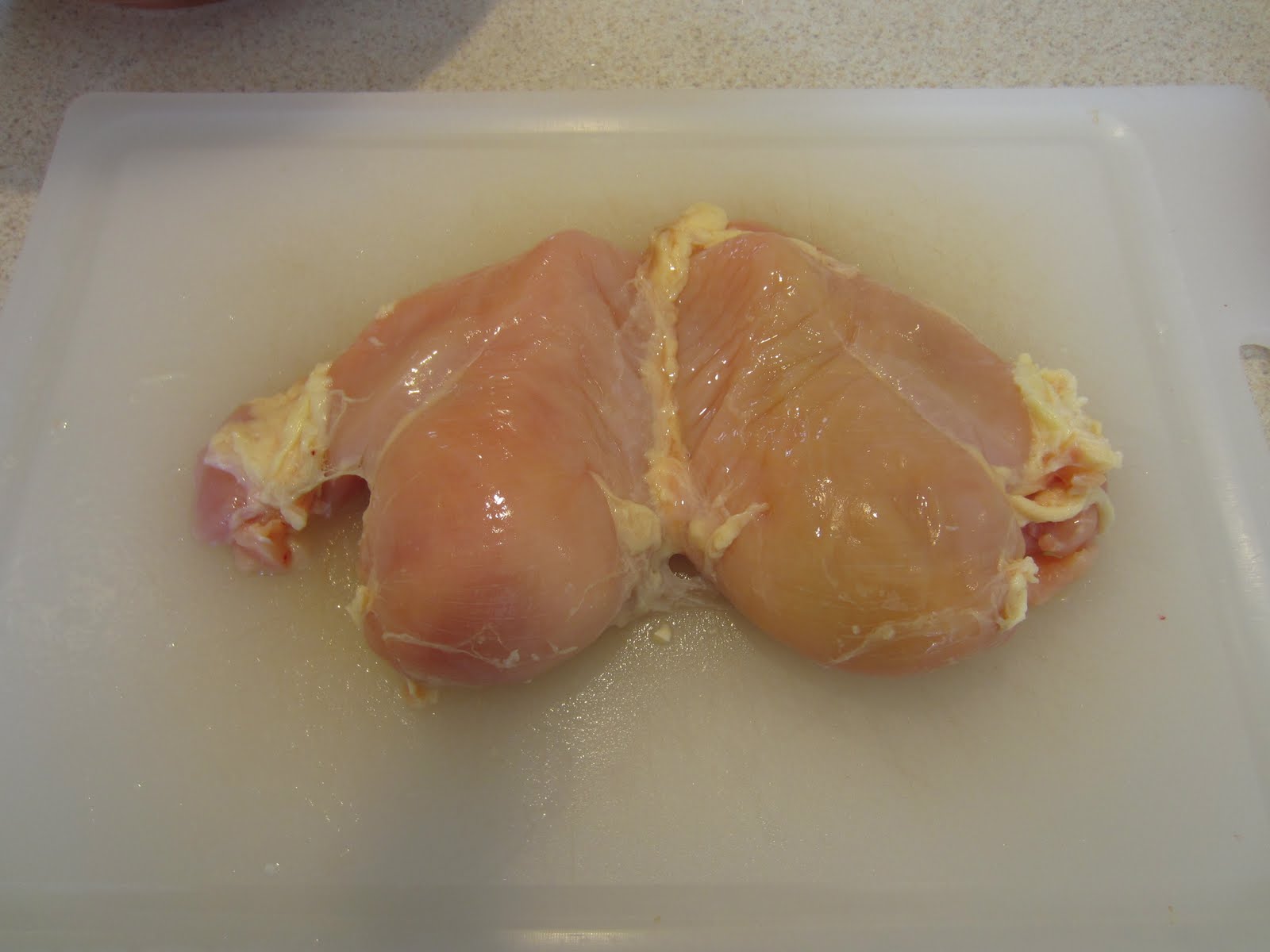
Cut the breast halves apart and trim any remaining fat. Keep the fat and trimmings in a separate bowl (you can use them to make chicken stock).
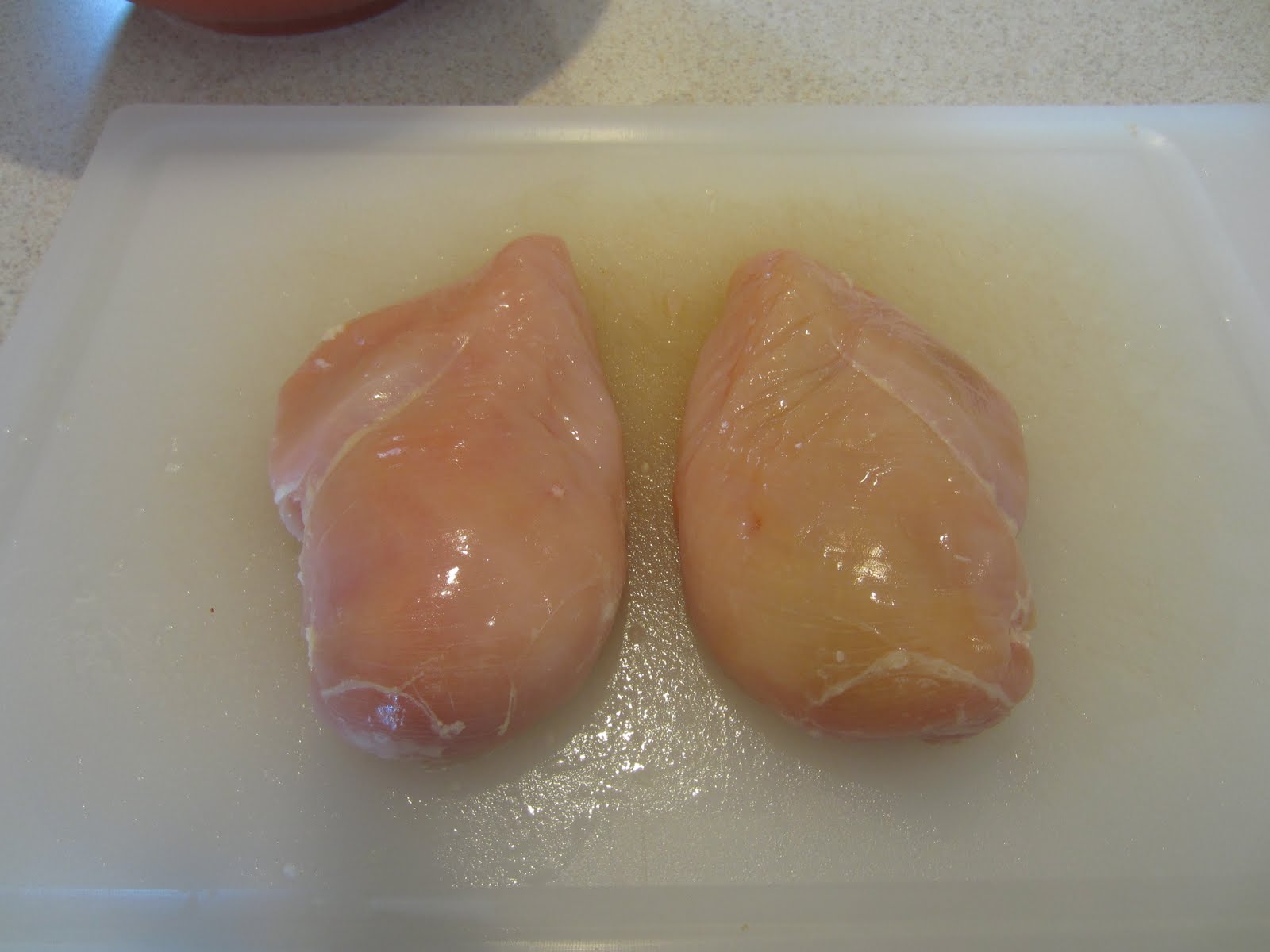
Cut each chicken breast into smaller chunks – doesn’t have to be precise, just so they are easier to stuff in the jars.
Pack the chicken pieces semi-loosely into the jars, leaving 1-inch of space between the top of the chicken and the top rim of the jar.
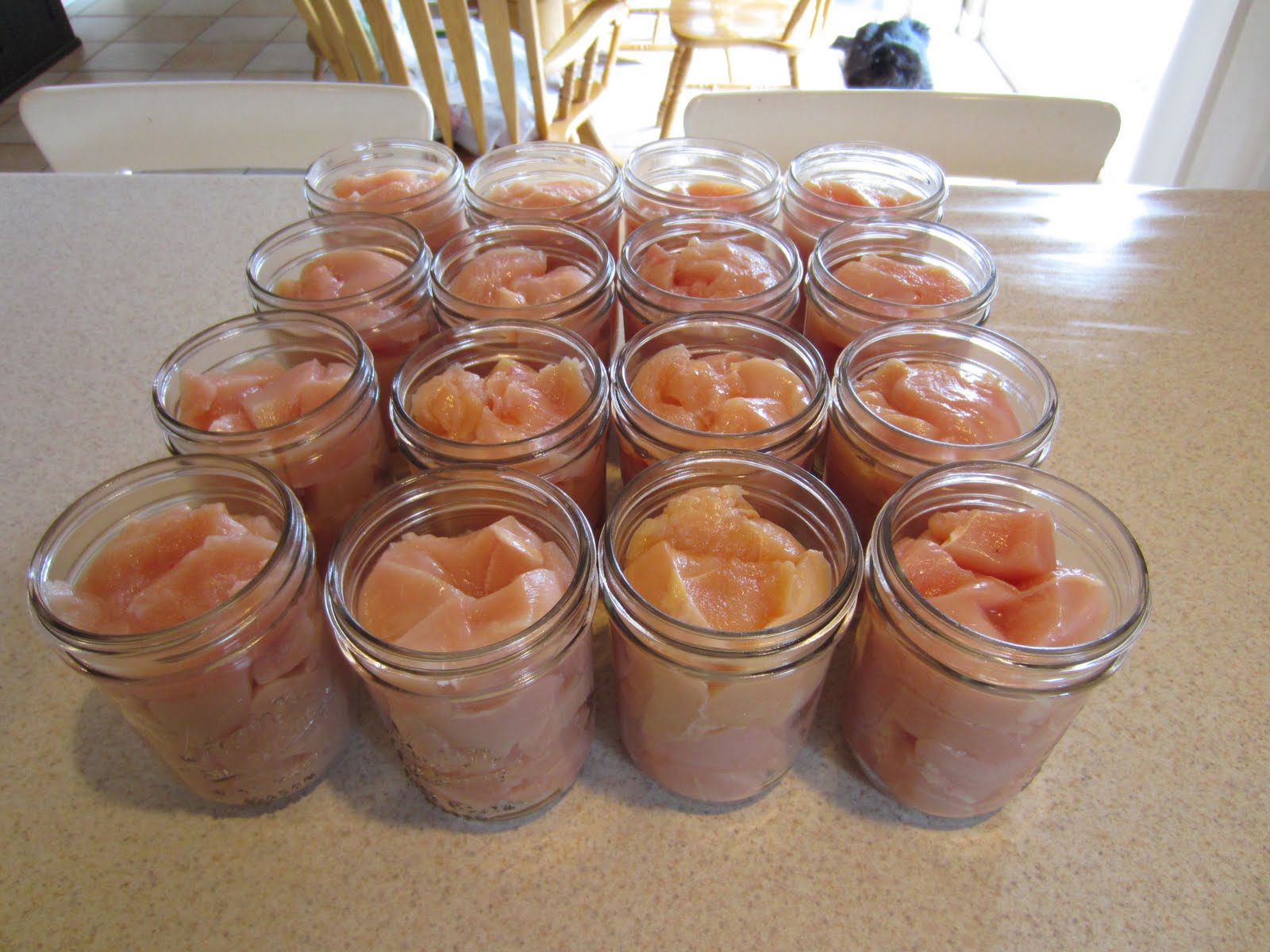
You don’t want a lot of big empty spaces, but you don’t want to smash it flat beyond recognition, either. The chicken will expand while processing, and then shrink. If you pack it too full, you may prevent the lid from being able to seal (more on that later).
Next, add boiling water (or you can use chicken broth if you’d like) to within 1-inch of the top rim of the jar. Pour some water in, poke around the sides with a spatula, plastic knife or chopstick, to help remove air bubbles, and then fill a little bit more if the water has settled below that 1-inch mark.
Once filled, take a clean wet rag or towel and wipe the rims of each jar to make sure they are clean and there is nothing there to impede the seal. Take a hot lid from your simmering pot, and place it on the jar, make sure it is centered, and then put on your ring.
Because the pressure canner uses steam that fills the entire container, you can double stack your jars in a pressure canner. Make sure the water in your canner is now at boiling. Place your jars in your canner according to the manufacturer instructions. Mine says to place the second layer of jars offset by half a jar, so the top jar rests on the edges of two bottom jars.
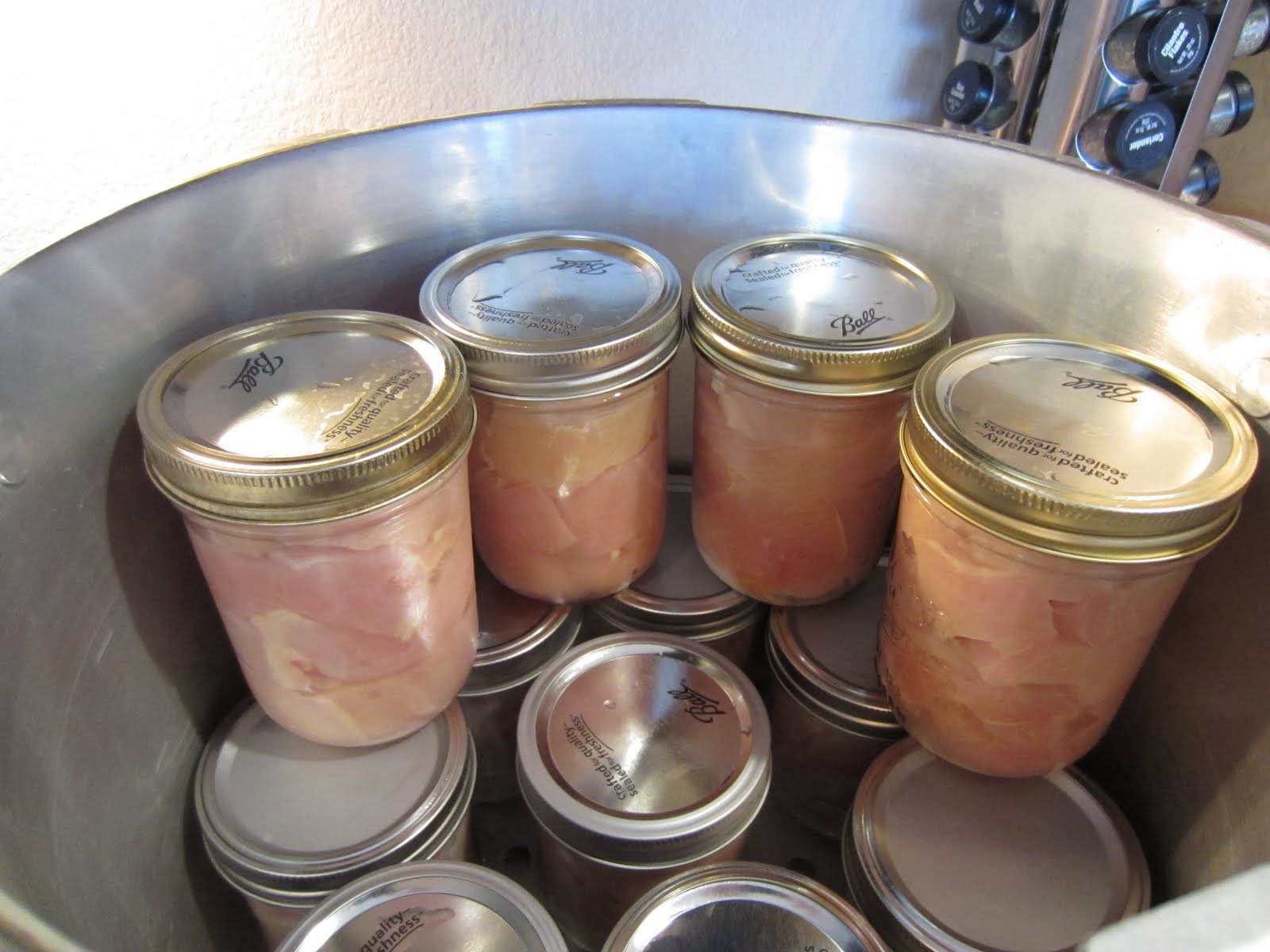
My particular model of canner can fit 16 pints jars at a time.
Once all your jars are in, put on the lid and process according to the instructions. (It’s basically a process of: create steam, let it vent for 10 minutes to get all extra air out, put on stopper/weight, bring to pressure, then hold at pressure for specified time, turn heat off after time is up, let pressure reduce to zero naturally, wait ten minutes, then open the lid and carefully remove jars.)
For chicken, the processing time is 75 minutes for pints, and 90 minutes for quarts. (One pint jar holds about 1lb of chicken, and a quart jar holds about 2lb.) You’ll need to look up in a canning book or in your canner manufacturer’s instructions to find out what pressure to can at – here where I live it is 13 psi. You must keep your pressure at that amount (or higher) throughout the processing time – if it dips below that, you’re supposed to start the time all over again. Because of that, I usually end up processing at 14 psi, because for the first little while the pressure will fluctuate as you get the heat settings figured out, and that way I have a few moments to adjust the heat before dipping below the 13 mark.
Once the jars are in, and you’ve vented the canner and brought it to pressure, there isn’t much to do but sit and wait. I usually bring a book with me and just sit in the kitchen so I can keep an eye on the pressure. You will need to adjust your burner settings periodically, as the heat and steam builds up and the pressure increases. I start out at high for getting to a boil, venting and getting to pressure. Once at pressure, I can turn down to med-high, then turn it down little by little every 10-15 minutes or so, until by the end I’m down to med-low for the last half hour or so.
Once your jars are out of the canner, leave them alone for 12-24 hours and then test for seal. Press the middle of the lid – if it flexes down, it isn’t sealed. If you can barely move it, then you’ve got a good seal. Any jars that don’t seal can be reprocessed (with a new lid) or moved to the refrigerator to be used soon. After 24 hours, you can remove the rings, wash the jars, label them with the date, and store them away!
[For specific instructions on the actual canning process, which I have not gone into here, I recommend the Ball Blue Book or the National Center for Home Preserving’s web site at https://www.uga.edu/nchfp/.]
Note: The canned chicken works best in recipes calling for diced/chopped or shredded chicken.
A PYP Best Blog! I saw it, I tried it: cleaning the grates on your gas stove.
Just in case you missed this article on cleaning the grates on your gas stove the first time we shared it a couple of years ago, we are republishing it. After Dori wrote this blog originally, we got an awesome response. This is one of the PYP Best Blogs!
I think I’ve tried everything to get my gas stove grates really clean. And most things work okay but it takes a LOT of elbow grease for mediocre results. So much in fact, that I tend to sort of ignore this chore.
I happened on a new idea on the good old internet though and I thought it was worth a shot.
Take one of your nasty old grates…
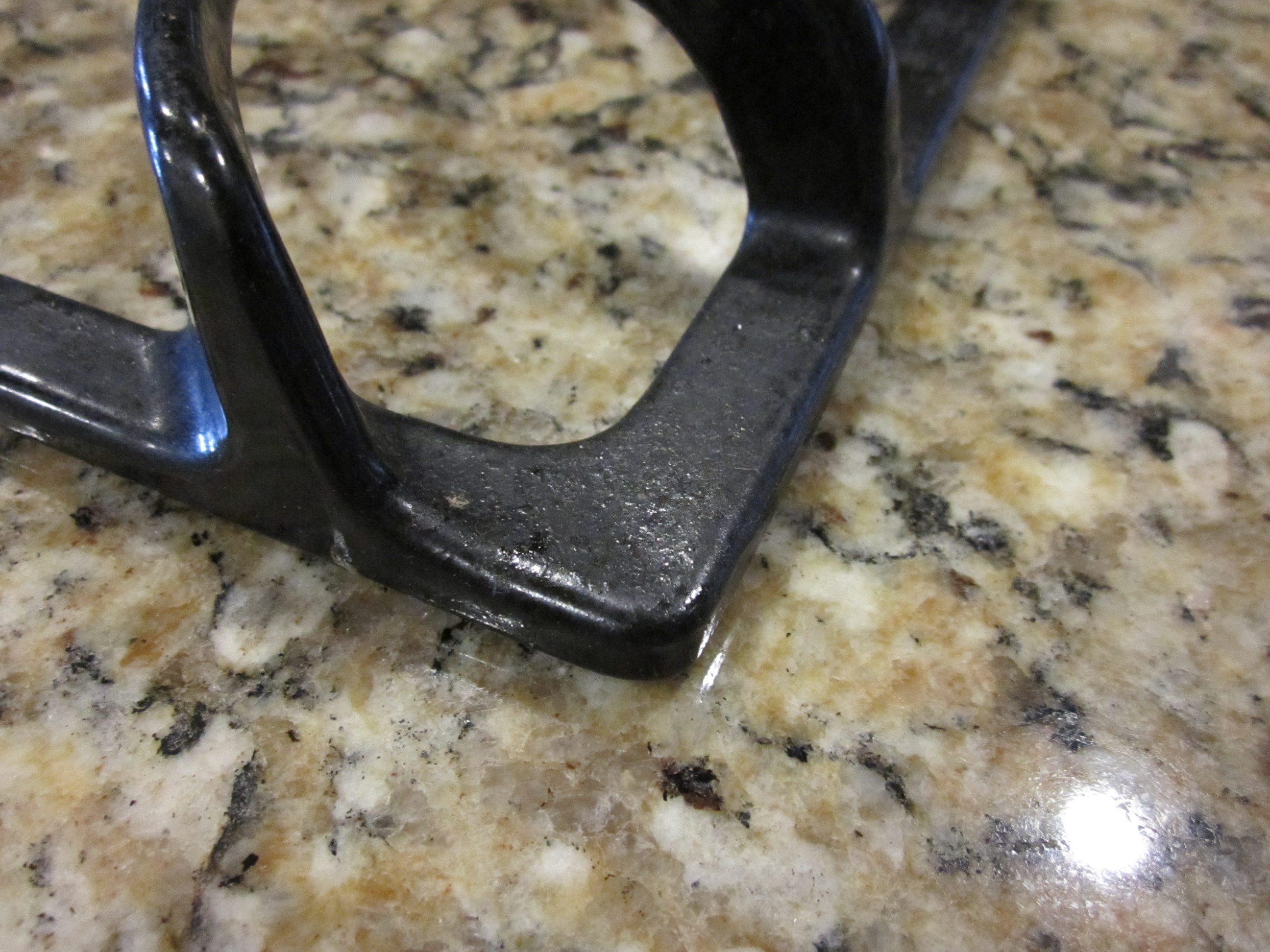
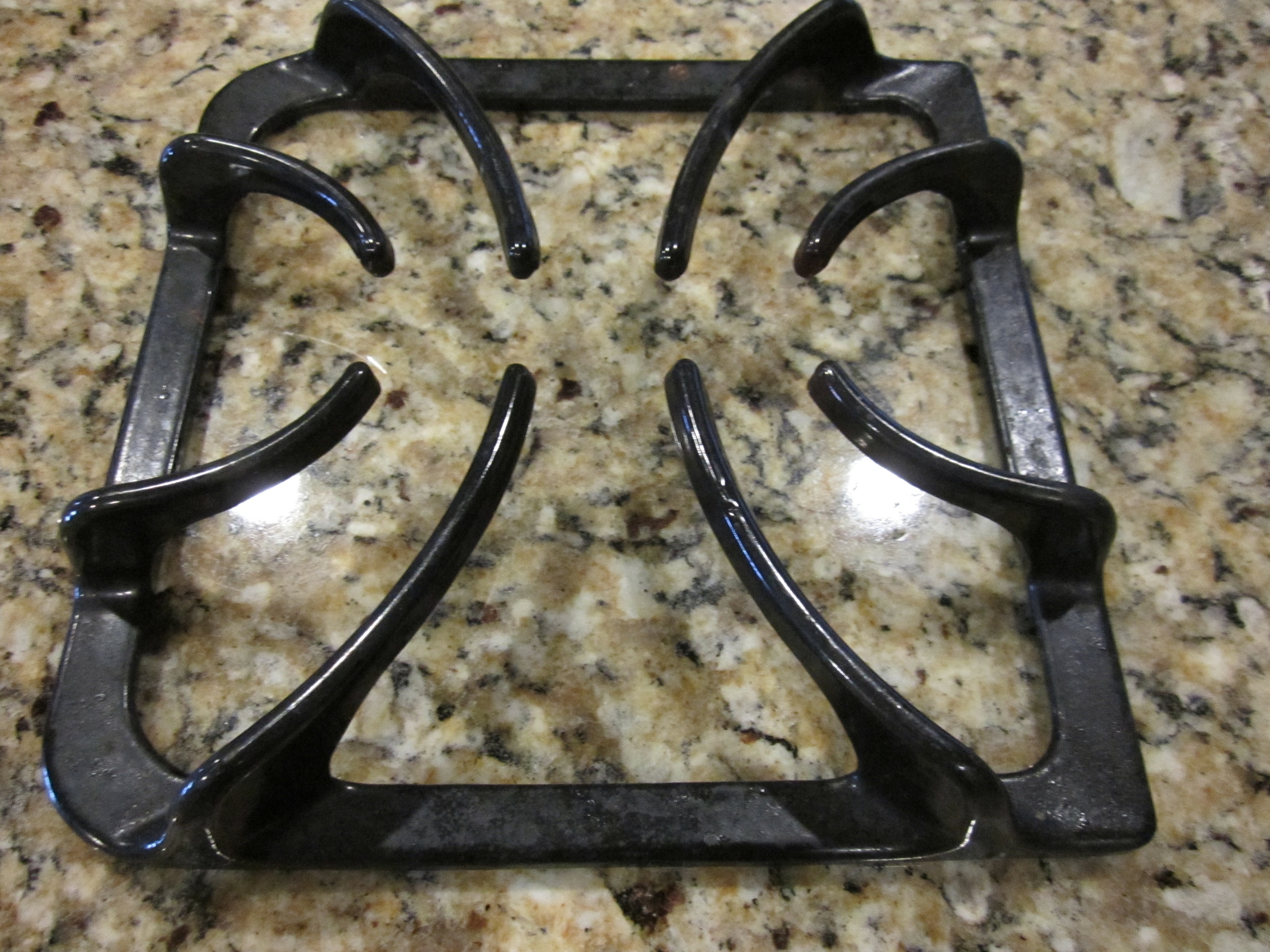
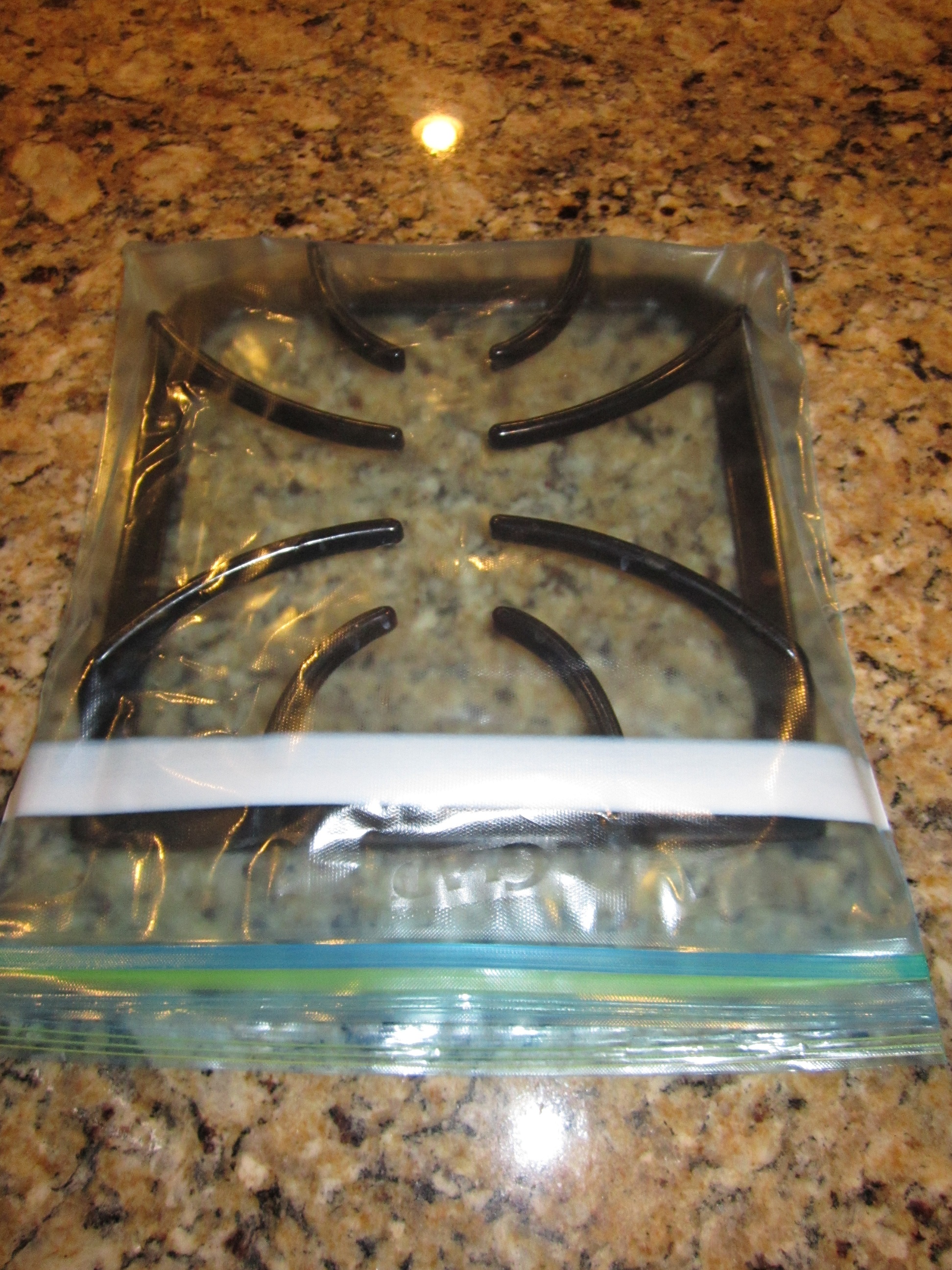
Slip it into a gallon size ziploc bag. Be careful not to put any holes in the bag.
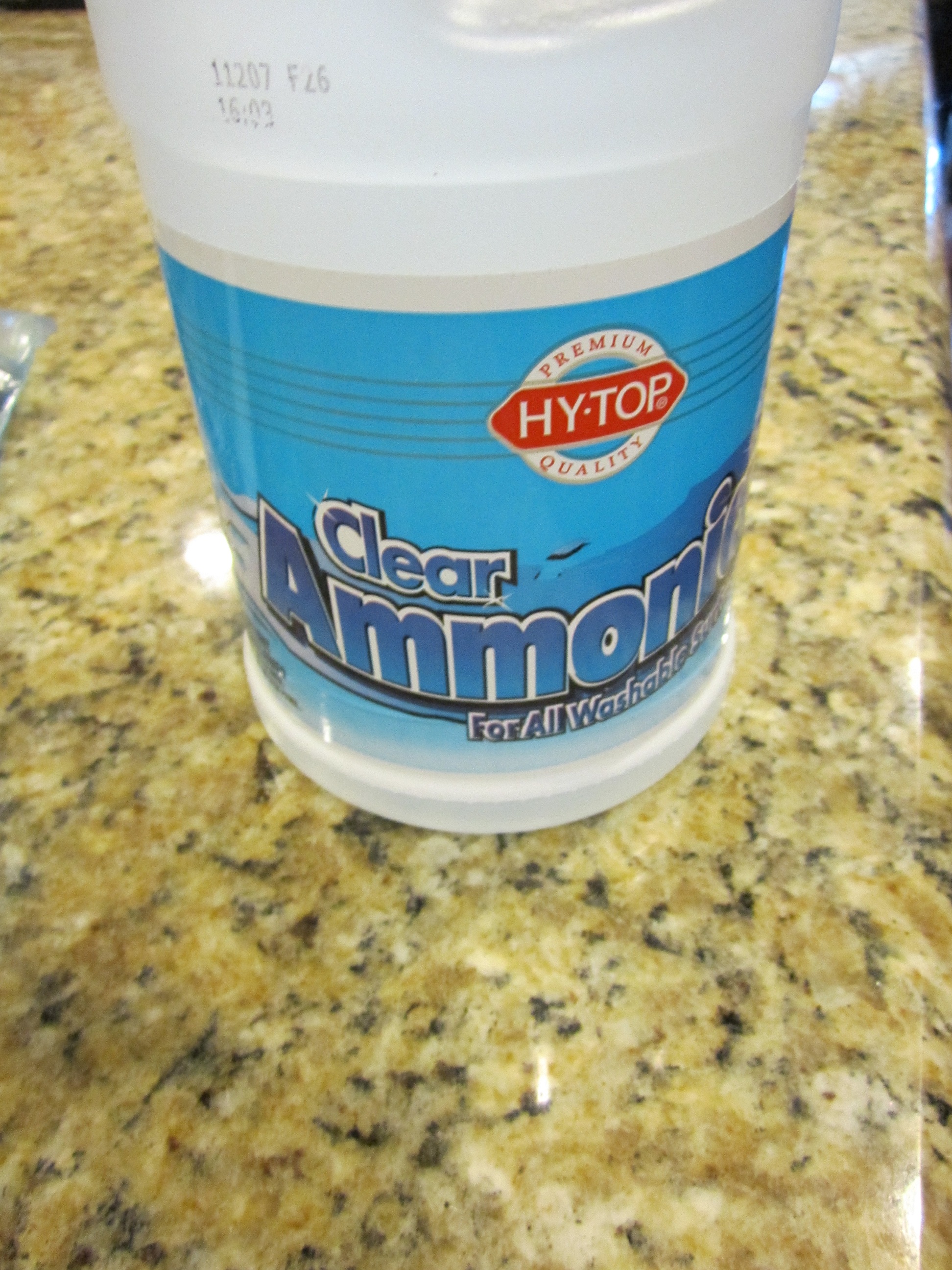
Pour 2 or 3 Tablespoons ammonia into the bag.
Seal the bag. And let it sit for 12 hours.
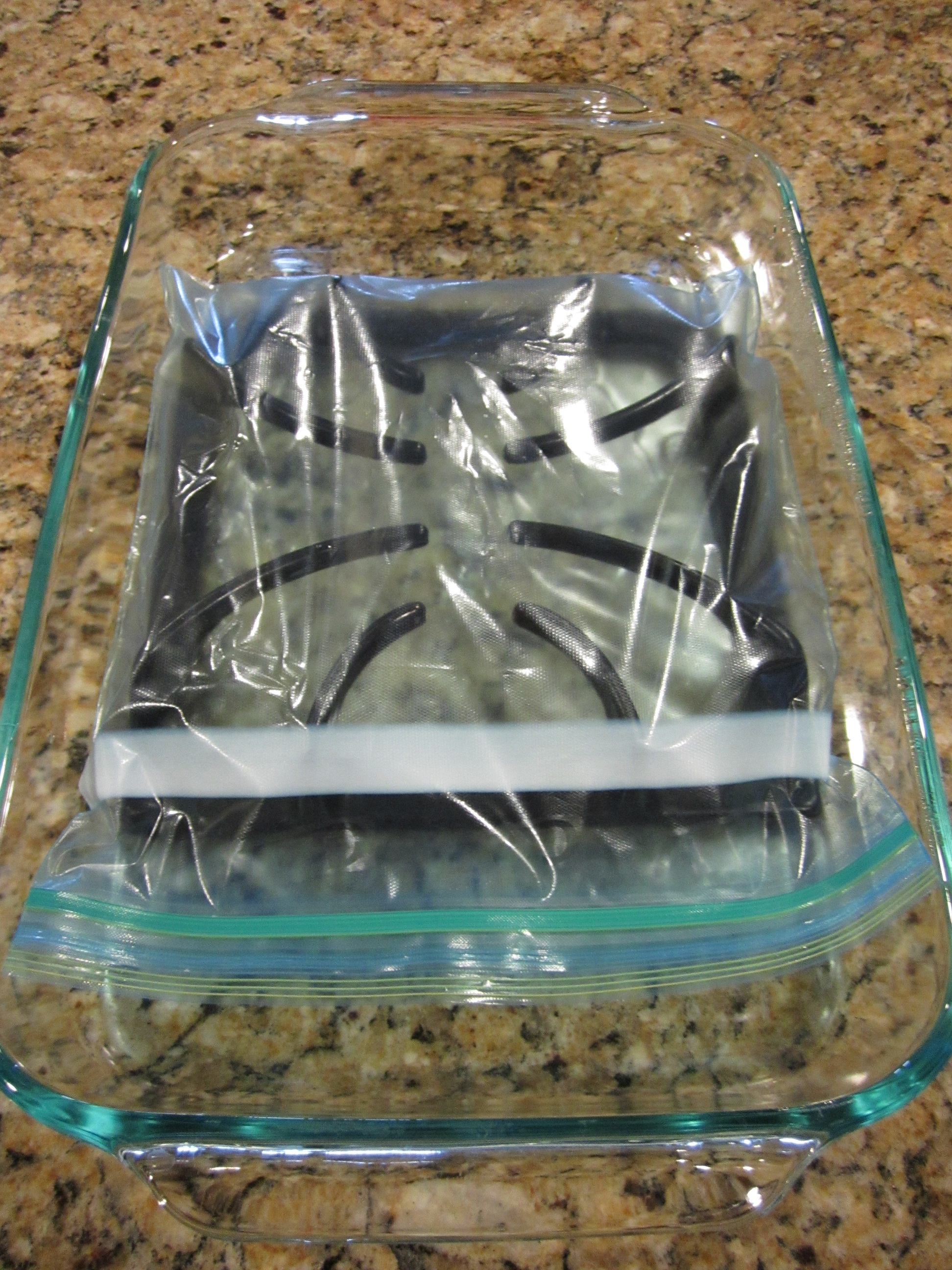
I put mine in a glass baking dish, just in case there were any leaks.
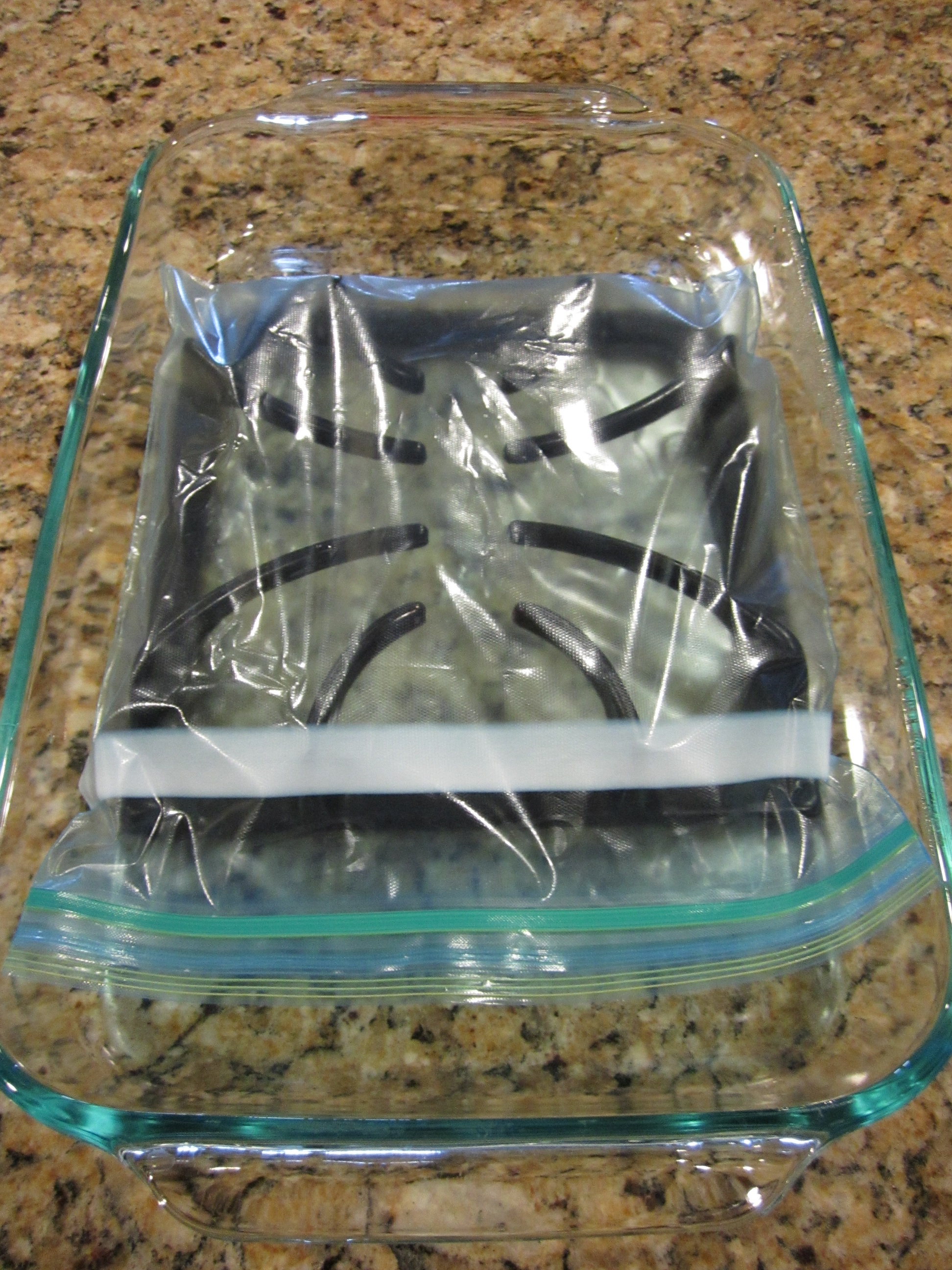
I only let mine sit for about 5 hours because I needed the stove to cook dinner. It’s probably best to plan to do this overnight.
Take the grate out of the ziploc bag. I did this in the kitchen sink.
Look at the yucky ammonia left in the bag…
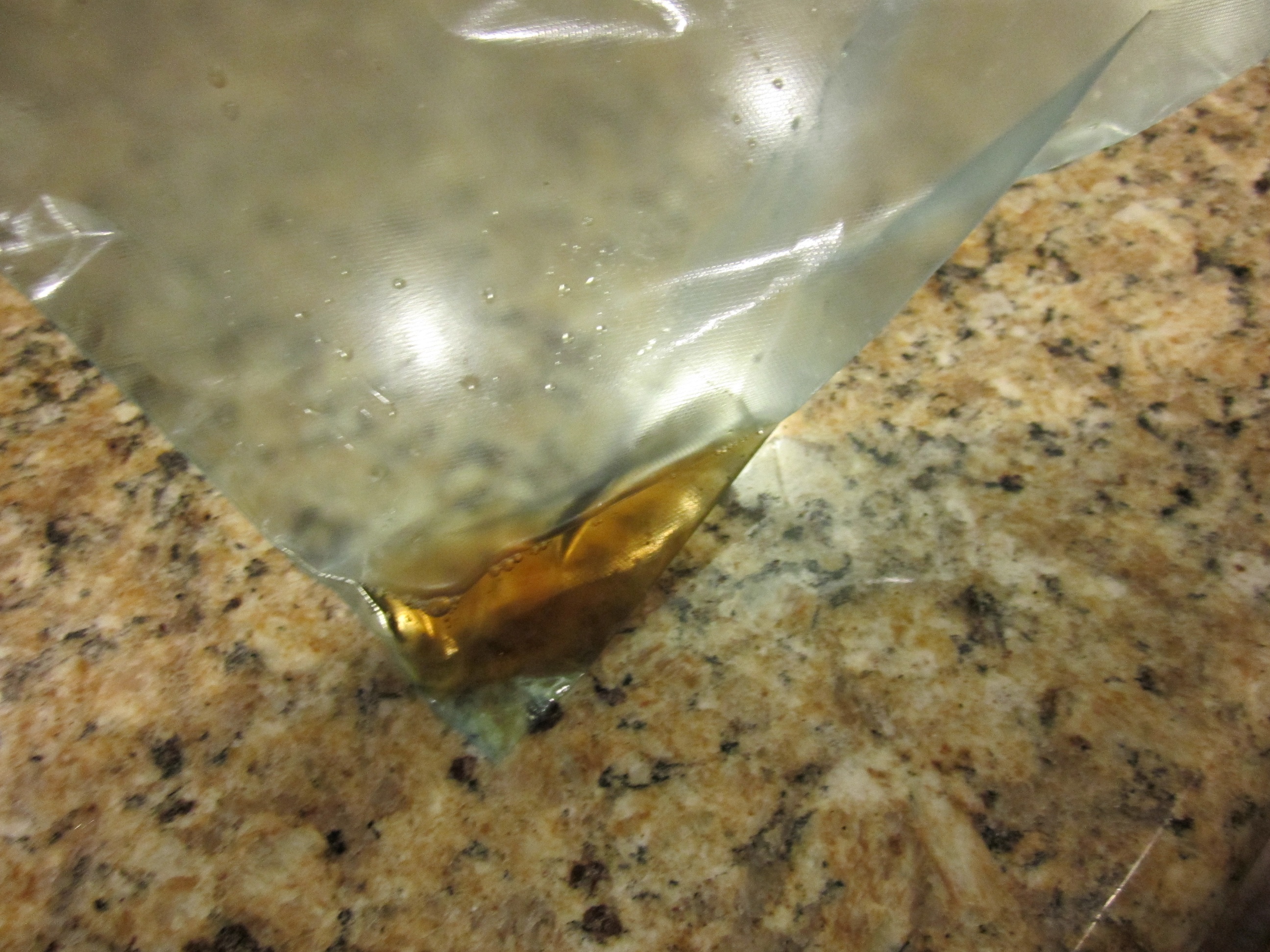
Rinse the grate thoroughly.
At this point I used a green scrubby (technical term, you know what I mean?) and just very lightly wiped all the surfaces off. No actual scrubbing at all really.
And TA-DA!!
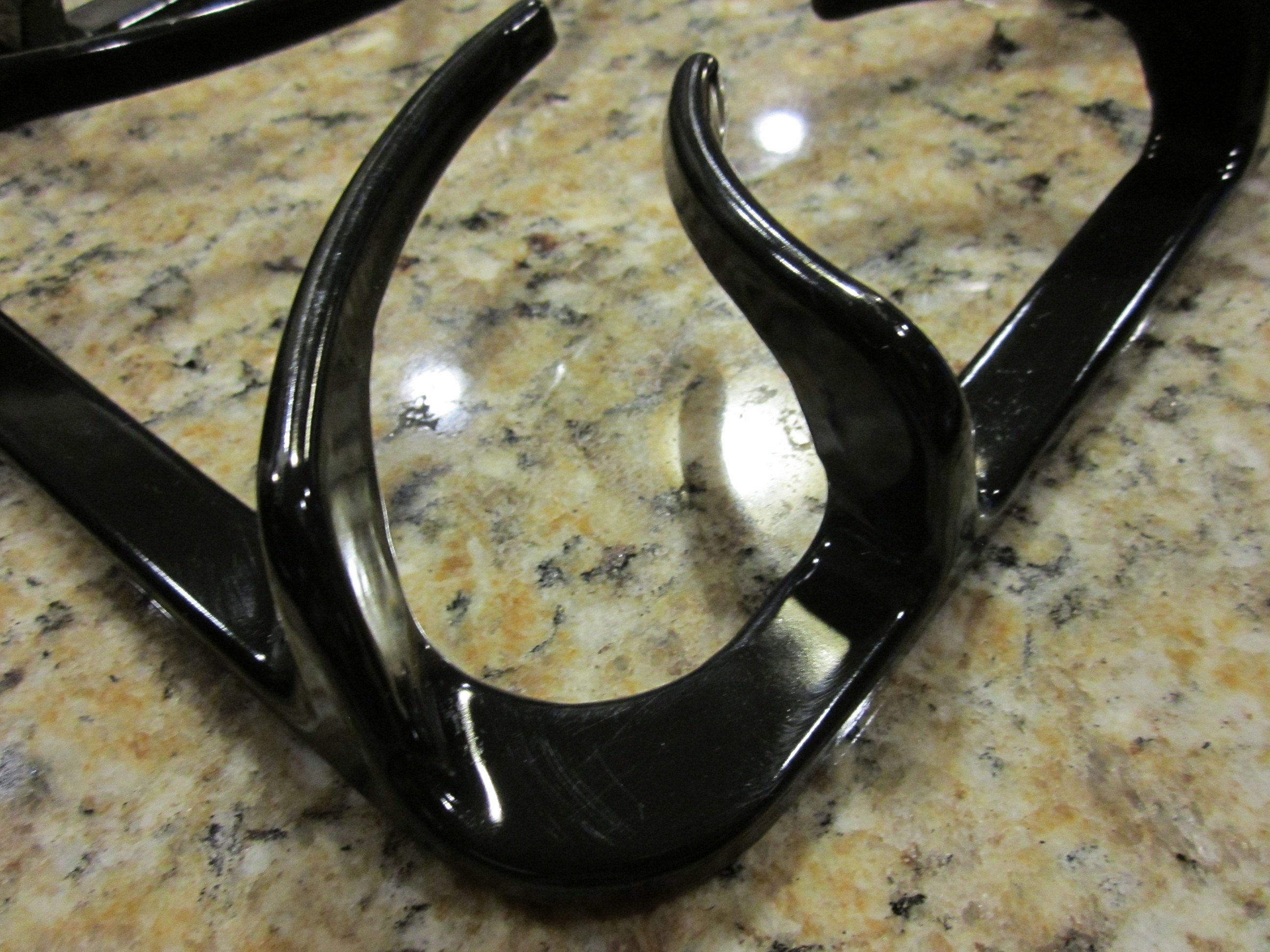
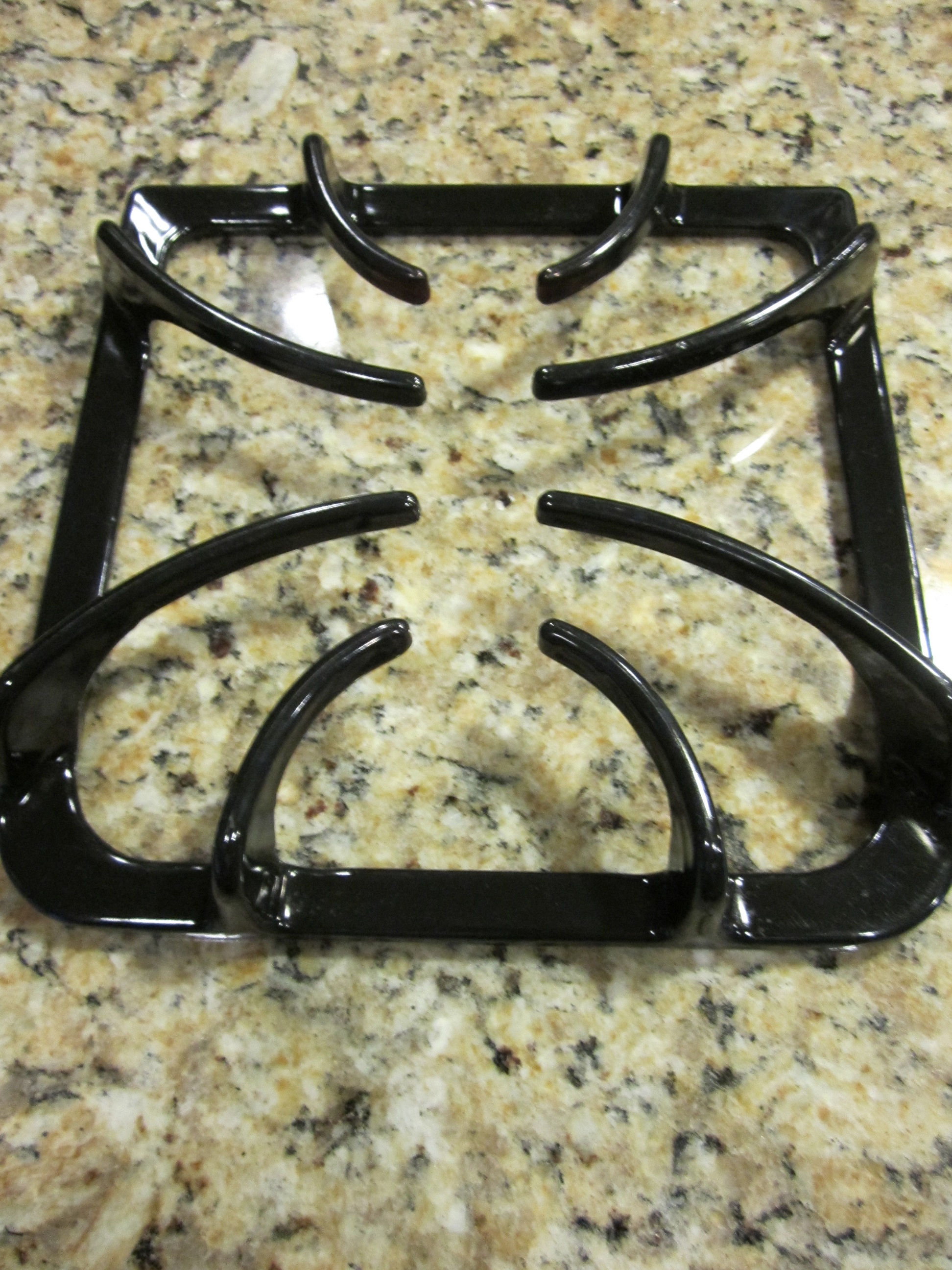
IT WORKED!!!
There are still a couple of tiny smudgy spots that probably would have been completely gone if I had let them soak for the full 12 hours.
This is definitely how I will clean them from now on. It was about $1.25 for a half gallon of ammonia. That’s a cheap and EASY clean if you ask me!
Side by side with one of the uncleaned grates.
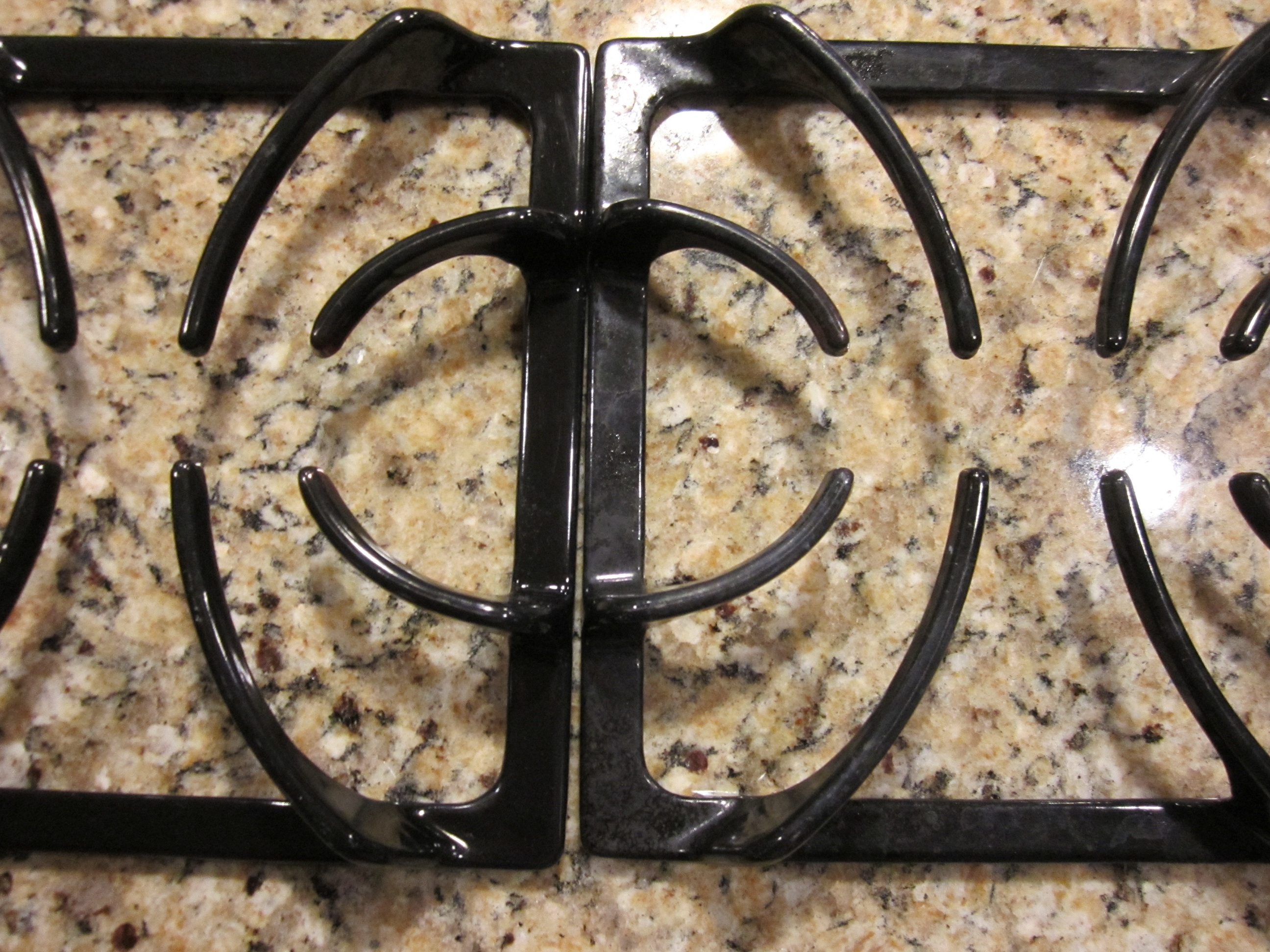
Now I’m off to put the other 3 grates in to soak overnight.
Pin It